In every successful commercial kitchen, preparation space plays a direct role in food safety, workflow, hygiene, productivity, and long-term operating efficiency. Whether the business is a café, bakery, restaurant, catering company, pub, takeaway outlet, hotel, butcher shop, or large-scale food production facility, the work surface must be strong enough for daily use and hygienic enough for professional food handling.
This is why stainless steel benches have become the industry standard across Australian hospitality and foodservice operations. They are durable, non-porous, easy to clean, corrosion-resistant, and flexible enough to suit different kitchen layouts. Unlike residential benches or decorative work surfaces, commercial stainless steel benches are designed for the pressure of professional kitchens where cleaning, preparation, storage, plating, and equipment handling happen continuously.
For businesses comparing kitchen infrastructure, the right bench is not simply a table. It is a preparation station, storage solution, hygiene support surface, workflow tool, and long-term investment in kitchen organisation.
Key Takeaways
| Benefit | Why It Matters | Commercial Kitchen Value |
|---|---|---|
| Hygiene | Non-porous surfaces help reduce moisture and food residue absorption. | Supports safer food preparation and cleaning routines. |
| Durability | Stainless steel withstands heavy daily use, heat, moisture, and cleaning. | Reduces replacement costs over time. |
| Cleaning Efficiency | Smooth surfaces are easy to wipe, sanitise, and inspect. | Saves staff time during busy operations. |
| Workflow Flexibility | Benches can include splashbacks, undershelves, drawers, castors, and custom sizing. | Improves kitchen organisation and staff movement. |
| Professional Appearance | Brushed stainless steel creates a clean, consistent kitchen environment. | Useful for open kitchens and customer-facing foodservice areas. |
What Are Commercial Stainless Steel Benches?
Commercial stainless steel benches are professional preparation surfaces designed for food preparation, plating, storage, cleaning support, and general kitchen workflow. They are manufactured to handle repeated commercial use, unlike residential benches that may not withstand constant cleaning, heavy equipment, or high-volume food handling.
Commercial stainless steel benches for sale are commonly used in preparation areas, cooking lines, dishwashing zones, bakery production spaces, café service stations, butcher shops, and catering kitchens. Many commercial sinks and sink benches are made from thicker stainless steel sheets, often around 1.2mm depending on the model, helping improve structural strength and reduce bending under working loads.
Common Stainless Steel Bench Configurations
| Configuration | Purpose | Best Use |
|---|---|---|
| Flat-top bench | General preparation and plating surface. | Restaurants, cafés, bakeries, prep kitchens. |
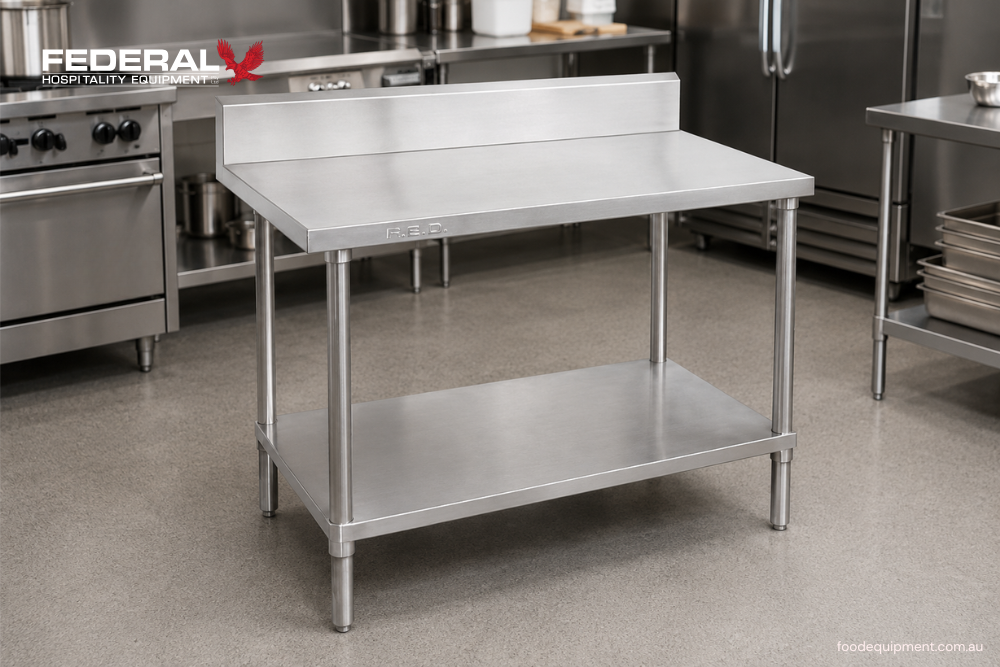
| Bench with splashback | Helps protect walls from spills, splashes, and residue. | Wet areas, prep zones, dishwashing support areas. |
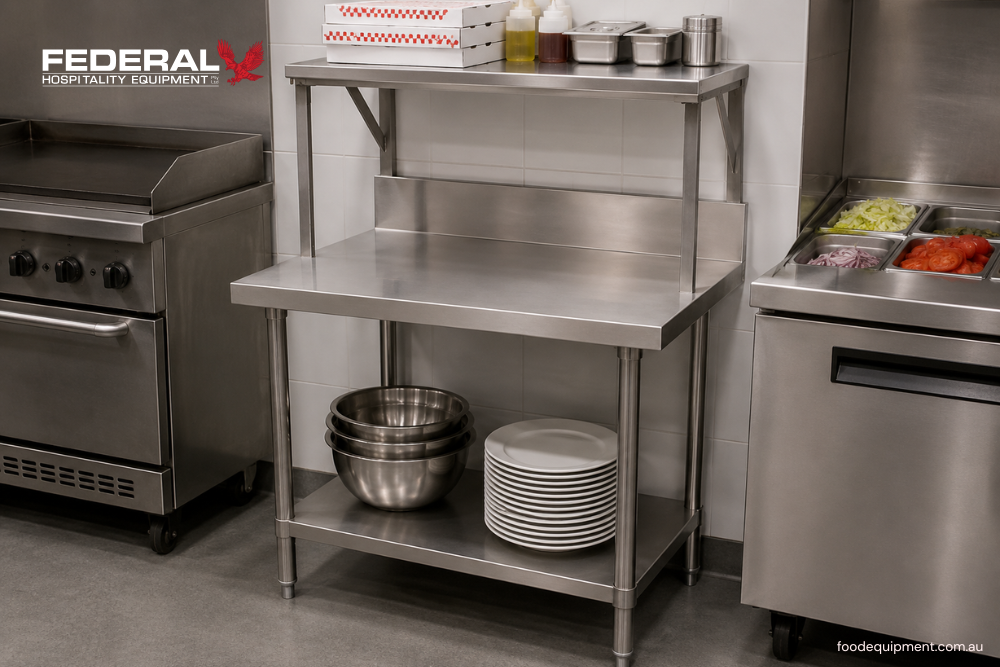
| Undershelf bench | Provides storage below the work surface. | Kitchens needing quick access to trays, containers, and utensils. |
| Drawer bench | Combines worktop space with organised utensil storage. | Busy prep stations and service areas. |
| Mobile bench | Allows flexible movement and layout changes. | Catering, production kitchens, flexible prep spaces. |
Why Stainless Steel Is the Industry Standard
Stainless steel has become the preferred material in commercial kitchens because it performs well across the areas that matter most: hygiene, durability, cleaning efficiency, heat resistance, moisture resistance, and layout flexibility.
Foodservice environments expose benches to oils, water, flour, sauces, acids, cleaning chemicals, hot cookware, sharp tools, heavy equipment, and repeated wiping. A good commercial bench needs to handle this without absorbing residue, warping, rusting quickly, or becoming difficult to sanitise.
How Stainless Steel Benches Support Food Safety
The hygiene performance of a kitchen work surface begins with the material. Stainless steel is non-porous, which means it does not easily absorb liquids, food particles, or moisture into the surface. This makes it suitable for food preparation environments where cross-contamination control is critical.
Australian food businesses must follow food safety expectations, including principles reflected in Food Standards Australia New Zealand guidance and Food Safety Standard 3.2.3, which covers food premises and equipment. Preparation surfaces sourced from the best stainless steel bench suppliers and manufacturers near you should support easy cleaning, sanitising, and inspection.
| Hygiene Feature | Operational Advantage |
|---|---|
| Non-porous surface | Helps prevent absorption of liquids and food residue. |
| Smooth finish | Allows effective sanitising between tasks. |
| Corrosion resistance | Helps maintain surface integrity over time. |
| Food-safe construction | Supports commercial hygiene expectations. |
| Easy inspection | Makes spills, residue, and cleaning issues easier to identify. |
Understanding Stainless Steel Grades: 304 vs 430
Not all stainless steel is the same. Commercial kitchens often use different grades depending on the environment, budget, and application. Grade 304 stainless steel is widely preferred for food preparation areas because it offers strong corrosion resistance and performs well in moist, frequently cleaned environments.
| Feature | Grade 304 Stainless Steel | Grade 430 Stainless Steel |
|---|---|---|
| Corrosion Resistance | Excellent. | Moderate. |
| Food Preparation Suitability | Strong choice for food contact areas. | Better suited to lighter-duty or lower-moisture applications. |
| Moisture Resistance | High. | Lower than 304. |
| Cleaning Performance | Excellent for frequent commercial cleaning. | Good, but may be less suitable for demanding conditions. |
| Cost | Higher initial investment. | Lower initial cost. |
For most professional food preparation environments, Grade 304 stainless steel provides the best balance of hygiene, durability, corrosion resistance, and long-term value.
How Stainless Steel Makes Cleaning Faster
In a commercial kitchen, cleaning speed matters. Staff may need to clear, wash, sanitise, and reset preparation areas multiple times throughout the day. Stainless steel benches help simplify this process because spills, sauces, grease, flour, food residue, and liquids can be removed efficiently.
A smooth stainless steel bench in Australia also works effectively with common commercial sanitising methods when used according to manufacturer instructions. This helps kitchens maintain cleaner preparation areas without unnecessary scrubbing or complicated maintenance routines.
3-Step Daily Cleaning Routine
| Step | Process | Purpose |
|---|---|---|
| 1. Remove debris | Clear food particles and loose residue from the surface. | Prepares the bench for proper washing. |
| 2. Wash and sanitise | Use approved commercial cleaning solutions. | Helps reduce contamination risks. |
| 3. Dry and inspect | Wipe completely dry and check the surface. | Maintains appearance and reduces water marks. |
Why Stainless Steel Is More Durable Than Many Alternatives
Commercial kitchens operate with constant movement. Ingredients, pans, containers, appliances, utensils, cleaning products, and staff activity all place pressure on work surfaces. Stainless steel performs well because it resists moisture, heat, corrosion, and impact better than many common alternatives.
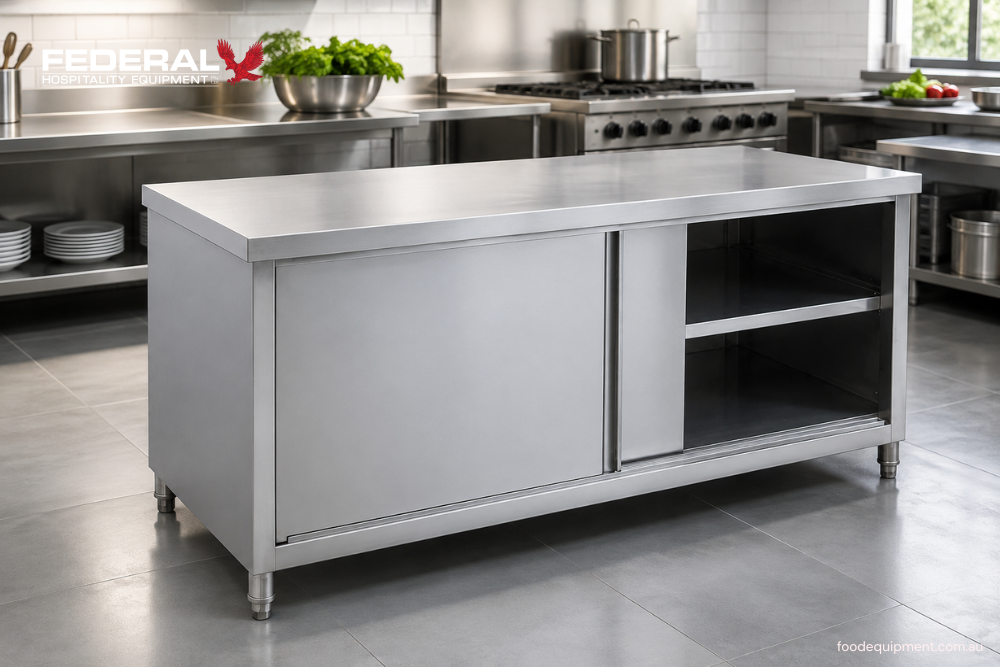
Products like stainless steel cabinets are valued for the same reason: they combine strength, hygiene, and long-term practicality in busy foodservice environments.
Material Durability Comparison
| Material | Durability Performance | Commercial Suitability |
|---|---|---|
| Stainless Steel | Excellent resistance to corrosion, impact, heat, and moisture. | Highly suitable for commercial kitchens. |
| Wood | Requires more maintenance and may absorb moisture. | Limited suitability for high-moisture food preparation areas. |
| Granite | Strong but heavy and less flexible for commercial modifications. | Better suited to decorative or specialised applications. |
| Laminate | Lower cost but more vulnerable to heat and surface damage. | Not ideal for demanding commercial kitchen use. |
This durability helps improve return on investment by reducing the need for frequent replacement or repair. You can gain further insights by contacting the top stainless steel bench dealers and distributors.
How Stainless Steel Benches Improve Kitchen Workflow
Efficient kitchens rely on organised preparation zones. Commercial stainless steel benches allow businesses to create dedicated areas for chopping, mixing, plating, baking, ingredient handling, cooling, packing, and service support.
| Business Type | Typical Application |
|---|---|
| Restaurants | Ingredient preparation, plating stations, and cooking line support. |
| Cafés | Beverage preparation, sandwich assembly, and service areas. |
| Bakeries | Dough preparation, cooling, decorating, and production surfaces. |
| Catering businesses | High-volume food preparation and packing. |
| Industrial kitchens | Large-scale production workflows. |
| Butcher shops | Meat preparation and equipment support. |
The ability to customise layouts with drawers, shelves, adjustable legs, splashbacks, and different bench sizes allows businesses to reduce unnecessary movement and improve task flow when they buy stainless steel benches online.
Choosing the Right Bench Configuration
The best stainless steel bench depends on the specific work being performed. A bakery may need long flat benches for dough handling, while a restaurant may need compact preparation benches with undershelves. A café may prioritise service counters and storage, while a catering business may need flexible mobile benches.
| Feature | Benefit | Best For |
|---|---|---|
| Adjustable legs | Allows better working height and levelling on uneven floors. | Most commercial kitchens. |
| Drawers | Keeps utensils, tools, and small equipment organised. | Prep stations and service areas. |
| Undershelf | Adds storage below the work surface. | Restaurants, cafés, catering kitchens. |
| Splashback | Improves hygiene around walls. | Wet prep, dish areas, messy production zones. |
| Custom sizes | Fits specific kitchen layouts. | Compact or custom-designed kitchens. |
| Castors | Allows movement and flexible placement. | Catering and multi-use prep spaces. |
How Stainless Steel Handles Dampness and Heat
Commercial kitchens expose benches to moisture, steam, hot cookware, frequent washing, spills, and cleaning products. Stainless steel performs well in these conditions because it resists rust, moisture damage, warping, and surface deterioration when properly maintained.
This makes it suitable for preparation zones located near sinks, cooking equipment, dishwashing areas, and high-frequency cleaning stations. Its ability to handle common kitchen heat and moisture is one of the reasons it remains the standard material for professional foodservice environments.
Why Appearance Still Matters
While function comes first, appearance still matters in modern hospitality. Many restaurants, bakeries, cafés, and takeaway businesses now operate open kitchens or customer-visible preparation areas. A clean stainless steel finish communicates professionalism, hygiene, and operational care.
When you shop for steel benches, their reflective brushed-metal appearance can create consistency across preparation zones, cooking stations, storage areas, and service counters. This visual consistency is especially useful in open kitchens where customers can see how food is prepared.
Common Buying Mistakes to Avoid
| Mistake | Potential Problem | Better Approach |
|---|---|---|
| Choosing only by price | Lower-quality benches may wear faster or lack strength. | Compare grade, thickness, structure, and intended use. |
| Ignoring bench height | Staff may work uncomfortably or inefficiently. | Check working height and adjustable-leg options. |
| Forgetting storage needs | Kitchen tools may clutter preparation areas. | Consider undershelves, drawers, or cabinets. |
| Choosing no splashback where needed | Walls may become harder to keep clean. | Use splashbacks in wet or messy prep zones. |
| Ignoring available space | The bench may block workflow or access. | Measure the kitchen layout before purchase. |
| Choosing the wrong stainless steel grade | May reduce corrosion resistance in demanding environments. | Prioritise Grade 304 for food prep and high-moisture areas. |
Commercial Stainless Steel Bench Buyer Checklist
- Confirm the bench will be used for food preparation, storage, plating, or equipment support.
- Measure available width, depth, and working clearance.
- Choose the correct stainless steel grade for the environment.
- Check material thickness and load capacity.
- Decide whether a splashback is required.
- Consider undershelves, drawers, or cabinets for storage.
- Review adjustable-leg or castor options.
- Confirm cleaning access around and beneath the bench.
- Match bench layout to kitchen workflow.
- Choose a trusted hospitality equipment supplier.
Why Choose Federal Hospitality Equipment Australia?
Federal Hospitality Equipment Australia supplies commercial kitchen equipment and stainless steel preparation solutions for cafés, restaurants, bakeries, pubs, catering businesses, takeaway outlets, hotels, and foodservice operations across Australia.
Choosing the right stainless steel bench means understanding the way your kitchen works every day. Preparation volume, storage needs, hygiene routines, available space, staff movement, and cleaning requirements all affect which bench configuration is most suitable.
Federal Hospitality Equipment Australia helps hospitality businesses choose practical stainless steel equipment that supports food safety, workflow efficiency, kitchen organisation, and long-term operational value.
Conclusion
Stainless steel benches are a fundamental part of foodservice infrastructure across Australia. Their combination of hygiene performance, durability, cleaning efficiency, moisture resistance, heat tolerance, and flexible design makes them suitable for businesses of all sizes.
From small cafés to large catering environments, these commercial preparation stations provide a dependable foundation for safe and efficient food preparation.
For hospitality businesses seeking reliable equipment, such as steel shelves and tables that support compliance, productivity, and long-term value, investing in high-quality stainless steel preparation surfaces is a practical decision.
Frequently Asked Questions
Why are stainless steel benches used in commercial kitchens?
Stainless steel benches are used because they are hygienic, durable, easy to clean, corrosion-resistant, and suitable for repeated food preparation tasks.
What stainless steel grade is best for food preparation?
Grade 304 stainless steel is commonly preferred for food preparation because it offers strong corrosion resistance and performs well in commercial kitchen environments.
Are stainless steel benches easy to clean?
Yes. Their smooth, non-porous surface makes them easy to wipe, wash, sanitise, and inspect during daily kitchen cleaning routines.
What is the purpose of a splashback?
A splashback is a raised rear section that helps protect walls from food particles, liquids, grease, and cleaning residue.
What is an undershelf bench?
An undershelf bench includes a lower shelf beneath the work surface, providing extra storage for trays, containers, utensils, and frequently used kitchen items.
Are mobile stainless steel benches useful?
Yes. Mobile benches are useful in catering businesses, production kitchens, and flexible workspaces where layouts need to change regularly.
Can stainless steel benches handle heat?
Stainless steel performs well under common kitchen heat exposure, although extremely hot cookware should still be handled with care to protect the surface and staff safety.
How do stainless steel benches improve workflow?
They create dedicated preparation zones, reduce clutter, support organised storage, and help staff complete tasks with less unnecessary movement.
Should I choose a bench with drawers or shelves?
Choose drawers if you need organised utensil storage. Choose undershelves if you need open storage for trays, containers, or larger equipment.
Are stainless steel benches suitable for cafés and bakeries?
Yes. Cafés use them for beverage and food preparation, while bakeries use them for dough preparation, cooling, decorating, and production tasks.