Coffee Machines

Common Commercial Coffee Machine Problems and How to Fix Them

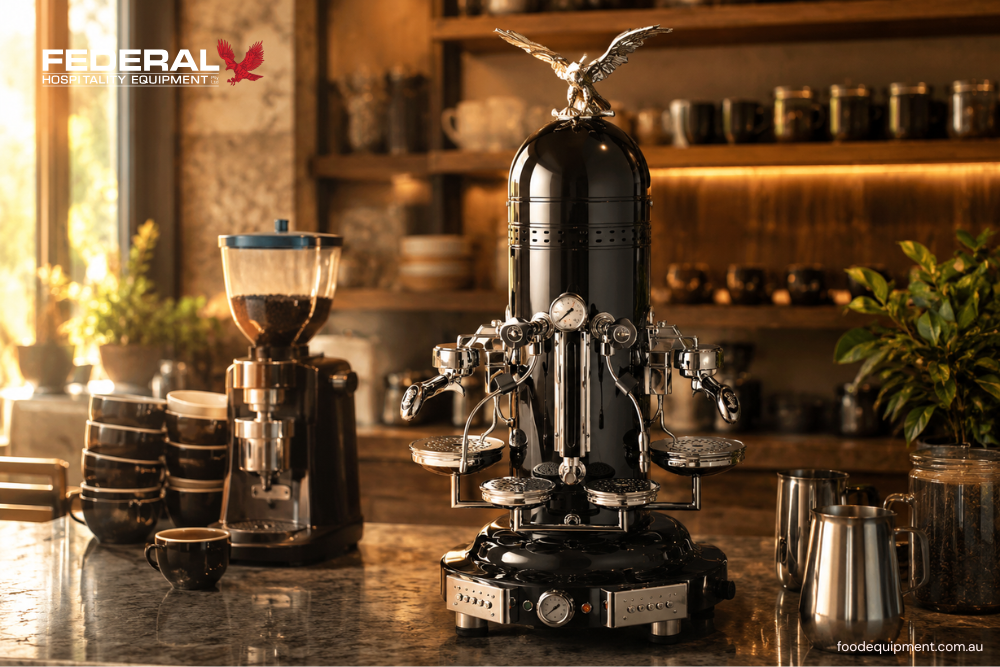
Premium commercial espresso coffee machine with professional coffee grinder in a modern Australian café interior.

Commercial coffee machines are an essential operational asset for cafés, restaurants, hotels, bakeries, and hospitality venues across Australia. Whether you operate a high-volume café in Melbourne, a speciality coffee bar in Sydney, or a regional takeaway venue in Queensland, reliable espresso equipment directly affects beverage consistency, service efficiency, and customer retention.

Operational disturbances as a result of espresso machine problems can lead to slower service, uneven brew quality, and needless repair costs. Most issues are preventable through preventative maintenance, regular cleaning, and early troubleshooting. Understanding how professional brewing systems operate allows hospitality businesses to reduce downtime, maintain beverage quality, and extend equipment lifespan.

Key Takeaways

Common Problem Primary Cause Recommended Solution
Uneven heating Scale accumulation or defective heating components Frequent descaling and boiler checks
Weak espresso extraction Incorrect grind size or blocked group head Clean components and recalibrate the grinder
Low steam pressure Blocked steam wand or low boiler pressure Clean steam tips and inspect pressure levels
Pro Tip: Installing a commercial water filtration system is one of the most effective ways to reduce mineral scale buildup in Australian cafés, particularly in hard-water regions of Western Australia and South Australia.

1. Why Is My Commercial Coffee Machine Not Heating Properly?

Quick Fix: Check boiler pressure levels immediately and descale the machine if mineral build-up is visible.

Commercial coffee machines for sale depend on static brewing temperatures to create balanced espresso. Low temperatures produce weak, under-extracted brew, while high temperatures lead to burnt or bitter flavours. Faulty thermostats, damaged heating elements, mineral scale accumulation, or unstable boiler pressure cause heating issues. Most professional brewing systems should maintain boiler pressure between 1.0 and 1.5 bars during operation.

The boiler pressure gauge should be inspected first. If pressure remains consistently below the recommended range, inspect the heating system and boiler components. The group head, the part of the machine where hot water meets the beans, should also be cleaned regularly because scale and coffee residue reduce heat transfer efficiency.

Immediate Actions

Use a commercial descaling solution to remove mineral deposits from the boiler and water lines. Replace water filters if they are overdue for maintenance. Inspect visible pressure gauges for unstable readings.

Long-Term Maintenance

Install a water filtration system designed for hospitality venues. Schedule professional boiler servicing every 6 to 12 months, especially in high-volume Australian cafés that operate continuously throughout the day.

2. Why Is My Espresso Tasting Weak or Watery?

Quick Fix: Adjust the grinder to a finer setting and clean the portafilter basket immediately.

Weak espresso extraction is one of the most common troubleshooting issues in commercial equipment sourced from the top commercial coffee machine suppliers and manufacturers. Extraction quality directly affects flavour, aroma, and crema, the golden foam layer on espresso.

Common causes include incorrect grind size, worn grinder burrs, blocked filters, inconsistent dosing, or dirty shower screens.

The portafilter, the handled basket that holds compressed brew grounds, and the group head should be cleaned multiple times daily using a specialised espresso machine cleaner and a group head brush.

If water flows too quickly through the compressed bean grounds, extraction becomes weak and watery. Most espresso machines operate best when extraction occurs within approximately 25 to 30 seconds.

Espresso Problem Possible Cause Recommended Fix
Watery espresso Coarse grind setting Adjust the grinder finer
Bitter espresso Over-extraction Reduce extraction time
No crema Old coffee beans Use fresher beans
Slow extraction Blocked basket Clean the portafilter basket
Uneven extraction Dirty shower screen Replace or clean the screen

Immediate Actions

Clean the shower screen, flush the group head, and recalibrate the grinder. Use fresh coffee beans and ensure consistent tamping pressure.

Long-Term Maintenance

Replace grinder burrs every 6 to 12 months in high-volume cafés. Schedule preventative maintenance inspections to monitor pump pressure and extraction consistency after you buy commercial coffee machines online.

3. Why Is the Steam Wand Producing Weak Pressure?

Quick Fix: Clean the steam tip immediately and check the boiler pressure.

Strong steam pressure is essential for milk-based drinks such as flat whites, cappuccinos, and lattes, which dominate Australian café menus.

Steam performance problems are commonly caused by dried milk residue blocking steam holes. Steam wands should be purged and wiped after every use to prevent hygiene-related blockages.

Commercial steam systems also lose performance when boiler pressure falls below recommended operating levels. Most machines require stable steam pressure to texture milk correctly.

Immediate Actions

Remove and soak the steam tip using a commercial milk residue cleaner. Purge the steam wand thoroughly before and after every use. Inspect boiler pressure gauges for readings below operational recommendations. Low pressure typically indicates scale accumulation or valve-related issues. For further information, visit the leading commercial coffee machine dealers and distributors in your area.

Long-Term Maintenance

Descalcify boilers regularly to prevent internal mineral build-up. Install water filtration systems in areas with hard water, particularly in parts of Western and South Australia.

4. Why Is Water Leaking from My Espresso Machine?

Quick Fix: Inspect hoses, fittings, and group gaskets for visible wear or loose connections.

Leaks are among the most common issues with these commercial machines. Even minor leaks can damage cabinetry, electrical systems, and flooring in hospitality environments. Water leaks are caused by worn seals, cracked hoses, damaged fittings, blocked drainage systems, or deteriorated group gaskets.

If water escapes around the portafilter during extraction, the group gasket should be replaced immediately. High-volume cafés often replace group gaskets every 6 to 12 months.

Immediate Actions

Inspect external hoses and tighten loose fittings. Clean drainage trays and remove blockages from waste outlets.

Long-Term Maintenance

Schedule regular gasket inspections and replace worn seals before failure occurs. Preventative upkeep of commercial coffee machines in Perth and Melbourne substantially reduces the risk of inner water damage.

5. Why Is My Coffee Grinder Affecting Espresso Quality?

Quick Fix: Clean the grinder chamber daily and inspect burr sharpness.

Commercial grinders directly affect extraction consistency. Many coffee quality problems originate from grinder performance rather than the espresso machine itself.

Dull burrs produce uneven coffee particles, leading to inconsistent extraction. Excessive heat inside the grinder also affects flavour quality.

Grinder Issue Effect on Coffee
Dull burrs Uneven extraction
Dirty grinder chamber Bitter flavour
Incorrect grind setting Weak or slow espresso
Overheating grinder Burnt taste
Inconsistent dosing Variable coffee quality

Immediate Actions

Remove retained coffee grounds from the grinder chamber and recalibrate grind settings throughout the day if humidity changes.

Long-Term Maintenance

Replace grinder burrs of commercial coffee machines regularly and service dosing systems to maintain consistency. High-volume cafés using grinders from top manufacturers should closely monitor burr wear.

Daily Maintenance Checklist for Commercial Coffee Equipment

Daily Task Purpose
Clean group heads Maintain extraction consistency
Backflush espresso machine Remove coffee oil residue
Purge steam wands Prevent milk blockage
Empty drip trays Prevent overflow
Clean the grinder chamber Maintain flavour quality
Check boiler pressure Ensure stable operation
Replace water filters if required Reduce scale accumulation
Tip: Daily cleaning is the simplest way to protect espresso quality, reduce breakdowns, and keep commercial coffee equipment performing reliably.

Conclusion

Commercial coffee machines require consistent preventative maintenance to deliver reliable performance in Australian hospitality venues. Heating instability, weak extraction, steam pressure problems, grinder inconsistencies, and water leaks are among the most common operational issues affecting professional brewing systems.

Most troubleshooting problems can be resolved through scheduled cleaning, water filtration, descaling, and routine servicing. Businesses that proactively maintain their industrial espresso equipment reduce downtime, improve beverage consistency, and protect their long-term investment in equipment.

FAQs: Commercial Coffee Machine Problems

1. Why is my commercial coffee machine not heating properly?

Heating issues are often caused by scale build-up, faulty thermostats, damaged heating elements, or unstable boiler pressure. Checking boiler pressure and descaling the machine can help resolve the issue.

2. Why does my espresso taste weak or watery?

Weak espresso usually comes from coarse grind settings, blocked group heads, dirty shower screens, inconsistent dosing, or old coffee beans. Cleaning the group head and adjusting the grinder can improve extraction.

3. Why is my steam wand pressure low?

Low steam pressure is commonly caused by blocked steam tips, dried milk residue, scale build-up, or low boiler pressure. Clean the steam tip and check pressure levels immediately.

4. Why is my espresso machine leaking water?

Leaks may be caused by worn seals, cracked hoses, loose fittings, blocked drainage systems, or damaged group gaskets. Inspect visible parts and replace worn gaskets promptly.

5. Can a coffee grinder affect espresso quality?

Yes. Dull burrs, dirty grinder chambers, incorrect grind settings, overheating, and inconsistent dosing can all affect espresso flavour, crema, and extraction consistency.

6. How often should commercial coffee machines be serviced?

High-volume commercial coffee machines should usually be professionally serviced every 6 to 12 months, with daily cleaning and regular water filter replacement to reduce scale and breakdown risks.

Why Speciality Cafés Rely on High-End Commercial Coffee and Espresso Machines?

Commercial Coffee

Every cup of coffee tells a story. It begins with beans grown in rich soil, continues through precise roasting, and culminates in the hands of a skilled barista. But there's one unsung hero in this journey — the machine that turns potential into perfection. 

In the world of speciality cafés, ordinary equipment won't do. These cafés depend on high-end commercial coffee and espresso machines to craft moments that make customers pause, smile, and come back again and again. Let's dive into why these machines matter so much — from consistency and quality to brand identity and customer experience. 

Built for busy venues, these products deliver vibrant flavours, consistent pours, and crowdpleasing coolness. Please check out Granita & Slushy Dispensers. 

  1. Consistency Is Everything

Imagine walking into your favourite café and ordering a latte you loved last week — only to find it tastes different. That inconsistency is a silent business killer. Customers expect the same great taste every time. High-end commercial machines deliver this consistently. 

They do this by: 

  • Controlling temperature precisely 

Water temperature significantly affects extraction. Premium machines maintain exact degrees, so every shot is balanced and rich. 

  • Regulating pressure accurately 

Espresso isn't just a beverage — it's science. The correct pressure extracts flavour and aroma without bitterness or sourness. 

  • Standardising output 

Advanced dosing systems and programmable settings ensure every shot is the same — whether made by a new barista or a veteran. 

In speciality cafés using coffee and espresso machines for sale, consistency builds trust. When customers know what to expect, they come back — and tell their friends. 

  1. Quality That Customers Can Taste

Speciality cafés pride themselves on flavour. They showcase single-origin beans, seasonal roasts, and unique flavour profiles. To do that justice, they need products that reveal — not mask — the character of the coffee. 

High-end machines: 

  • Extract maximum flavour potential from beans 
  • Produce rich crema and vibrant mouthfeel 
  • Reduce bitterness or burnt notes 
  • Handle complex flavour nuances with precision 

With lower-end machines, delicate flavours can get lost. But great equipment brings out depth, sweetness, and clarity — the qualities brew lovers seek. This feature is essential for espresso-based drinks, where every element — from grind size to equipment pressure — influences the final taste. 

  1. Faster Service During Busy Hours

Busy mornings and lunchtime rushes are challenging in any café. When lines stretch and customers wait, quality must stay high without slowing down service. 

High-end machines are built for peak performance: 

  • Faster heat-up times 
  • Dual boilers or heat exchangers 
  • Larger water reservoirs 
  • Multiple group heads 
  • Commercial-grade steam wands 

These features allow baristas to: 

  • Pull multiple shots quickly 
  • Steam milk efficiently 
  • Serve drinks without long waits 

Cafés that invest in quality equipment sourced from top coffee and espresso machine suppliers and manufacturers can serve great beverages quickly, boosting sales and customer satisfaction. 

  1. Equipment That Lasts and Saves Money

It's tempting to cut costs with cheap equipment — especially for new cafés. But that choice often leads to: 

  • Frequent breakdowns 
  • Poor performance 
  • Standard repairs cost more over time 

High-end offerings are built to last years under heavy use. They use durable materials and premium components designed for: 

  • Continuous operation 
  • High-volume output 
  • Long-term reliability 

Yes, the upfront cost is higher. But when you calculate: 

  • Fewer repairs 
  • Lower downtime 
  • Longer lifespan 
  • Better quality output 

It becomes clear that investing smartly saves money and stress in the long run. 

  1. A Better Experience for Baristas

Baristas are the soul of any café. Their skills bring coffee to life. But even the best barista needs the right tools. Premium coffee and espresso machines in Australia empower baristas with: 

Serve happiness in every scoop with our appliances that turn desserts into crowdpleasers. Please take a look at Ice Cream & Frozen Yoghurt Appliances. 

Precision Controls 

Baristas can adjust grind size, temperature, pressure, and flow to match each coffee's profile. 

Responsive Steam Wands 

Powerful steam enables baristas texture milk swiftly and unfailingly — crucial for latte art and silky microfoam. 

Reliable Performance 

Baristas spend less time troubleshooting equipment and more time brewing joy. When baristas work with equipment they trust, they: 

  • Feel more confident 
  • Make better drinks 
  • Deliver a more enjoyable customer experience 

Significant variants don't just make good coffee — they help create passionate, skilled baristas. 

  1. Creative Freedom forSpecialityDrinks 

Speciality cafés thrive on creativity. They invent unique drinks, seasonal flavours, and signature creations that set them apart. High-end equipment gives baristas the freedom to innovate: 

  • Adjustable pre-infusion unlocks new extraction profiles 
  • Programmable shots support espresso experimentation 
  • Precise steam power enhances milk-based drink artistry 
  • Stable heat and pressure encourage flavour exploration 

Without the right product sourced from the leading coffee and espresso machine dealers and distributors in Australia, experimentation can be frustrating — and results unpredictable. But with advanced features, baristas can push boundaries and invent new favourites that become customer staples. 

  1. Better Customer Perception and Brand Identity

Coffee isn't just a beverage — it's an experience. From the moment customers walk in, they notice: 

  • The ambiance 
  • The barista's skill 
  • The appliance behind the counter 

A high-end espresso machine sends a message: 

"We care deeply about quality." 

It boosts a café's image — especially among the top connoisseurs. Customers notice when machines are well-maintained, clean, and professional. This feature builds credibility in speciality cafés, branding matters. A premium piece of equipment aligns with a premium experience. 

  1. Sustainability and Efficiency

Consumers increasingly care about sustainability. When you buy coffee and espresso machines online with high-end features, they contribute to environmental responsibility through: 

  • Energy-saving modes 
  • Idle periods use less power. 
  • Water efficiency 
  • Innovative systems reduce waste. 
  • Durability 
  • Long-lasting products mean fewer replacements and less waste. 

When cafés care about quality and the environment, customers feel good about their choices. 

  1. Training and Skill Development

Speciality coffee is a craft. High-end machines often come with: 

  • Barista training support 
  • Advanced documentation 
  • Community and brand backing 

These help cafés train their teams to brew better coffee and understand extraction science. When baristas learn to master premium appliances, the entire café benefits through: 

  • Higher drink quality 
  • Stronger customer trust 
  • A culture of excellence 
  1. Standing Out in a Competitive Market

The café market is competitive. Consumers are more educated than ever. They know flavours, brewing techniques, bean origins, and extraction science. To stand out, cafés must offer: 

  • Exceptional taste 
  • Memorable experiences 
  • Knowledgeable baristas 
  • A reputation for quality 

A high-end commercial espresso variant becomes part of that identity. It tells customers that this café is serious about coffee — not just serving beverages, but serving craft. 

Refreshment on tap with our Cold Drink Dispensers that keep every pour chilled, crisp, and crowdready. Please browse our collection here. 

Conclusion 

Speciality cafés don't rely solely on high-end commercial coffee and espresso machines for performance. They depend on them to tell their story. These appliances are partners in the craft of coffee — translating skill into experience, bean into flavour, and routine into ritual. 

Every feature — from precise temperature control to rapid throughput — matters. But coffee is an experience — and excellence begins with the equipment behind the cup. When baristas and machines work in harmony, customers don't just drink coffee — they savour it, remember it, return for it, and share it with others. 

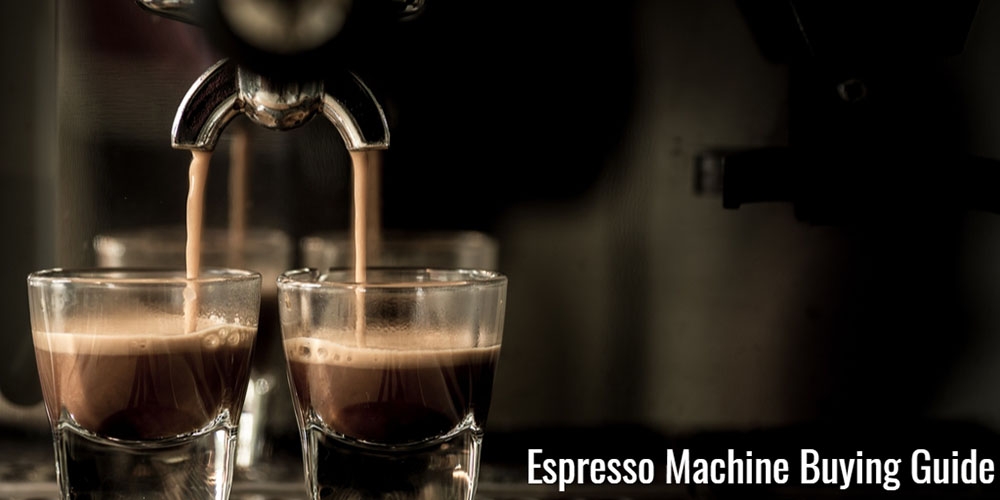
Espresso Machine Buying Guide

Espresso Machine Buying Guide

Espresso Machine Buying Guide

Super-automatic commercial espresso machines are generally used for large-scale commercial purposes, whereas small-scale businesses like small cafe tend to use semi-automatics or fully automatics. A few guidelines for buying one are as follows:

Choosing the Type of Espresso Machine

Conventional coffee machines can be reliable, require a lower initial investment, often need only in-house maintenance, and are perceived as the traditional way of
preparing espresso. However, these require substantial staff training. Super-automatic machines are easy to operate and require less staff training. They also reduce product cost by 20 to 25 %. On the negative side, most super-automatic machines require have a higher maintenance cost, grind adjustment, are more expensive to purchase, and require a trained technician for maintenance.

There are several different definitions of machines expresso; they generally fit into three categories.

  1. The manual espresso machine needs the full participation of user; the user adds water and coffee grinds and maintains control over the beverage until it is completely brewed.
  2. The semi-automatic espresso machine is a combination of user and machine wherein the user starts the machine, it takes over to brew the coffee, and the user turns the espresso machine off.
  3. The Fully automatic espresso machines This type of machine goes through the entire brewing process from start to finish. Finding the perfect home espresso machine is as easy as visiting your local commercial hospitality retailer. There, you will find different machines that differ in components, colour, and price. Online shopping can also be a great idea for finding that commercial espresso machine that works best for your space restrictions and lifestyle. You can also find consumer reports that can alert you to brands that have performed well in the marketplace.

Now, if you want to make sure that you get the top of the line, cream of the crop expresso machine, you’re going to want to look at some of the features. However, if you’re just looking for a basic, back-to-basics expresso machine for your everyday coffee needs, there are many choices out there.

Finding that perfect espresso coffee machine means determining what level of convenience works best for you. How much you want to be part of the espresso making process will determine the right espresso coffee machine for you. Some of the more complex coffee machines can be pricey. You can limit your research guidelines depending on the buyer’s space considerations & budget.

The Internet can be a reliable source for research purposes. Consumer sites can lead you in the right direction to choosing the perfect expresso machine as far as brand popularity and quality. Shopping around at your local stores will also give you an idea of what models are selling and the prices you should expect to pay.

Choosing a Dealer
It is important to gather information regarding the dealer’s distribution network. In addition, the service dealer should be available 24/7. The sale of the machine should include professional installation; parts warranty; labour warranty (if possible), and a 24-hour callout during the warranty.

Federal Hospitality Equipment (F.E.D) does have a collection of Espresso Machine, please visit to our showroom or call us: 1300 659 409 and explore all the features and get it in a competitive price.

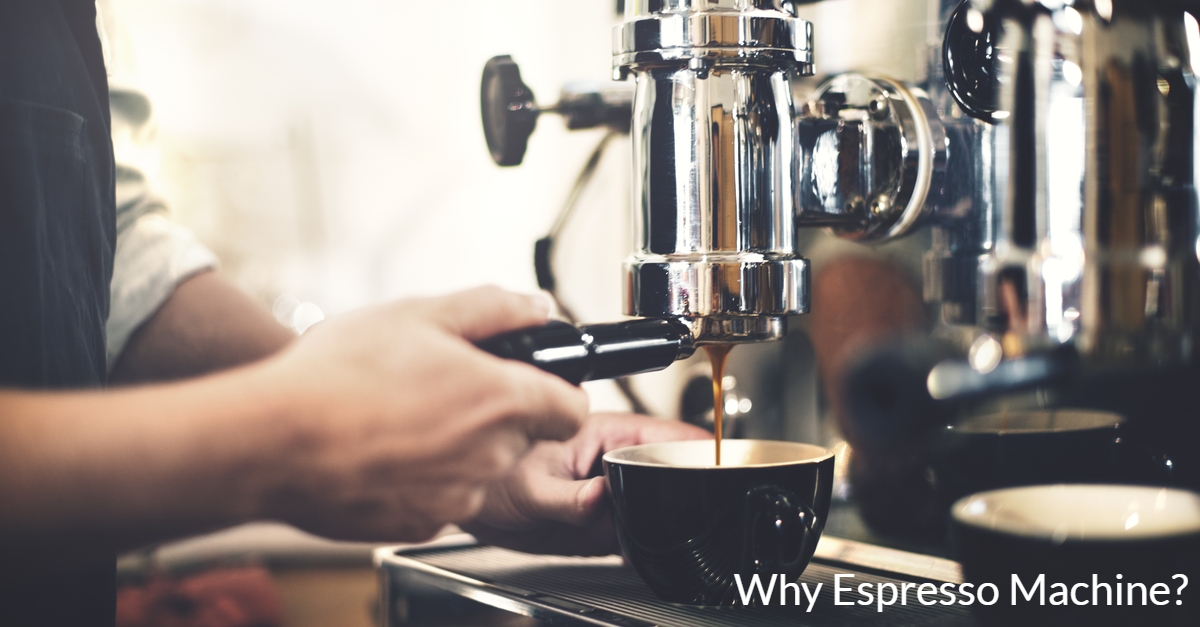
Why Espresso Machine?

why espresso machine for catering business

First of all, what is this popular beverage called espresso? The word espresso is derived from the Italian word meaning express as because espresso is ordered by and delivered quickly to the customer. Best espresso must taste sweet with a strong aroma whose flavor is like a freshly ground coffee.

The wonders of modern science have made it possible for people to make their espresso using coffee espresso machines at home – instead of having to just visit commercial coffee houses for it. Before, coffee houses have to employ professional baristas to brew each cup of coffee for their customers. Now, people can just buy a commercial espresso machine to enjoy their coffee at their convenience.

How does one select the best espresso coffee machine for their purposes? Ideally, consumers should test-run each espresso machine and judge each of the different devices based on the coffee taste, build quality, features, and ease of use. However, since this is not practical, consumers can only rely on testimonials from their friends or turn to the reviews published by popular coffee aficionado magazines. They can also go to the stores and window-shop, asking pertinent questions from salespeople to get the best buy.

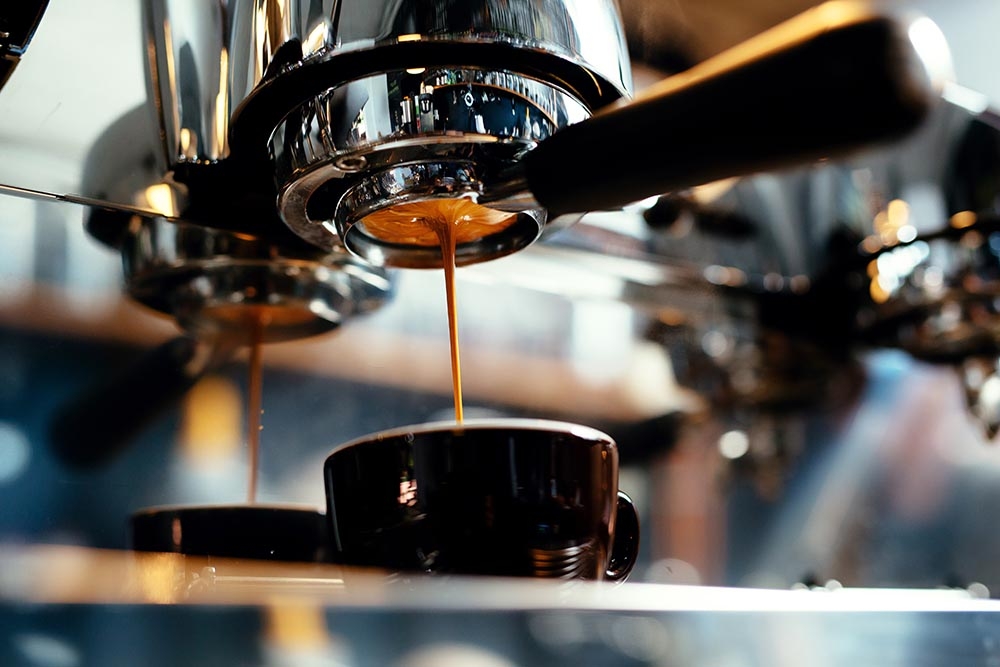
So how does an espresso coffee maker work? An espresso machine shoots out water that is 90 degrees Centigrade hot or at a temperature of 195 degrees using 9 bar of pressure into a puck of freshly ground coffee. The oils in the finely ground coffee are thus extracted and emulsified to create that rich, nearly syrupy liquid.

A machine can ideally churn out a double shot of espresso within 25 to 30 seconds from when its pump is initially switched on. The amount of time necessary can be adjusted by putting in the coffee that is either of a finer or coarser blend. Or you can always change the tamping pressure.

Individual espresso machines are combination devices that rely on a steam wand to create milk-based espresso beverages like the cappuccino and latte. The machine brews and then froths milk to produce these drinks.

There are various kinds of espresso coffee machines, which include the pump-driven machine, piston-driven machine, steam espresso machine, stovetop machine, automatic espresso maker and lastly the super automatic espresso machine.

The key to a good espresso is using an excellent espresso blend. Coffees must be specially blended to produce the smoothness, aromatic and sweetness inherent in a good espresso. However, the blend must be freshly ground and brewed within four days of roasting.

Another element of making a good espresso is that the espresso must be roasted light so that its aroma will not be lost. Darkly-roasted espresso produces a bitter liquid that will taste like charcoal. You must filter water used for brewing since if the water tastes weird, it can then affect the outcome of brewing. Make sure that the espresso machine you selected can maintain water temperature between 92 to 96 degrees Centigrade to assure a consistent espresso.

F.E.D is the largest distributor of commercial coffee and Expresso Machines in Australia and also commercial coffee machines are available in New Zealand, So just visit our website to browse the extensive range of trusted brands commercial espresso and coffee machines for your business

The History of the Espresso Machine and Why Bezzera is Your Best Choice

Why Choosing Bezzera Espresso Machine

Here at Federal Hospitality Equipment we understand the importance of coffee to your morning, as crafting the ideal coffee is a good determining factor in starting off your day right. Through the variety of brands we sell here at FED we cannot recommend top quality seller – Bezzera, enough. In fact, we are so confident in the exceptional quality of Bezzera that we can tell you, here and now, our Sydney office utilises Bezzera machines, to craft even our morning coffee/espresso.

Bezzera machines acquire the latest in barista machinery and coffee making, straight form the heart of Italy. Bezzera machines have acted as a workhorse for the Australian marketplace for years.                                                                     

Let’s face facts - Aussies love their coffee, they need their coffee. We have gradually developed into a coffee-loving culture, with the hot beverage becoming a significant staple of our everyday lives. We now see an increasing quantity of cafes and baristas pop up in our local areas, and there’s a reason for that, and none of these cafes trust any brand more than Bezzera.

But what is Bezzera really? How did this brand become so popular and dominant in the market? What’s the history behind it?

For starters we need to head back in time, to the inception of what we love. It all started during the early Italian industrial evolution, where workers were seen to work more efficiently and productively after coffee breaks, however, actual coffee production during this period took an unnecessarily lengthy amount of time – time that could be better utilised.

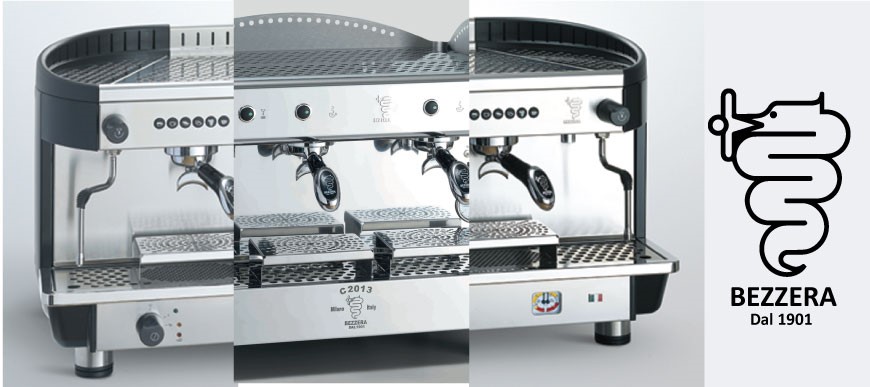
Enter Milanese man - Luigi Bezzera - who resolved this slow production by proactively inventing and developing the Espresso process in 1901 with the word’s first single-serving espresso machine. He utilised the correct temperature and pressure needed to extract the aromatic oils, resulting in the flavoursome espresso coffee we all love todaBezzera Logoy.

The company, and Bezzera himself, consistently improved coffee production by updating the technology and practicality of their machines and appliances. The Bezzera family is now a fourth generation family business, still refining and perfecting their renowned and prestigious coffee and espresso makers.

Modern day transformations in technology and innovation has not altered Bezzera’s ethos on coffee production.

Many other manufacturers such as Saeco, Faema, Boema, Nuova Simoni, Rancilio, La Pavoni, Expobar, Unic, Grimac, ECM, San Marino, Brasilia, and Wega have utilised Luigi’s invention; but Bezzera still remains the machine of choice. Bezzera’s volumetric espresso machines have always been known in the industry as the Mercedes or BMW, due to their design, reliability and the consistency in their steam pressure. This results in an excellent cup of espresso every time.

At Federal Hospitality Equipment we sell a range of Bezzera machines, both traditional and recent additions to their exclusive line. All of our Bezzera products are advertised at competitive prices and constructed from quality, durable material – shipping in straight from the heart of coffee making – Italy.

We also sell a variety of commercial coffee machines and appliances including coffee grinders, coffee tampers, milk jugs/rinsers and cafe accessories.

You can browse Bezzera’s range on our website here...

Get to know your Coffee Grinder:


Commercial Coffee Grinder  


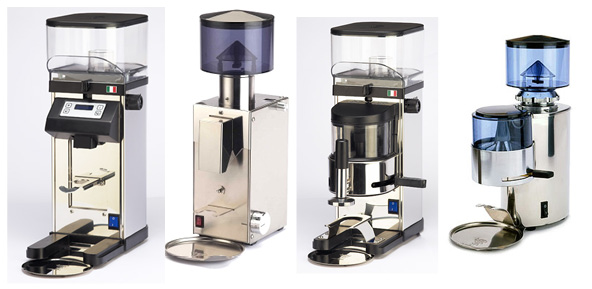
The two types that are commonly found are the Doser and Doserless variety. Which includes our exclusive Bezzera Commercial Coffee Grinders 


So how do you know which will coffee grinder will suite you?


A Commercial Doser Coffee Grinder works by grinding the beautiful roasted coffee beans which it then stores in a second chamber.

A Doser Coffee Grinder chamber is divided into pie shaped segments that rotate with the pull of a lever to usually deliver around 7 grams of ground coffee. With each rotation a new section will move into the second chamber and with a click of the lever deliver a pre-measured amount of ground coffee into the group head.

This type of grinder is commonly found in commercial cafes. For a Doser Coffe Grinder to work at its best the second chamber must have at least one or two of the segments in the second chamber filled with ground coffee beans. If the Doser Coffe Grinder used to make one espresso than the left over beans in this chamber will go stale. A trick to stop this is to only grind enough coffee beans into the second chamber for the shots you are going to serve.

One of the benefits of a Doser Coffe Grinder is that it delivers quick pre-measured dosage of espresso goodness, this makes the Doser Coffee Grinder best suited for any café or restaurant with a high demand for Espresso Coffee.

If you have restaurant were the demand may be less than Doserless Coffe Grinder might be a better option. In a Doserless Coffe Grinder the roasted beans are ground and exit the grinder directly into the group. It is up to the user to decide how much ground coffee they need for any particular order.

This may lead to overfilling of the group and takes some practice to get it right.

Each type of Commercial Coffee Grinders have their benefits and it will always depend on you to decide which of them best suite your needs. For more information on our Commercial Espresso Range or to see these units in action visit one of our showrooms.

How to Make a Beautiful Espresso with Bezzera

how-to-make-a-beautiful-espresso-with-bezzera

How to make a beautiful Espresso with Bezzera

To make a beautiful espresso you require three key pillars.

Firstly you need premium quality coffee beans, secondly a trained barista and last but not least a quality commercial espresso machine.

Luckily at Federal we can help you on two of these fronts but sadly one of them isn't a trained barista... …better luck next time.

But none the less we can assist you on your journey for the perfect cup of espresso. How? you ask, by providing you with a range of premium quality coffee beans and high quality espresso coffee machines to match.

This range will include the beautifully designed and made Bezzera Italian espresso machines.

Why Choose Bezzera?

Many other manufacturers such as Saeco, Faema, Boema, Nuova Simonell, Rancilio, La Pavoni, Expobar, Unic, Grimac, ECM, San Marino, Brasilia and Wega have utilised Luigi’s invention, but Bezzera still remains the machine of choice. Bezzera’s espresso machines have always been known in the industry as the Mercedes or BMW, due to their design, reliability and the consistency in their steam pressure which results in the producing of an excellent cup of espresso every time.

Here are some key points to note about Bezzera:

One of the key factors on the way to that perfect cup of coffee is the consistency of the pressure, developed when extracting the coffee. Too little resistance in the coffee handle does not allow for sufficient pressure that results in an under extracted coffee: weak with little crema. Too much resistance on the other hand will cause an over extraction, bitter coffee and with little crema. Also you should note that they are:

o Inventor of Espresso machines in 1901
Family owned by the Bezzera family with a continual focus on producing machines that live up to the family
honour and reputation.
o Have been perfecting espresso machines and their manufacture for over 100 years
High degree of temperature stability
o Superior steam availability & thermal stability due to double probe (Low/Hi) boiler system to control precisely the ratio of steam and water – unique to Bezzera machines
Produced with high quality components with all panels being top grade stainless steel

Bezzera has over 105 years experience in the design and manufacture of coffee machines which has lead to renown reliability, quality and performance.

To find out more about how we can assist you in achieving that perfect cup of espresso, please visit our site today.
Alternatively visit your nearest Showroom for a demonstration.

ShareThis Copy and Paste