
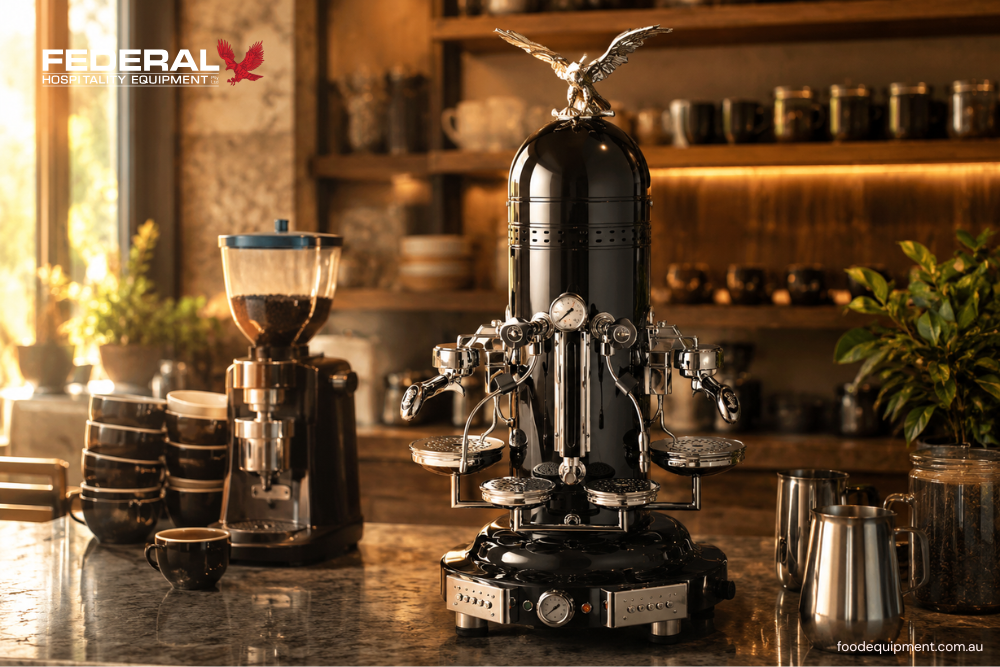
Commercial coffee machines are an essential operational asset for cafés, restaurants, hotels, bakeries, and hospitality venues across Australia. Whether you operate a high-volume café in Melbourne, a speciality coffee bar in Sydney, or a regional takeaway venue in Queensland, reliable espresso equipment directly affects beverage consistency, service efficiency, and customer retention.
Operational disturbances as a result of espresso machine problems can lead to slower service, uneven brew quality, and needless repair costs. Most issues are preventable through preventative maintenance, regular cleaning, and early troubleshooting. Understanding how professional brewing systems operate allows hospitality businesses to reduce downtime, maintain beverage quality, and extend equipment lifespan.
Key Takeaways
| Common Problem | Primary Cause | Recommended Solution |
|---|---|---|
| Uneven heating | Scale accumulation or defective heating components | Frequent descaling and boiler checks |
| Weak espresso extraction | Incorrect grind size or blocked group head | Clean components and recalibrate the grinder |
| Low steam pressure | Blocked steam wand or low boiler pressure | Clean steam tips and inspect pressure levels |
1. Why Is My Commercial Coffee Machine Not Heating Properly?
Commercial coffee machines for sale depend on static brewing temperatures to create balanced espresso. Low temperatures produce weak, under-extracted brew, while high temperatures lead to burnt or bitter flavours. Faulty thermostats, damaged heating elements, mineral scale accumulation, or unstable boiler pressure cause heating issues. Most professional brewing systems should maintain boiler pressure between 1.0 and 1.5 bars during operation.
The boiler pressure gauge should be inspected first. If pressure remains consistently below the recommended range, inspect the heating system and boiler components. The group head, the part of the machine where hot water meets the beans, should also be cleaned regularly because scale and coffee residue reduce heat transfer efficiency.
Immediate Actions
Use a commercial descaling solution to remove mineral deposits from the boiler and water lines. Replace water filters if they are overdue for maintenance. Inspect visible pressure gauges for unstable readings.
Long-Term Maintenance
Install a water filtration system designed for hospitality venues. Schedule professional boiler servicing every 6 to 12 months, especially in high-volume Australian cafés that operate continuously throughout the day.
2. Why Is My Espresso Tasting Weak or Watery?
Weak espresso extraction is one of the most common troubleshooting issues in commercial equipment sourced from the top commercial coffee machine suppliers and manufacturers. Extraction quality directly affects flavour, aroma, and crema, the golden foam layer on espresso.
Common causes include incorrect grind size, worn grinder burrs, blocked filters, inconsistent dosing, or dirty shower screens.
The portafilter, the handled basket that holds compressed brew grounds, and the group head should be cleaned multiple times daily using a specialised espresso machine cleaner and a group head brush.
If water flows too quickly through the compressed bean grounds, extraction becomes weak and watery. Most espresso machines operate best when extraction occurs within approximately 25 to 30 seconds.
| Espresso Problem | Possible Cause | Recommended Fix |
|---|---|---|
| Watery espresso | Coarse grind setting | Adjust the grinder finer |
| Bitter espresso | Over-extraction | Reduce extraction time |
| No crema | Old coffee beans | Use fresher beans |
| Slow extraction | Blocked basket | Clean the portafilter basket |
| Uneven extraction | Dirty shower screen | Replace or clean the screen |
Immediate Actions
Clean the shower screen, flush the group head, and recalibrate the grinder. Use fresh coffee beans and ensure consistent tamping pressure.
Long-Term Maintenance
Replace grinder burrs every 6 to 12 months in high-volume cafés. Schedule preventative maintenance inspections to monitor pump pressure and extraction consistency after you buy commercial coffee machines online.
3. Why Is the Steam Wand Producing Weak Pressure?
Strong steam pressure is essential for milk-based drinks such as flat whites, cappuccinos, and lattes, which dominate Australian café menus.
Steam performance problems are commonly caused by dried milk residue blocking steam holes. Steam wands should be purged and wiped after every use to prevent hygiene-related blockages.
Commercial steam systems also lose performance when boiler pressure falls below recommended operating levels. Most machines require stable steam pressure to texture milk correctly.
Immediate Actions
Remove and soak the steam tip using a commercial milk residue cleaner. Purge the steam wand thoroughly before and after every use. Inspect boiler pressure gauges for readings below operational recommendations. Low pressure typically indicates scale accumulation or valve-related issues. For further information, visit the leading commercial coffee machine dealers and distributors in your area.
Long-Term Maintenance
Descalcify boilers regularly to prevent internal mineral build-up. Install water filtration systems in areas with hard water, particularly in parts of Western and South Australia.
4. Why Is Water Leaking from My Espresso Machine?
Leaks are among the most common issues with these commercial machines. Even minor leaks can damage cabinetry, electrical systems, and flooring in hospitality environments. Water leaks are caused by worn seals, cracked hoses, damaged fittings, blocked drainage systems, or deteriorated group gaskets.
If water escapes around the portafilter during extraction, the group gasket should be replaced immediately. High-volume cafés often replace group gaskets every 6 to 12 months.
Immediate Actions
Inspect external hoses and tighten loose fittings. Clean drainage trays and remove blockages from waste outlets.
Long-Term Maintenance
Schedule regular gasket inspections and replace worn seals before failure occurs. Preventative upkeep of commercial coffee machines in Perth and Melbourne substantially reduces the risk of inner water damage.
5. Why Is My Coffee Grinder Affecting Espresso Quality?
Commercial grinders directly affect extraction consistency. Many coffee quality problems originate from grinder performance rather than the espresso machine itself.
Dull burrs produce uneven coffee particles, leading to inconsistent extraction. Excessive heat inside the grinder also affects flavour quality.
| Grinder Issue | Effect on Coffee |
|---|---|
| Dull burrs | Uneven extraction |
| Dirty grinder chamber | Bitter flavour |
| Incorrect grind setting | Weak or slow espresso |
| Overheating grinder | Burnt taste |
| Inconsistent dosing | Variable coffee quality |
Immediate Actions
Remove retained coffee grounds from the grinder chamber and recalibrate grind settings throughout the day if humidity changes.
Long-Term Maintenance
Replace grinder burrs of commercial coffee machines regularly and service dosing systems to maintain consistency. High-volume cafés using grinders from top manufacturers should closely monitor burr wear.
Daily Maintenance Checklist for Commercial Coffee Equipment
| Daily Task | Purpose |
|---|---|
| Clean group heads | Maintain extraction consistency |
| Backflush espresso machine | Remove coffee oil residue |
| Purge steam wands | Prevent milk blockage |
| Empty drip trays | Prevent overflow |
| Clean the grinder chamber | Maintain flavour quality |
| Check boiler pressure | Ensure stable operation |
| Replace water filters if required | Reduce scale accumulation |
Conclusion
Commercial coffee machines require consistent preventative maintenance to deliver reliable performance in Australian hospitality venues. Heating instability, weak extraction, steam pressure problems, grinder inconsistencies, and water leaks are among the most common operational issues affecting professional brewing systems.
Most troubleshooting problems can be resolved through scheduled cleaning, water filtration, descaling, and routine servicing. Businesses that proactively maintain their industrial espresso equipment reduce downtime, improve beverage consistency, and protect their long-term investment in equipment.
FAQs: Commercial Coffee Machine Problems
1. Why is my commercial coffee machine not heating properly?
Heating issues are often caused by scale build-up, faulty thermostats, damaged heating elements, or unstable boiler pressure. Checking boiler pressure and descaling the machine can help resolve the issue.
2. Why does my espresso taste weak or watery?
Weak espresso usually comes from coarse grind settings, blocked group heads, dirty shower screens, inconsistent dosing, or old coffee beans. Cleaning the group head and adjusting the grinder can improve extraction.
3. Why is my steam wand pressure low?
Low steam pressure is commonly caused by blocked steam tips, dried milk residue, scale build-up, or low boiler pressure. Clean the steam tip and check pressure levels immediately.
4. Why is my espresso machine leaking water?
Leaks may be caused by worn seals, cracked hoses, loose fittings, blocked drainage systems, or damaged group gaskets. Inspect visible parts and replace worn gaskets promptly.
5. Can a coffee grinder affect espresso quality?
Yes. Dull burrs, dirty grinder chambers, incorrect grind settings, overheating, and inconsistent dosing can all affect espresso flavour, crema, and extraction consistency.
6. How often should commercial coffee machines be serviced?
High-volume commercial coffee machines should usually be professionally serviced every 6 to 12 months, with daily cleaning and regular water filter replacement to reduce scale and breakdown risks.