Choosing dough-making equipment is not just about buying a mixer. For a bakery, café, pizza outlet or wholesale production site, the right machine affects dough consistency, production speed, labour costs, food safety and long-term profitability.
Whether you run an artisan sourdough bakery in Melbourne, a pizza shop in Sydney or a wholesale bread facility in Brisbane, this guide will help you compare commercial mixers and dough-processing equipment with confidence.
Quick Answer: What Dough-Making Equipment Should You Choose?
The best equipment depends on what you make most often. Bread and pizza businesses usually benefit from spiral mixers because they develop gluten efficiently. Cake, pastry and filling production often suits planetary mixers because they are more versatile for lighter mixtures.
| Bakery Type | Best Equipment Choice | Why It Works |
|---|---|---|
| Artisan bread bakery | Spiral mixer | Supports strong gluten development and consistent dough texture. |
| Pizza shop | Spiral mixer and pizza dough rollers | Handles firm dough and improves shaping speed. |
| Café bakery | Planetary mixer | Useful for cakes, batters, creams and smaller batch production. |
| Wholesale bakery | Large spiral or horizontal mixer | Designed for higher-volume, repeatable production. |
Why the Right Dough Equipment Matters
Commercial bakery equipment has a direct impact on product quality and daily workflow. A well-matched mixer produces more consistent dough, reduces manual handling and helps prevent avoidable waste.
When dough is mixed evenly using dough-making equipment , ingredients are distributed more accurately. This improves texture, appearance and baking results across every batch.
| Business Benefit | Operational Impact |
|---|---|
| Consistent dough quality | More reliable texture, rise and finished product appearance. |
| Lower labour demand | Less manual mixing, kneading and dough handling. |
| Faster production cycles | Higher daily output without overloading staff. |
| Reduced ingredient waste | Fewer rejected batches caused by uneven mixing. |
| Better compliance support | Easier cleaning, sanitising and maintenance routines. |
| Improved long-term ROI | Lower downtime and fewer early equipment replacements. |
Tip: Do not judge bakery equipment by purchase price alone. A cheaper machine can become expensive if it slows production, needs frequent repairs or cannot support future growth.
Start With the Products You Make Most Often
Different doughs need different mixing actions. Bread and pizza dough need strong gluten development, while cakes and batters need gentler mixing. High-hydration doughs also require equipment that can handle wetter, stickier mixtures without overheating the dough.
| Product Type | Dough Characteristics | Recommended Equipment |
|---|---|---|
| Artisan bread | High hydration, long fermentation and strong gluten structure. | Spiral mixer |
| Sandwich bread | Medium-volume production with repeatable batch quality. | Spiral mixer |
| Pizza dough | Firm dough requiring elasticity and gluten strength. | Spiral mixer |
| Pastries | Lower-resistance mixtures and laminated dough preparation. | Planetary mixer |
| Cakes and batters | Light mixing with careful ingredient incorporation. | Planetary mixer |
| Speciality products | Variable dough, batter or filling requirements. | Multi-purpose systems |
Choose Capacity Based on Growth, Not Just Today’s Orders
One common mistake is buying equipment that only matches current demand. If your bakery grows, a small mixer can quickly become a bottleneck. Choosing scalable appliances from top dough-making equipment suppliers and manufacturers can reduce the risk of replacing equipment too soon.
| Bakery Type | Typical Capacity Requirement | Buying Tip |
|---|---|---|
| Boutique café bakery | 10–20 kg per batch | Choose compact equipment with enough flexibility for daily menu changes. |
| Retail bakery | 30–80 kg per batch | Allow spare capacity for weekends, seasonal demand and catering orders. |
| Wholesale bakery | 200–500 kg per shift | Prioritise durability, service access and consistent batch output. |
Tip: If your mixer regularly runs at full capacity, it may wear faster and slow down production. Leave room for peak periods.
Check Your Available Space Before Ordering
Before buying commercial bakery equipment, measure more than the machine footprint. You also need space for operators, cleaning, maintenance and safe movement around the equipment.
| Measurement Area | What to Confirm |
|---|---|
| Equipment footprint | Check the manufacturer’s width, depth and height dimensions. |
| Guard swing zone | Allow enough space for safety guards to open fully. |
| Operator clearance | Make sure staff can load, operate and clean the machine safely. |
| Service access | Leave rear and side access for maintenance and repairs. |
| Delivery access | Measure doorways, corridors and transport paths before delivery. |
Plan Equipment Placement Around Bakery Workflow
Good workflow reduces double handling and helps staff work faster. Ideally, ingredients should move through the bakery in a logical sequence:
Storage → Mixing → Proofing → Baking → Packaging
Placing mixers, dough sheeters and preparation benches in the right order can shorten production time and make cleaning easier.
Tip: Walk through your current production process before buying new equipment. Mark where staff lose time, lift heavy loads or move back and forth unnecessarily.
Spiral Mixer vs Planetary Mixer: Which One Is Better?
Both machines are useful, but they are designed for different bakery needs.
How a Spiral Mixer Works
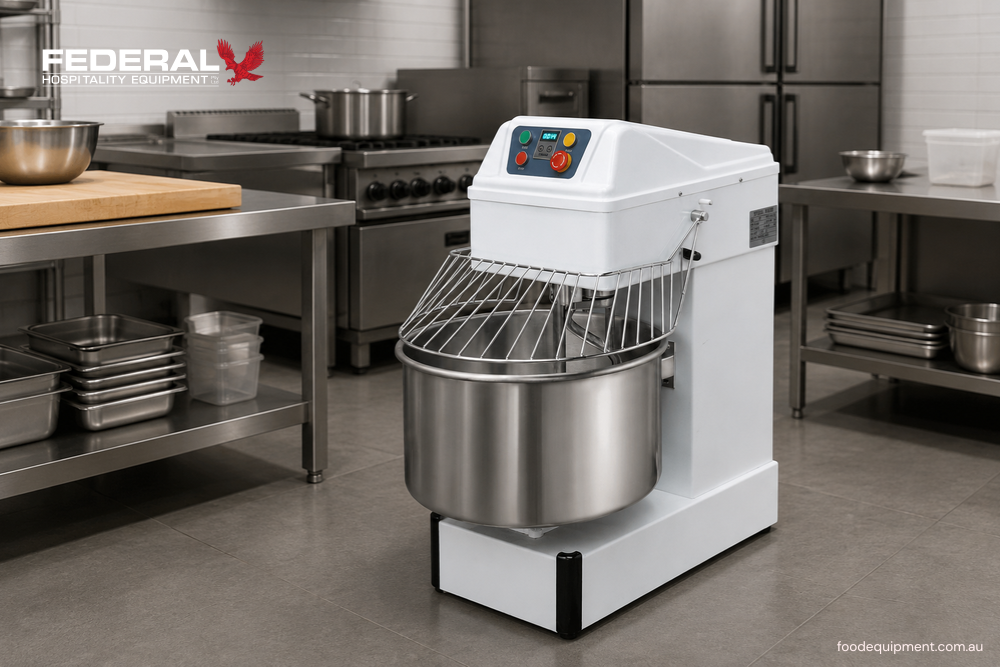
A spiral mixer uses a rotating bowl and spiral-shaped hook to develop dough efficiently. It produces less frictional heat, which helps protect fermentation quality and supports strong gluten development.
Spiral mixers are best for:
- Artisan bread
- Pizza dough
- Bread rolls
- High-hydration doughs
How a Planetary Mixer Works
A planetary mixer uses an attachment that rotates around a stationary bowl. This makes it more versatile for lighter mixtures and varied bakery tasks. For tailored advice, speak with best dough-making equipment dealers and distributors in your area.
Planetary mixers are commonly used for:
- Cakes
- Batters
- Creams
- Fillings
- Pastries
| Feature | Spiral Mixer | Planetary Mixer |
|---|---|---|
| Bread dough | Excellent | Good |
| Pizza dough | Excellent | Moderate |
| High-hydration dough | Excellent | Moderate |
| Cakes and batters | Limited | Excellent |
| Product versatility | Moderate | High |
| Production speed | High | Moderate |
| Initial investment | Higher | Lower |
When Should You Consider a Horizontal Mixer?
Horizontal mixers are designed for industrial-scale production. They are suitable for wholesale bakeries producing large volumes of dough every day.
These machines can improve batch consistency and output, but they may require more floor space, stronger electrical infrastructure and planned maintenance access.
Check Electrical Requirements Before You Buy
Electrical compatibility should be confirmed before you buy dough-making equipment online. Smaller mixers may run on single-phase power, while larger commercial systems often need 3-phase 415V power.
Before installation, verify:
- Available electrical supply
- Switchboard capacity
- Circuit protection requirements
- Installation costs
- Compliance with AS/NZS 3000 wiring standards
A licensed Australian electrician should inspect the site before setup. This can prevent delays, unexpected costs and safety issues.
Daily and Weekly Maintenance Checklist
Regular maintenance keeps equipment safe, hygienic and reliable. It also helps extend the life of mixers, dough sheeters and pizza dough rollers.
| Task | Frequency | Why It Matters |
|---|---|---|
| Clean mixing bowl | Daily | Prevents residue build-up and contamination risk. |
| Sanitise attachments | Daily | Supports food safety and product hygiene. |
| Inspect safety guards | Daily | Helps protect operators during use. |
| Check drive systems | Weekly | Identifies early signs of mechanical wear. |
| Inspect belts and bearings | Weekly | Reduces the risk of unexpected breakdowns. |
| Lubricate approved components | Monthly | Supports smooth operation and equipment longevity. |
Tip: Keep a simple maintenance log. It helps staff stay accountable and gives technicians useful information if repairs are needed.
Buyer’s Checklist for Australian Bakeries
| Question | Why It Matters |
|---|---|
| What products will we make most often? | Product type determines the best mixer style. |
| What batch size do we need now and in 12–24 months? | Future-proofing avoids early replacement. |
| Do we have enough floor space and service access? | Poor placement can slow production and create safety risks. |
| Is our electrical supply suitable? | Larger machines may need 3-phase 415V power. |
| How easy is the machine to clean? | Cleaning affects food safety and labour time. |
| Are spare parts and servicing available locally? | Local support reduces downtime. |
Common Mistakes to Avoid
- Buying only on price instead of lifetime value.
- Choosing a mixer that is too small for future demand.
- Ignoring electrical requirements until delivery day.
- Forgetting to measure guard swing and service access areas.
- Using one type of mixer for every product without checking dough requirements.
- Skipping maintenance until the machine breaks down.
FAQs About Dough-Making Equipment
What is the best mixer for bread dough?
A spiral mixer is usually the best choice for bread dough because it develops gluten efficiently and helps maintain dough quality during mixing.
Can I use a planetary mixer for pizza dough?
A planetary mixer can handle some pizza dough, but a spiral mixer is generally better for regular pizza production because it is designed for stronger dough development.
How much mixer capacity does a small bakery need?
A boutique café bakery may need around 10–20 kg per batch, while a larger retail bakery may need 30–80 kg per batch depending on daily production volume.
Should I buy a bigger mixer than I currently need?
In many cases, yes. Buying with future growth in mind can prevent production bottlenecks and reduce the need for early equipment replacement.
Do commercial bakery mixers need 3-phase power?
Some larger commercial mixers require 3-phase 415V power. Always confirm electrical requirements before purchasing and ask a licensed electrician to inspect your site.
Conclusion
Choosing commercial bakery and pizza equipment is a major business decision. The right equipment should match your product range, batch size, available space, electrical supply, maintenance routine and long-term growth plans.
For most Australian bakeries, the best investment is not simply the cheapest machine. It is the equipment that delivers consistent dough quality, supports efficient workflow, meets safety and compliance requirements, and continues to perform as production demand grows.