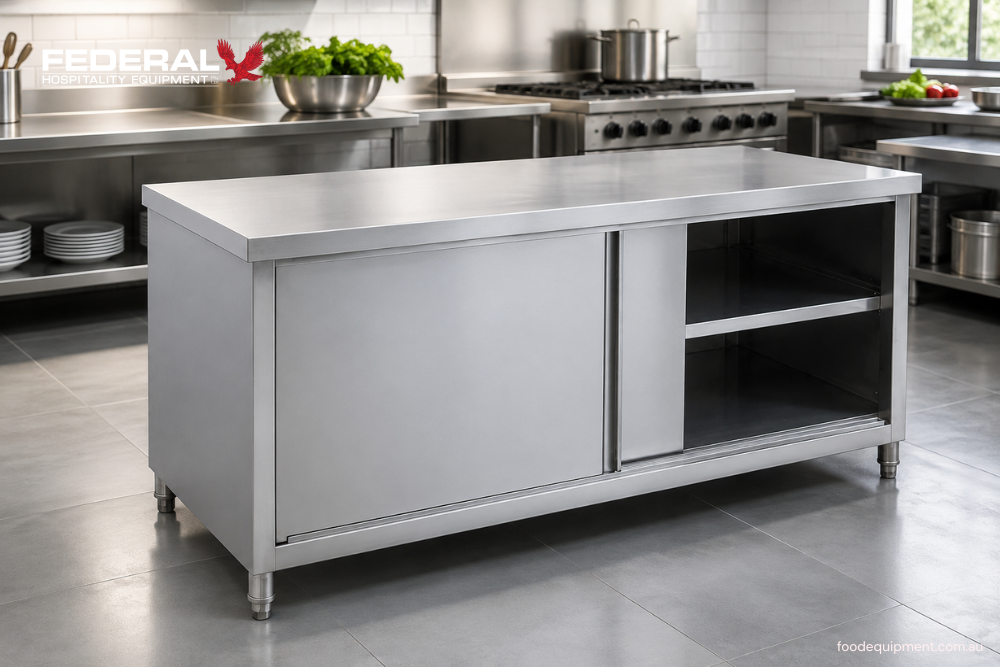

A commercial dishwasher bench is more than just a stainless steel workspace—it’s the backbone of your dishwashing station. In fast-paced Australian kitchens, from Sydney cafés to Melbourne restaurants and regional catering setups, the right dishwasher bench can dramatically improve workflow, hygiene, and compliance.
This content breaks down the best features to consider when choosing a commercial plate cleaning bench in Australia, with practical insights, tables, and buying tips to help you make an informed decision.
Top Features to Consider
1. Stainless Steel Grade
The most critical factor is the quality of stainless steel used.
| Steel Grade | Features | Best For |
|---|---|---|
| 304 Grade Stainless Steel | Corrosion-resistant, durable, food-safe | Most commercial kitchens |
| 430 Grade Stainless Steel | Lower cost, less corrosion resistance | Light-duty use |
2. Configuration: Left-Hand vs Right-Hand
Dishwasher benches are available in left- and right-hand configurations, depending on workflow direction.
| Configuration | Ideal For | Workflow Direction |
|---|---|---|
| Left-Hand Bench | Dishwasher on the right | Dirty → Clean (left to right) |
| Right-Hand Bench | Dishwasher on the left | Dirty → Clean (right to left) |
3. Sink Size and Depth
The sink is essential for pre-rinsing and soaking dishes.
| Feature | Ideal Specification |
|---|---|
| Sink Depth | 300mm – 450mm |
| Sink Width | 400mm – 600mm |
| Number of Sinks | Single or double |
Why it matters:
Deeper sinks reduce splashing and accommodate large cookware, such as pots and trays.
4. Drainboard Design
Drainboards help manage wet dishes before and after washing.
Key considerations:
- Ribbed surface for water drainage
- Adequate slope toward the sink
- Sufficient space for stacking dishes
5. Splashback Height
Splashback benches prevent water from damaging walls and surrounding equipment.
| Splashback Height | Application |
|---|---|
| 100mm | Light-duty use |
| 150mm – 200mm | Standard commercial kitchens |
| 300mm+ | Heavy-duty or high-splash areas |
6. Undershelf Storage
An undershelf provides valuable storage for:
- Cleaning chemicals
- Dish racks
- Kitchen tools
| Type | Benefit |
|---|---|
| Fixed Undershelf | Strong and durable |
| Adjustable Undershelf | Flexible storage |
It keeps your workspace clutter-free and organised.
7. Compatibility with Commercial Dishwashers
Your product, sourced from the leading dishwasher bench suppliers and manufacturers, must integrate seamlessly with your machine.
Check for:
- Correct height alignment
- Inlet/outlet space
- Rack size compatibility
| Dishwasher Type | Bench Compatibility |
|---|---|
| Undercounter Variant | Compact benches |
| Pass-Through Variant | Larger, dual-sided benches |
8. Load Capacity and Strength
Commercial kitchens handle heavy loads daily.
| Feature | Recommended Spec |
|---|---|
| Bench Thickness | 1.0mm – 1.2mm steel |
| Weight Capacity | 150kg+ |
Why it matters: Prevents bending, warping, and long-term damage.
9. Adjustable Legs
Uneven floors are common in older Australian buildings.
Look for:
- Adjustable stainless steel legs
- Non-slip feet
Benefit: Ensures stability and proper alignment of the drainage system.
10. Hygiene and Easy Cleaning
Hygiene is critical for compliance with Australian food safety standards.
Key features:
- Rounded corners (no dirt traps)
- Smooth welds
- Easy-to-clean surfaces
11. Plumbing and Tap Compatibility
Ensure the product supports your plumbing setup when you buy dishwasher benches online.
| Feature | Importance |
|---|---|
| Pre-drilled tap holes | Easy installation |
| Waste outlets | Efficient drainage |
| Water connection points | Compatibility with existing systems |
12. Customisation Options
Not all kitchens are the same. Custom commercial benches allow:
- Tailored dimensions
- Additional sinks
- Special drainage systems
Ideal for:
- Unique kitchen layouts
- High-volume operations
- Space-constrained environments
Compliance Requirements in Australia
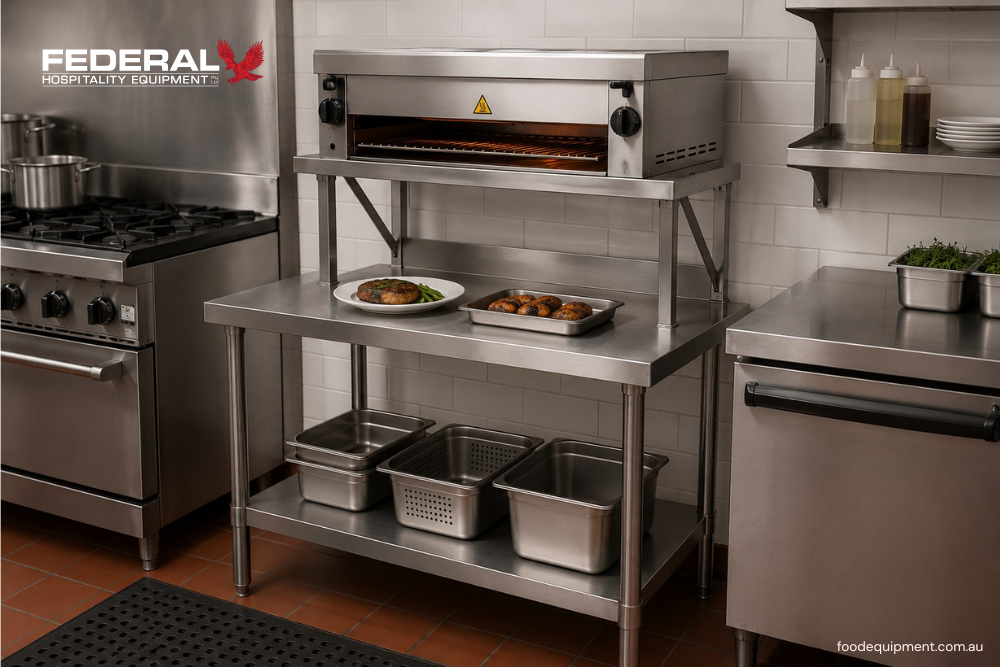
When selecting a product like a dishwasher or a salamander bench, ensure compliance with:
- Food Standards Australia New Zealand (FSANZ) benchmarks
- Local council health regulations
- Workplace safety standards
Key Compliance Factors
| Requirement | Description |
|---|---|
| Food-Grade Material | Stainless steel (preferably 304 grade) |
| Cleanability | Smooth, non-porous surfaces |
| Drainage | Proper water flow and waste disposal |
| Splash Protection | Adequate splashbacks |
Failure to adhere to the instructions can lead to fines or operational shutdowns.
Cost Overview in Australia
Prices differ on the basis of size, material, and features.
| Type | Price Range (AUD) |
|---|---|
| Basic Bench | $500 – $900 |
| Mid-Range Bench | $900 – $1,500 |
| Premium/Custom Bench | $1,500 – $3,000+ |
Common Mistakes to Avoid
Choosing the Wrong Configuration (Left vs Right)
Many buyers overlook the importance of workflow direction when selecting a titular bench.
Why this is a problem:
- Disrupts the natural flow of dirty → clean dishes
- Causes staff to cross paths, increasing the risk of contamination
- Slows down operations during peak hours
What to do instead:
- Map your kitchen workflow before purchasing
- Ensure dishes move in a single, logical direction
- Match the bench configuration with your dishwasher position
Ignoring Compliance Requirements
Failing to meet Australian food safety standards can result in fines or failed inspections.
Why this is a problem:
- Non-compliant materials can harbour bacteria
- Poor drainage or splash protection violates hygiene codes
- Retrofitting later is expensive
What to do instead:
- Choose food-grade stainless steel (304 grade)
- Ensure proper drainage, splashbacks, and cleanable surfaces
- Check local council and FSANZ guidelines before buying
Buying Low-Grade Stainless Steel
Opting for cheaper materials may save money upfront, but costs more in the long run.
Why this is a problem:
- Prone to rust and corrosion
- Shorter lifespan under heavy use
- May not meet hygiene standards
What to do instead:
- Invest in 304-grade stainless steel
- Verify material specifications from the top dishwasher bench dealers and distributors
- Avoid vague product descriptions like “commercial quality” without proof
Underestimating Required Space
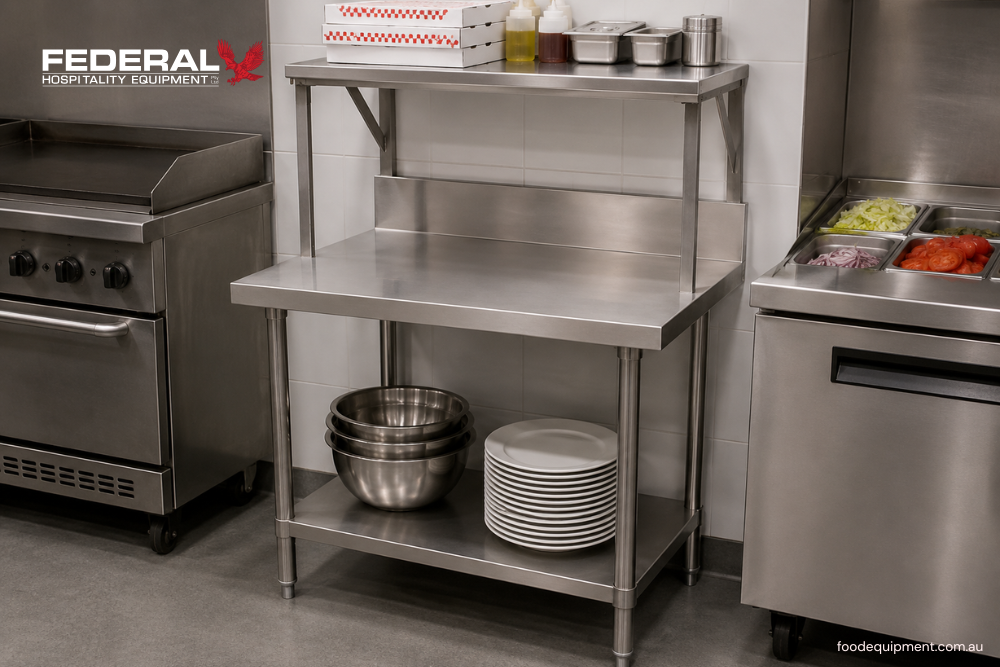
A mobile bench that’s too small—or too large—can disrupt your kitchen layout.
Why this is a problem:
- Limited space creates bottlenecks
- Oversized benches reduce the movement area
- Poor fit affects workflow efficiency
What to do instead:
- Measure your kitchen accurately (width, depth, height)
- Allow space for staff movement and dish racks
- Consider future growth and peak-hour demand
Skipping Professional Installation
DIY installation may seem cost-effective, but it often leads to operational issues.
Why this is a problem:
- Incorrect plumbing connections
- Improper alignment with the dishwasher
- Risk of leaks and drainage problems
What to do instead:
- Hire licensed professionals for installation
- Ensure proper alignment with your dishwasher and plumbing
- Test the setup before full operation
Quick Buying Checklist
Use this checklist before making a purchase:
- 304-grade stainless steel
- Correct left/right configuration
- Adequate sink size and depth
- Integrated drainboards
- Minimum 150mm splashback
- Dishwasher compatibility
- Strong load capacity
- Easy-to-clean design
- Meets Australian compliance standards
Conclusion:
A commercial dishwasher bench is a long-term investment that directly impacts your kitchen's efficiency, hygiene, and compliance. In Australia's competitive food service industry, choosing the right features—from stainless steel grade to ergonomic design—can streamline operations and reduce costs.
Take the time to assess your kitchen layout, workflow, and regulatory requirements before purchasing. Whether you run a busy restaurant in Brisbane or a café in Perth, the right dishwasher bench will keep your operations running smoothly and your customers satisfied.
FAQs: Commercial Dishwasher Benches
1. What is the best stainless steel grade for a commercial dishwasher bench?
304-grade stainless steel is generally the best choice for Australian commercial kitchens because it is durable, corrosion-resistant, food-safe, and suitable for hygiene compliance.
2. Should I choose a left-hand or right-hand dishwasher bench?
The best configuration depends on your kitchen workflow and where your dishwasher is positioned. Choose the setup that allows dishes to move in a clear dirty-to-clean direction without staff crossing paths.
3. What splashback height is recommended for commercial kitchens?
A splashback height of at least 150mm is commonly preferred for commercial kitchens, although high-splash or heavy-duty areas may benefit from 300mm or higher.
4. Why are drainboards important on dishwasher benches?
Drainboards help manage wet dishes before and after washing. They improve workflow, reduce mess, and provide space for stacking dishes safely during busy service periods.
5. Do dishwasher benches need to meet Australian compliance standards?
Yes. Commercial dishwasher benches should support food safety, cleanability, drainage, splash protection, and workplace safety requirements. Local council and FSANZ expectations should always be considered.
6. Is professional installation necessary?
Professional installation is strongly recommended because dishwasher benches often require correct plumbing, drainage alignment, and integration with commercial dishwashers.