Running a successful café in Australia today means delivering speed, consistency, and quality across a diverse menu. From protein smoothies in Sydney’s fitness hubs to iced frappes in Brisbane’s warm climate, beverages are a high-margin category—and the commercial blender sits right at the centre of that opportunity.
But not all blenders are built for café environments. Choosing the wrong unit can slow service, increase maintenance costs, and frustrate staff during peak hours. This guide breaks down exactly what works best for Australian cafés, with practical insights, comparisons, and decision frameworks designed for clarity and proper understanding.
Why Commercial Blenders Matter in Australian Cafés?
Australian café culture is one of the most competitive in the world. Customers expect fast service without compromising on taste or presentation. A reliable commercial blender helps you:
- Maintain consistent texture and flavour
- Reduce prep time during busy service hours
- Expand your menu into high-margin beverages
- Improve workflow efficiency behind the counter
Unlike domestic blenders, commercial blenders are designed for continuous use, higher loads, and tougher ingredients such as ice, frozen fruit, and nuts.
Key Use Cases in Australian Cafés
Understanding how your blender will be used is the first step in choosing the right model.
| Use Case | Typical Requirements | Recommended Blender Type |
|---|---|---|
| Smoothies & Protein Shakes | High speed, ice crushing, consistent blending | High-speed commercial blender |
| Frappes & Iced Coffee | Ice mixing, quick cycles | High-speed with preset functions |
| Sauces & Purees | Precision control, variable speeds | Variable-speed blender |
| Nut Butters & Thick Blends | Strong motor, durable blades | Heavy-duty blender |
| Cocktail Preparation | Ice crushing, quick operation | Bar blender |
In Australia’s warmer regions, such as Queensland and Western Australia, demand for cold beverages is significantly higher, making high-speed blenders for sale with cooling systems especially valuable.
What Works Best: Core Features to Look For
1. Motor Power (The Heart of Performance)
Motor power determines how efficiently your blender handles tough ingredients.
| Power Range | Best For | Suitability for Cafés |
|---|---|---|
| 1000–1200W | Light use | Small cafés, low volume |
| 1200–1800W | Medium use | Standard cafés |
| 1800W+ | Heavy-duty | High-volume cafés |
For most Australian cafés, 1500W–1800W is the sweet spot between performance and energy consumption.
2. Noise Reduction (Critical in Café Settings)
Australian cafés often emphasise ambience. Loud equipment, like commercial coffee and espresso machines, can disrupt the customer experience.
| Feature | Benefit |
|---|---|
| Sound Enclosures | Reduces noise significantly |
| Quiet Motors | Improves customer comfort |
| Anti-vibration Design | Minimises countertop noise |
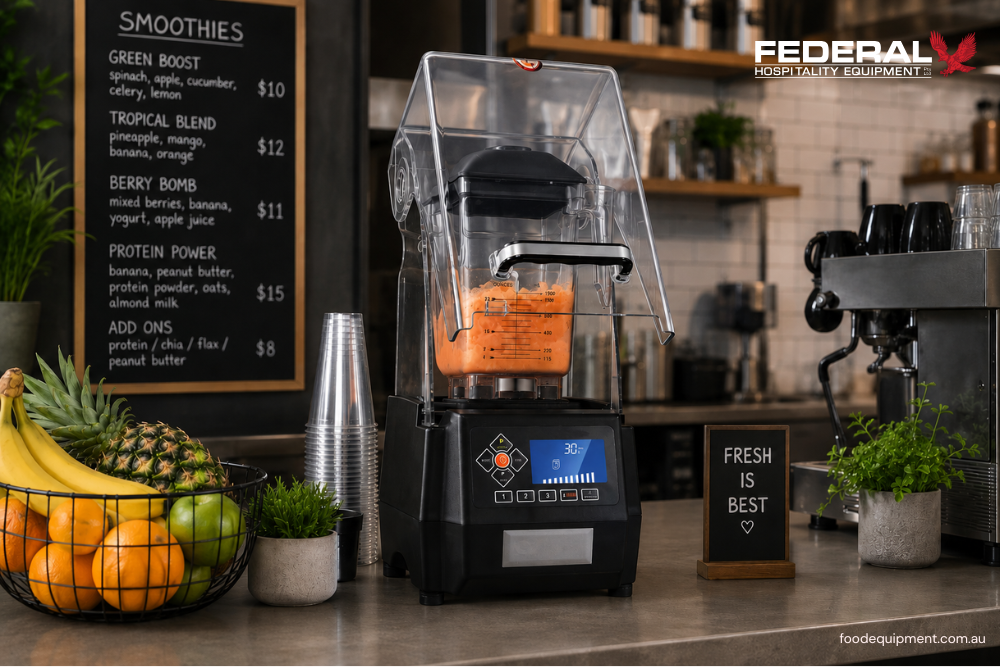
If your café has an open layout, investing in a quiet blender in Australia with a sound shield is highly recommended.
3. Blade Design and Material
Blades impact blending consistency and durability.
| Blade Type | Best For |
|---|---|
| Stainless Steel Multi-Blade | Smoothies, ice crushing |
| Serrated Blades | Tough ingredients |
| Flat Blades | Grinding and dry ingredients |
High-quality stainless steel blades are essential for long-term use in Australian conditions, where frequent ice blending is common.
4. Jar Capacity and Material
Choosing the right jar size affects both efficiency and waste reduction.
| Capacity | Ideal For |
|---|---|
| 1–1.5L | Single servings |
| 1.5–2L | Standard café use |
| 2L+ | High-volume operations |
| Material | Pros | Cons |
|---|---|---|
| Polycarbonate | Lightweight, durable | Can scratch over time |
| Glass | Scratch-resistant | Heavy, breakable |
| Stainless Steel | Durable, opaque | No visibility |
Most Australian cafés prefer polycarbonate jars for their balance of durability and practicality.
For further information, visit the top commercial blender suppliers and manufacturers in your area.
5. Speed Controls and Automation
Modern commercial blenders offer programmable features that simplify operations.
| Feature | Why It Matters |
|---|---|
| Preset Programs | Ensures consistency |
| Variable Speed Control | Greater flexibility |
| Pulse Function | Better texture control |
Automation is particularly useful in cafés with high staff turnover, reducing training time and human error.
Comparing Blender Types for Cafés
| Product Type | Pros | Cons | Best Fit |
|---|---|---|---|
| High-Speed Blender | Fast, versatile | Higher cost | Busy cafés |
| Heavy-Duty Blender | Handles thick blends | Bulky | Specialty cafés |
| Bar Blender | Compact, efficient | Limited versatility | Coffee-focused cafés |
| In-Counter Blender | Space-saving, quieter | Installation required | Premium cafés |
For most Australian cafés, a high-speed commercial blender with sound enclosure offers the best balance.
Workflow Considerations for Australian Cafés
Efficiency behind the counter is critical, especially during peak morning hours.
Placement Strategy
| Placement Option | Advantage |
|---|---|
| Front Counter | Quick access |
| Under Counter | Noise reduction |
| Dedicated Beverage Station | Streamlined workflow |
Multi-Blender Setup
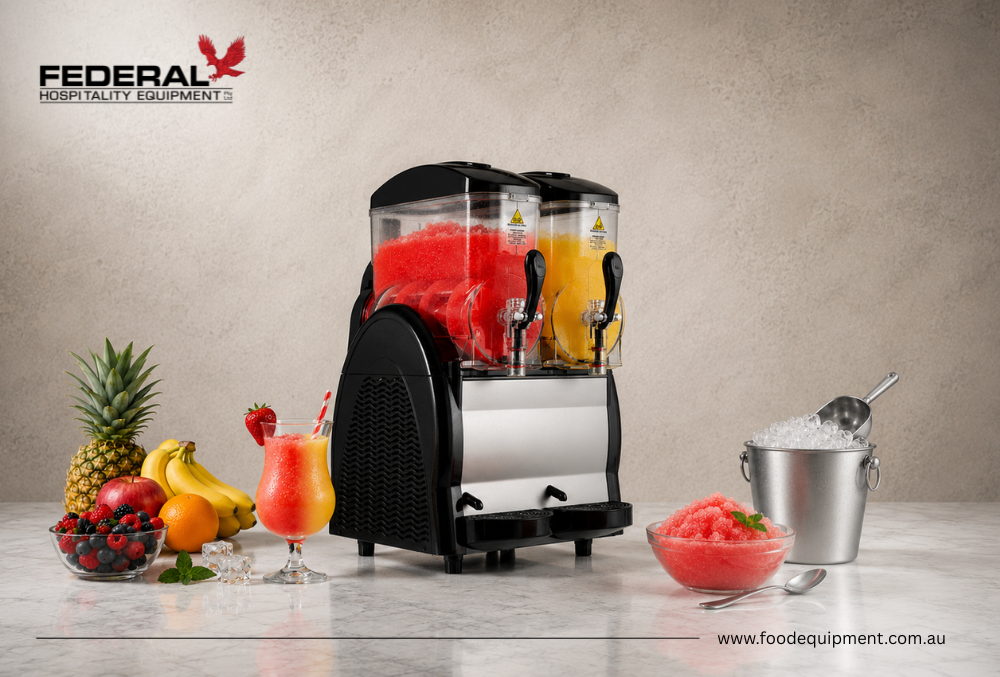
High-volume cafés should consider using multiple blenders & granita and slushy dispensers:
| Setup | Benefit |
|---|---|
| Two identical units | Backup and speed |
| Different product types | Menu flexibility |
Energy Efficiency and Compliance in Australia
Australia has strict energy standards and rising electricity costs. When you buy commercial blenders online that are energy-efficient, it can reduce operational expenses.
| Factor | What to Look For |
|---|---|
| Energy Rating | Higher efficiency models |
| Auto Shut-Off | Prevents overheating |
| Efficient Motors | Lower power consumption |
Always ensure your equipment complies with Australian electrical safety standards (RCM certification).
Maintenance Tips for Long-Term Performance
Frequent maintenance is crucial to keep your equipment performing at its best.
| Task | Frequency |
|---|---|
| Cleaning the jar and blades | After each use |
| Checking seals | Weekly |
| Inspecting blades | Monthly |
| Servicing motor | Annually |
Common Issues and Solutions
| Issue | Cause | Solution |
|---|---|---|
| Overheating | Overuse | Allow cooling time |
| Uneven blending | Dull blades | Replace blades |
| Leaks | Worn seals | Replace gasket |
Cost vs Value: What Should You Spend?
Commercial mixer pricing in Australia varies widely.
| Price Range (AUD) | What You Get |
|---|---|
| $200–$500 | Entry-level |
| $500–$1,200 | Mid-range (best value) |
| $1,200+ | Premium, high-performance |
While budget models may seem attractive, mid-range to premium options sourced from the leading commercial blender dealers and distributors typically offer better durability and ROI.
Best Product Setup for Different Café Types
| Café Type | Recommended Setup |
|---|---|
| Small Café | 1 mid-range blender |
| Medium Café | 1 high-speed + backup unit |
| High-Volume Café | 2–3 high-speed blenders |
| Specialty Café | Heavy-duty + variable-speed |
Hygiene and Food Safety Standards in Australia
Food safety compliance is non-negotiable in Australian cafés, especially when handling dairy, fresh fruit, and protein-based beverages.
Key Hygiene Considerations
| Requirement | Why It Matters | Best Practice |
|---|---|---|
| Easy-to-clean design | Prevents bacterial buildup | Choose removable blade assemblies |
| Dishwasher-safe jars | Saves time and ensures sanitation | Use commercial-grade dishwasher cycles |
| BPA-free materials | Food safety compliance | Opt for certified polycarbonate jars |
| Smooth surfaces | Reduces residue buildup | Avoid complex internal designs |
Blenders used for dairy-based drinks must be cleaned thoroughly to comply with Food Standards Australia New Zealand (FSANZ) guidelines. Poor hygiene can lead to contamination risks in products such as the one mentioned here, as well as hot water boilers and urns, and regulatory penalties.
Future Trends in Commercial Blenders
The Australian market is evolving with new technology.
| Trend | Impact |
|---|---|
| Smart Blenders | App control, automation |
| Noise Reduction Tech | Better customer experience |
| Energy Efficiency | Lower operating costs |
| Compact Designs | Space optimisation |
Conclusion
For most Australian cafés, the ideal commercial blender includes:
- A 1500W–1800W motor
- Sound enclosure for noise reduction
- 1.5–2L polycarbonate jar
- Preset programs and variable speed control
- Strong warranty and local support
The best choice ultimately depends on your café’s volume, menu, and workflow. Investing in the right product isn’t just about equipment—it’s about improving service speed, product quality, and profitability.
FAQs: Commercial Blenders for Cafés
1. What commercial blender works best for Australian cafés?
For most cafés, a high-speed commercial blender with strong motor power, durable stainless steel blades, and noise reduction features works best. It can handle smoothies, frappes, iced coffee, frozen fruit, and ice more reliably than a domestic blender.
2. What wattage should a café blender have?
Most Australian cafés should look for a blender in the 1500W–1800W range. This is usually powerful enough for regular smoothie and frappe preparation while still balancing energy consumption.
3. Are sound enclosures important for café blenders?
Yes. Sound enclosures are valuable in cafés because they reduce blending noise and help maintain a more comfortable customer experience, especially in open-plan venues.
4. What jar size is best for café use?
A 1.5–2L jar is generally suitable for standard café use. It provides enough capacity for common drinks while still being manageable for staff during busy service.
5. How often should commercial blenders be cleaned?
The jar and blades should be cleaned after every use. Seals should be checked weekly, blades inspected monthly, and the motor serviced annually for long-term performance.
6. Is a domestic blender suitable for a café?
No. Domestic blenders are not designed for continuous commercial use or heavy ingredients such as ice, frozen fruit, and nuts. A commercial blender is safer, stronger, and more reliable for café operations.
7. Should high-volume cafés use more than one blender?
Yes. High-volume cafés often benefit from multiple units because they improve service speed, provide backup during cleaning or maintenance, and allow staff to prepare different drink types efficiently.