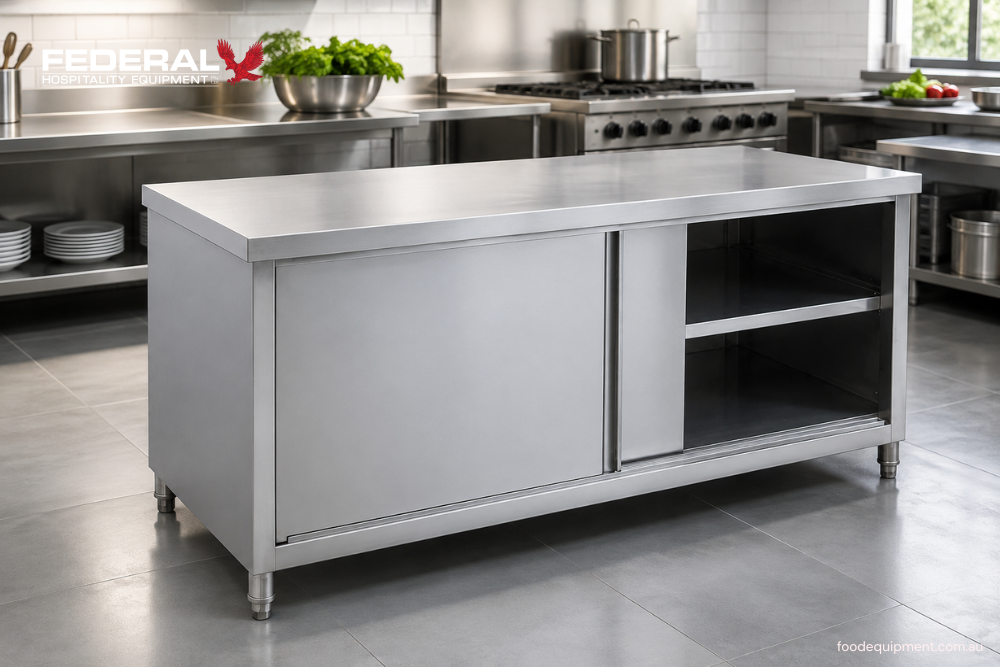

Choosing a workbench freezer for your business is not just about selecting a unit that keeps food frozen. In Australia, where commercial kitchens operate in high ambient temperatures and must comply with strict food safety regulations, the right decision directly affects efficiency, compliance, and long-term operating costs.
A workbench freezer combines refrigerated storage with a functional prep surface, making it essential to align the unit with your workflow and kitchen environment.
Matching the Freezer to Your Kitchen Layout
The first step in choosing the right refrigeration unit, such as a workbench freezer, is understanding your kitchen layout. These units are typically installed along prep lines or near cooking stations to improve workflow.
| Width Range | Door Configuration | Best For |
|---|---|---|
| 1200mm | 2-door | Small cafés |
| 1500mm | 2–3 door | Restaurants |
| 1800mm | 3-door | Busy kitchens |
Choosing the Right Capacity
Capacity should match your daily usage, not future assumptions.
| Business Type | Capacity | Usage |
|---|---|---|
| Café | 150–200L | Low |
| Restaurant | 200–300L | Moderate |
| High-volume | 300L+ | Heavy |
Considering Australian Climate Conditions
Australian kitchens often operate in high temperatures. Tropical-rated units are designed to handle environments up to 38°C.
| Feature | Standard Unit | Tropical Unit |
|---|---|---|
| Max Temp | 30°C | 38°C |
| Stability | Moderate | High |
Temperature Control Systems
| Feature | Benefit |
|---|---|
| Digital thermostat | Precise control |
| Fan cooling | Even airflow |
| Auto defrost | Reduced maintenance |
Build Quality and Materials
- Stainless steel exterior
- Durable shelving
- Hygienic interiors
Workflow Efficiency and Design
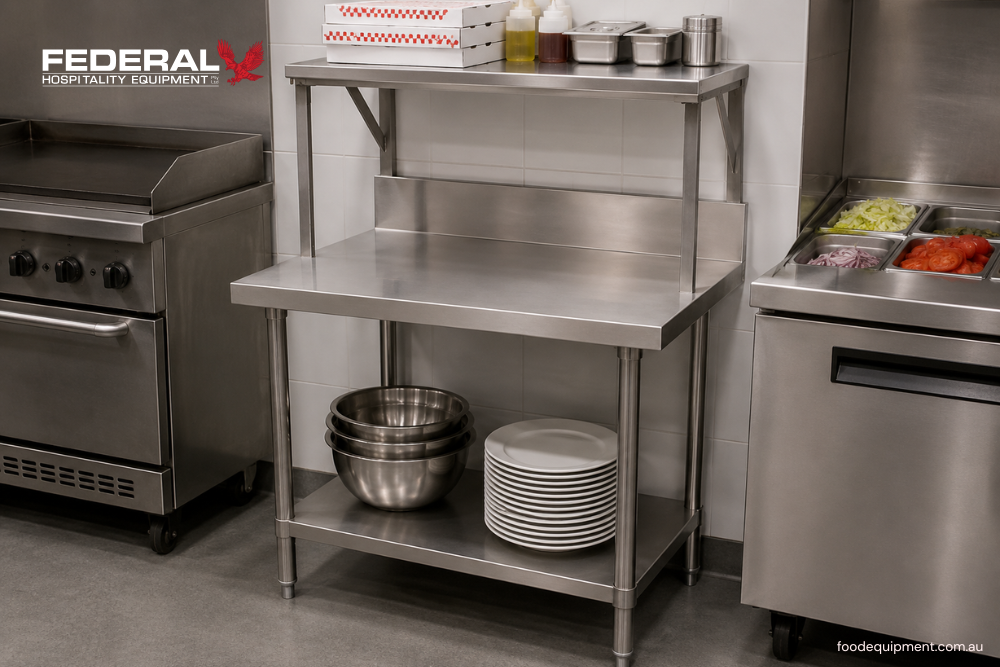
A workbench freezer also functions as a prep station, improving workflow efficiency.
Energy Efficiency and Costs
| Feature | Benefit |
|---|---|
| Insulation | Lower energy use |
| Efficient compressor | Reduced power |
| Eco refrigerant | Compliance |
Maintenance and Cleaning
| Feature | Benefit |
|---|---|
| Removable shelves | Easy cleaning |
| Smooth interior | Hygiene |
| Drain system | Less downtime |
Budget vs Long-Term Value
| Category | Budget | Premium |
|---|---|---|
| Cost | Lower | Higher |
| Efficiency | Moderate | High |
| Durability | Average | Long-lasting |
Conclusion
Choosing the right workbench freezer involves balancing capacity, layout, durability, and efficiency. The right choice improves workflow, reduces costs, and ensures compliance.