
Tagged with 'commercial kitchen equipment Australia'

How Vegetable Prep Machines Improve Speed in Commercial Kitchens?

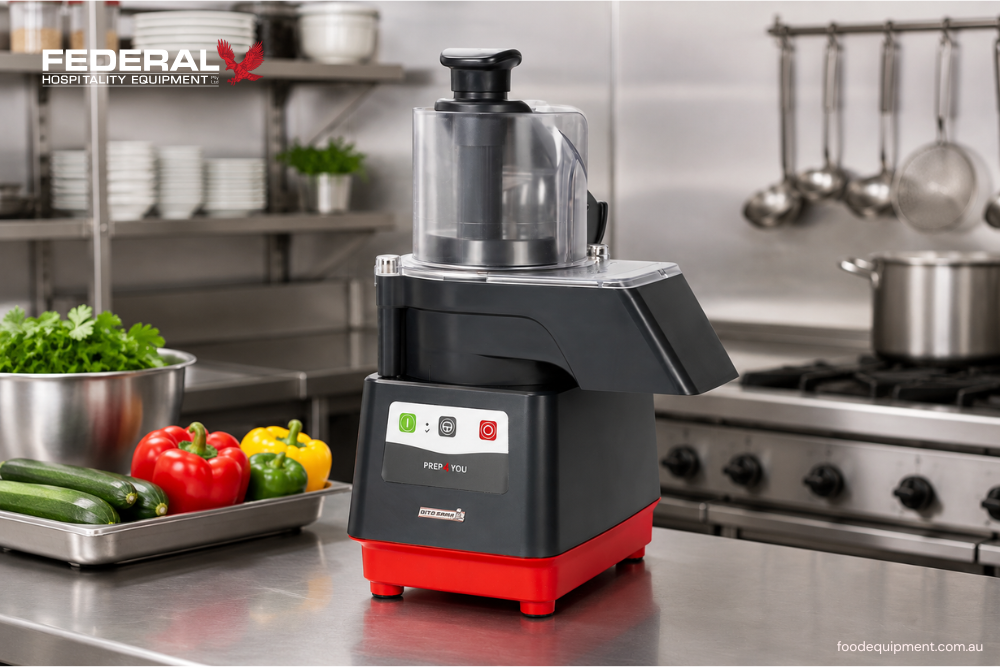
Commercial vegetable prep machine slicing fresh vegetables in a professional Australian hospitality kitchen.

Australia’s catering industry functions in a highly competitive setting where speed, consistency, and efficiency directly influence user satisfaction and revenue. Restaurants, cafés, catering businesses, pubs, hotels, hospitals, and delivery-only kitchens must prepare meals quickly without compromising food quality or hygiene standards. During busy hours, slow ingredient preparation creates operational delays that affect cooking stations, service times, and customer experience.

Vegetable preparation is one of the most time-consuming tasks in commercial kitchens. Slicing onions, dicing potatoes, grating carrots, and shredding cabbage are deceptively simple tasks, but repeating them at scale consumes valuable labour hours every day. This is why commercial vegetable prep machines have become essential equipment for Australian foodservice businesses.

Key Takeaways

Core Benefit Business Impact
70–90% faster preparation times Faster kitchen workflow during busy hours
Uniform cutting consistency Improved cooking accuracy and presentation
Reduced manual labour requirements Lower labour costs and better staff allocation
Improved food hygiene Reduced hand-to-food contact
Long-term operational efficiency Consistent return on investment

How Do Vegetable Prep Machines Improve Operational Efficiency?

Commercial food slicers and food processors improve operational efficiency by automating repetitive preparation tasks that would otherwise require extensive manual labour. Instead of relying on staff to cut vegetables by hand, employees can load ingredients into the machine and have them sliced, grated, julienned, shredded, or diced within seconds.

This automation allows kitchen staff to focus on cooking, plating, customer service, and food assembly instead of repetitive preparation work. Machines equipped with induction motors and high-capacity feeding systems are specifically designed for continuous commercial operation, making them suitable for large-scale food production environments.

Efficient preparation using vegetable prep machines for sale also improves kitchen coordination. When ingredients are processed quickly and consistently before service begins, chefs experience fewer interruptions during meal preparation. This creates a smoother kitchen workflow and reduces operational delays during busy lunch and dinner services.

Tip: Organising vegetables by blade attachment type before service begins reduces changeover time and improves preparation efficiency.

How Do Prep Machines Reduce Labour Costs?

Labour shortages continue to affect the Australian hospitality industry, especially in regional locations. Commercial preparation equipment reduces dependence on manual vegetable cutting, allowing businesses to allocate staff more efficiently across cooking, cleaning, and customer-facing tasks.

Instead of assigning multiple kitchen hands to repetitive preparation work, one employee can operate an automated processor while other team members focus on higher-value responsibilities. This directly improves operational profitability by reducing unnecessary labour hours. For businesses handling high meal volumes, including hotels, hospitals, aged care facilities, and catering companies, automated preparation systems support more efficient workforce management while maintaining production speed. For further information, visit the top vegetable prep machine suppliers and manufacturers near you.

How Do These Machines Improve Workplace Safety?

Continuous manual chopping and slicing places physical strain on kitchen staff, particularly during long shifts. Repetitive knife work contributes to fatigue, wrist strain, and workplace injuries. Mechanical cutting solutions reduce repetitive manual handling and create a safer working environment. Many commercial units include safety guards, enclosed blade systems, and non-slip feeding mechanisms that reduce the risk of accidents during operation.

Reducing physical strain also supports staff retention by creating a more manageable workplace environment for kitchen employees.

Tip: Proper staff training improves machine safety, preparation speed, and blade handling accuracy.

How Do Vegetable Prep Machines Improve Workflow During Busy Hours?

Commercial kitchens depend on consistent workflow management. When ingredient preparation slows, operational delays spread throughout cooking stations and food assembly areas. Prep automation ensures ingredients are ready before service begins, allowing chefs to maintain consistent production speed during high-demand periods. This is especially important for quick-service restaurants, cafés, food courts, and takeaway businesses where fast turnaround times are essential.

For example, a busy breakfast café in Melbourne or a restaurant in Sydney’s city centre may need to prepare hundreds of servings within a short timeframe. Fast ingredient preparation allows staff to respond quickly to sudden order surges without interrupting kitchen operations.

How Does Uniform Cutting Improve Cooking Efficiency?

When you buy vegetable preparation machines online, they use precision-engineered blades to create uniform vegetable sizes. Consistent cuts improve cooking accuracy because ingredients cook evenly and predictably.

Manual cutting often yields uneven pieces, leading to inconsistent cooking times and unnecessary food waste. Uniform slicing improves both presentation quality and kitchen efficiency.

Benefit of Uniform Cutting Kitchen Impact
Even cooking times Faster meal production
Consistent presentation Improved customer experience
Reduced food waste Lower ingredient costs
Standardised portion sizes Consistent menu quality

This consistency through the titular equipment and mixers is particularly valuable for franchise restaurants and multi-location hospitality businesses that require standardised menu presentation across all locations.

How Do Prep Machines Support Food Safety Compliance?

Commercial vegetable prep machines support food safety compliance by reducing direct hand-to-food contact during preparation. Less manual handling lowers contamination risks and improves hygiene management.

Most professional units, supplied by leading vegetable prep machine dealers and distributors, are manufactured using high-grade 304 stainless steel, which is corrosion-resistant, easy to sanitise, and suitable for commercial food environments. Many models also feature removable blades and dishwasher-safe components, making cleaning easier.

Australian kitchens must comply with the Australia New Zealand Food Standards Code and commonly follow HACCP, Hazard Analysis and Critical Control Points, guidelines to identify and control food safety risks. Easy-to-clean preparation equipment helps businesses maintain these hygiene standards efficiently.

Maintenance Checklist

Maintenance Task Recommended Frequency
Clean blades and feeding chute After every use
Sanitise food-contact surfaces Daily
Inspect blade sharpness Weekly
Check motor ventilation areas Weekly
Lubricate moving components Monthly
Inspect electrical connections Quarterly
Tip: Cleaning appliances immediately after use prevents food leftover accumulation and extends the lifespan of the motor and blades.

How Do You Choose the Right Blade for Different Vegetables?

Selecting the correct blade improves cutting quality, preparation speed, and ingredient consistency.

Vegetable Type Recommended Blade Type Common Result
Onions Slicing blade Uniform rings or strips
Carrots Grating blade Fine or coarse-grated texture
Potatoes Dicing grid Consistent cubes
Cabbage Shredding disc Thin salad strips
Cucumbers Adjustable slicer Even salad slices

Businesses should consider menu requirements, daily preparation volume, and portion consistency when selecting blade configurations for vegetable prep machines in Sydney and Melbourne.

Manual Preparation vs Automated Preparation

Factor Manual Preparation Automated Preparation
Preparation speed Slow Fast
Labour requirement High Lower
Portion consistency Variable Uniform
Physical strain High Reduced
Food safety control Moderate Improved
Scalability Limited Suitable for large-scale production

This comparison highlights why many Australian hospitality businesses are transitioning to automated preparation systems, including appliances such as processors and stick blenders.

Conclusion

Vegetable prep machines play a critical role in modern Australian commercial kitchens by improving speed, consistency, labour efficiency, and compliance with hygiene standards. Automated culinary processors reduce repetitive manual work, support workplace safety, and help businesses maintain efficient operations during busy service periods.

As customer expectations for fast service continue to increase, inefficient preparation processes can impact a business’s bottom line. Commercial food slicers, industrial vegetable cutters, and other mechanical cutting solutions help hospitality businesses maintain productivity, improve food quality, and support sustainable long-term growth.

FAQs: Vegetable Prep Machines in Commercial Kitchens

1. How do vegetable prep machines improve kitchen speed?

Vegetable prep machines automate repetitive slicing, dicing, grating, shredding, and julienning tasks, helping kitchens prepare ingredients much faster than manual cutting.

2. Are vegetable prep machines suitable for busy Australian kitchens?

Yes. They are especially useful for restaurants, cafés, catering businesses, hotels, hospitals, pubs, and delivery kitchens that need fast and consistent ingredient preparation.

3. Do vegetable prep machines reduce labour costs?

Yes. By reducing manual preparation time, one staff member can process larger volumes of vegetables while other team members focus on cooking, plating, cleaning, or customer service.

4. How do prep machines improve food consistency?

Precision blades create uniform cuts, which helps ingredients cook evenly, improves presentation, reduces waste, and supports consistent portion sizes.

5. Are commercial vegetable prep machines hygienic?

Most commercial units are designed with stainless steel construction, removable blades, and easy-clean components, helping reduce hand-to-food contact and support food safety compliance.

6. What maintenance do vegetable prep machines need?

Blades and feeding chutes should be cleaned after every use, food-contact surfaces sanitised daily, blade sharpness checked weekly, and motor ventilation inspected regularly.

Why Australian Cafés Are Switching to Induction Cooking Equipment?

Commercial induction cooking equipment in an Australian café kitchen featuring energy-efficient induction cooktops for fast, safe, and modern hospitality food preparation.

Australia’s café culture is vibrant, and owners are always looking for smarter ways to improve efficiency, reduce operating costs, and deliver consistent food quality. One major shift across the hospitality industry is the growing adoption of induction cooking equipment.

Commercial induction cooking equipment is no longer a niche upgrade reserved for luxury venues. It’s now a practical, energy-efficient option for cafés seeking faster service, lower heat output, and improved kitchen safety—especially as energy costs rise, sustainability expectations increase, and kitchen designs become more compact.

Tip: Cafés operating long breakfast and lunch hours can benefit from faster heat-up times, reduced wasted heat, and better kitchen comfort when switching to commercial induction cooking equipment.

What Is Induction Cooking Equipment?

This mode of cooking uses electromagnetic technology to heat cookware directly rather than heating a burner or open flame. With induction-compatible pots and pans, energy transfers into the cookware for rapid, precise heating.

Cooking Method Heat Source Energy Efficiency Heat Loss Temperature Control
Gas Cooking Open flame Lower High Moderate
Electric Cooking Heated element Moderate Medium Slower response
Induction Cooking Electromagnetic energy Very high Minimal Instant response

Commercial plug-in cooktops are now available in countertop, drop-in, and floor-standing configurations suitable for cafés, restaurants, catering businesses, and hospitality venues across Australia.

Energy Efficiency Is Driving Adoption

One of the biggest reasons Australian cafés are moving toward equipment like electric cooking equipment and contact grills is energy efficiency. With electricity and gas prices putting pressure on hospitality businesses, cutting wasted heat matters—especially for venues operating long service hours.

Commercial induction plates for sale can transfer up to 90% of energy to cookware, while gas cooktops lose substantial heat to the surrounding air. Over time, that difference can reduce consumption and operating costs.

Tip: For Australian cafés with high-volume breakfast and lunch services, energy-efficient induction cooktops can help reduce wasted heat while supporting quicker kitchen turnaround.

Equipment Type Approximate Energy Efficiency
Gas Cooktops 35%–50%
Traditional Electric Cooktops Around 74%
Commercial Induction Cooktops Up to 90%

For cafés running breakfast and lunch services seven days a week, the savings can add up over a year. Swifter heat-up periods also reduce slow operations during the morning rush.

Many café owners now view electromagnetic cooking as an investment because utility savings and efficiency gains can offset higher upfront costs.

Australian Cafés Need Faster Service

Speed matters in the café industry. Morning coffee and breakfast rushes demand quick turnaround times, especially in high-footfall business districts and busy suburban café strips.

Such equipment heats cookware almost instantly: water boils faster, pans reach temperature quickly, and chefs can adjust heat immediately without waiting for burners to cool down or warm up.

Faster heat-up times and instant temperature response help busy café kitchens improve workflow during morning coffee and brunch rushes.

This responsiveness improves kitchen workflow and helps cafés serve customers faster during peak periods. For example, brunch cafés often rely on rapid preparation of eggs, sautéed vegetables, toasted sandwiches, and breakfast proteins. This mode supports this pace with consistent, precise heat. In competitive environments, even small time savings can improve customer turnover and revenue potential. For further information, visit the top induction cooktop suppliers and manufacturers.

Cooler Kitchens Improve Staff Comfort

Australia’s climate also plays an important role in the rise of plug-in cooking equipment. Commercial kitchens can become extremely hot during summer, particularly in warmer regions.

Traditional gas burners generate significant ambient heat, making kitchens uncomfortable. These surfaces stay cooler because heat is generated in the cookware rather than in the air around it, improving comfort and reducing strain on cooling and ventilation.

Cooler commercial kitchens can improve staff comfort, reduce fatigue, and support better productivity during high-volume service periods.

Benefit Impact on Cafés
Reduced ambient heat Improved staff comfort
Less strain on ventilation systems Lower cooling costs
Better working conditions Improved productivity
Reduced kitchen fatigue Better staff retention

Australian cafés are increasingly prioritising employee wellbeing, particularly during labour shortages affecting the hospitality industry. Cooler kitchens help create safer and more comfortable workplaces for chefs and kitchen assistants.

Such Cooking Supports Sustainability Goals

Sustainability is becoming a major focus for Australian hospitality businesses. Customers increasingly prefer cafés that demonstrate environmentally responsible practices, including energy-efficient operations and reduced carbon emissions.

Induction wok cooking aligns with these goals because it minimises wasted heat and can reduce overall energy consumption—especially when paired with efficient refrigeration, lighting, and ventilation in modern fit-outs.

Energy-efficient hospitality equipment is becoming increasingly important for Australian cafés focused on reducing utility costs and creating future-ready commercial kitchens.

Many businesses are also preparing for energy transitions as governments and councils encourage electrification and reduced reliance on gas infrastructure, making the mode a future-ready option for new venues.

Improved Kitchen Safety Matters

Safety is another key reason cafés are switching to benchtop equipment, such as induction systems. Without open flames, burning or fire hazards and gas leaks are lower, and many industrial units include automatic shut-off, overheating safeguards, and pan-detection attributes.

These safety advantages are particularly valuable in compact café kitchens where multiple staff members work in proximity during busy service hours.

Safety Feature Benefit
No open flame Reduced fire risk
Automatic shut-off Improved operational safety
Pan detection Prevents unnecessary energy use
Cooler surfaces Lower burn risk

For café owners managing workplace health and safety requirements, when you buy induction cooktops online, it can help reduce hazards while maintaining high kitchen performance.

This Equipment Works Well in Open Kitchen Designs

Open kitchens are increasingly popular in Australian cafés because customers like seeing food prepared in real time. These layouts benefit from cleaner, quieter, and more visually appealing equipment.

Induction is ideal for open kitchens because it generates less heat and no visible flames. On the other hand, the sleek surfaces are easy to maintain and present well to consumers. This feature helps boutique cafés and premium brunch venues create a more polished, modern experience.

Tip: Open kitchen cafés often prefer induction cooking equipment because it creates a cleaner, quieter, and more visually appealing cooking environment for customers.

Challenges of Switching to Induction Cooking

Although this cooking offers many advantages, the transition comes with practical considerations. Some establishments need electrical renovations to support commercial electromagnetic units, and induction-compatible cooking equipment is needed—meaning older aluminium or unsuitable pans may need to be substituted.

Upfront equipment costs can be higher than gas costs, but many operators find that energy savings, lower maintenance, and faster service speed can justify the investment.

Tip: Before upgrading to induction cooking, ensure your cookware is induction-compatible and check whether electrical infrastructure upgrades may be required.

Challenge Potential Solution
Higher initial investment Long-term energy savings
Need for compatible cookware. Gradual cookware replacement
Electrical upgrades Future-proof kitchen infrastructure
Staff training Simple induction training programs

Despite these considerations, the adoption of this mode continues to grow across Australia’s hospitality industry. You can gain further insights by reaching out to the best induction cooktop dealers and distributors.

Why Induction Cooking Is the Future of Australian Cafés?

The Australian café industry is evolving rapidly, and operators are looking for equipment that improves efficiency, supports sustainability, and creates safer, more comfortable kitchens.

Products like Induction cooking equipment, pie warmers and many others meet these needs by delivering fast, controllable heat with less wasted energy and a cooler working environment.

Suppliers across Australia are also expanding commercial electromagnetic ranges, making the technology accessible to cafés of all sizes. As energy prices rise and cafés prioritise sustainability and operational efficiency, induction is likely to become a standard feature in Australian café kitchens.

Many hospitality businesses across Sydney, Melbourne, Brisbane, Perth, and Adelaide are now investing in energy-efficient induction cooktops to support sustainability goals and reduce long-term operating costs.

Conclusion

Australian cafés are switching to induction cooking equipment because it delivers measurable benefits: faster cooking, improved energy efficiency, cooler kitchens, and safer operations.

From small suburban coffee shops to high-volume city venues, induction cooking is helping businesses lower running costs and modernise their kitchens. While the switch can require upfront spend and operational changes, the long-term gains are increasingly hard to ignore.

FAQs

1. Why are Australian cafés switching to induction cooking equipment?

Australian cafés are switching to induction cooking equipment because it offers faster heat-up times, better energy efficiency, cooler kitchens, improved safety, and more precise temperature control during busy service periods.

2. Is induction cooking equipment suitable for commercial cafés?

Yes, commercial induction cooking equipment is suitable for cafés, restaurants, catering businesses, and hospitality venues across Australia. It is available in countertop, drop-in, and floor-standing configurations to suit different kitchen layouts.

3. Does induction cooking save energy compared to gas?

Yes, commercial induction cooktops can transfer up to 90% of energy to cookware, while gas cooktops lose more heat to the surrounding air. This can help reduce energy waste and support lower running costs over time.

4. What cookware is needed for induction cooking?

Induction cooking requires induction-compatible cookware. Some older aluminium or unsuitable pans may need to be replaced, but many cafés manage this gradually as part of their kitchen upgrade process.

5. Is induction safer than gas cooking in café kitchens?

Induction can improve kitchen safety because it does not use an open flame and many commercial units include automatic shut-off, overheating protection, and pan-detection features. Cooler surfaces may also help reduce burn risks.

6. Can induction cooking equipment help keep café kitchens cooler?

Yes, induction cooking generates heat directly in the cookware rather than heating the air around the appliance. This can reduce ambient heat, improve staff comfort, and lessen the load on ventilation and cooling systems.

7. What are the main challenges of switching to induction?

The main challenges include higher upfront equipment costs, the need for compatible cookware, possible electrical upgrades, and staff training. However, many cafés find the long-term gains in efficiency, safety, and running costs worthwhile.

8. Is induction cooking a good option for open kitchen cafés?

Yes, induction cooking equipment works well in open kitchen designs because it produces less heat, has no visible flame, is quieter, and offers a sleek appearance that suits modern café interiors.

ShareThis Copy and Paste