
In Australia’s bustling foodservice industry, commercial refrigeration is a non-negotiable necessity—but it’s also one of the biggest electricity consumers in any kitchen. With rising electricity costs and growing pressure to meet sustainability goals, maximising energy efficiency in your commercial refrigerator isn’t just smart—it’s essential.
Whether you run a café in Melbourne, a cloud kitchen in Sydney, or a butcher shop in Brisbane, this guide will help you reduce electricity consumption, cut costs, and extend the life of your refrigeration equipment.
Provide a high volume of ice for your chilled drinks to ensure a satisfactory customer experience. Check out our Ice Machine range.
Why Energy Efficiency Matters?
Commercial refrigerators can account for up to 41% of a kitchen’s daily electricity use. Inefficient units not only spike your power bills but also strain the grid and increase your carbon footprint. Benefits of boosting efficiency include:
- Lower operating costs
- Improved food safety
- Longer equipment lifespan
- Compliance with Australian energy standards
- Reduced environmental impact
- Set the Right Temperature
Refrigerators work most efficiently when the temperature is set to the optimal level. The optimal range is:
- Refrigerators: 1°C to 4°C
- Freezers: -18°C to -15°C
Avoid overcooling—every degree lower increases power use by up to 5%. Use calibrated thermometers or digital sensors to monitor and maintain consistent temperatures in your commercial refrigerators.
- MaintainYour Equipment Regularly
Dirty coils, clogged drains, and worn gaskets force your fridge to work harder. A regular maintenance routine should include:
- Cleaning condenser coils every 3 months
- Inspecting door seals for cracks or gaps
- Defrosting manually if needed
- Checking fan motors and evaporators
- Scheduling professional servicing annually
Preventive care can improve energy efficiency by 10–15% and reduce the frequency of breakdowns.
- Upgrade to Energy-Efficient Models
Modern commercial refrigerators come with electricity-saving features like:
- Inverter compressors: Adjust speed based on cooling demand
- LED lighting: Uses less power and emits less heat
- Eco-mode settings: Reduce energy during off-peak hours
- R290 refrigerant: More efficient and environmentally friendly than R134a
Look for units with MEPS (Minimum Energy Performance Standards) compliance and Energy Rating Labels in Australia. For further information, visit the top commercial refrigerator suppliers and manufacturers in Australia.
- Optimise Fridge Placement
Where you place your fridge affects how hard it has to work. Follow these tips:
- Keep away from heat sources like ovens, grills, or direct sunlight
- Ensure proper ventilation around the unit—at least 10 cm clearance
- Avoid cramped corners that trap heat
- Level the fridge to ensure door seals close properly
Clever placement can reduce power use by up to 20% in high-traffic kitchens.
- Minimise Door Openings
Every time the door opens, warm air rushes in, forcing the compressor to kick in. To reduce this:
- Train staff to open doors only when necessary
- Use transparent doors or internal lighting to locate items faster
- Install strip curtains or air barriers in walk-in coolrooms
- Organise contents logically to reduce search time
In busy kitchens, door discipline can save hundreds in annual energy costs.
- Avoid Overloading or Underloading
Both extremes in a commercial refrigerator for sale affect airflow and cooling efficiency:
- Overloading blocks, vents, and forces uneven cooling
- Underloading wastes energy on empty space
Use shelving to optimise airflow and maintain consistent temperatures. Rotate stock regularly to prevent spoilage and reduce cooling demand.
- Monitor Energy Usage
Install smart meters or IoT sensors to track real-time energy consumption. These tools help:
- Identify peak usage times
- Detect performance issues early
- Benchmark efficiency across multiple units or locations
- Automate alerts for temperature fluctuations
Data-driven decisions can lead to energy savings of 10–30% over time.
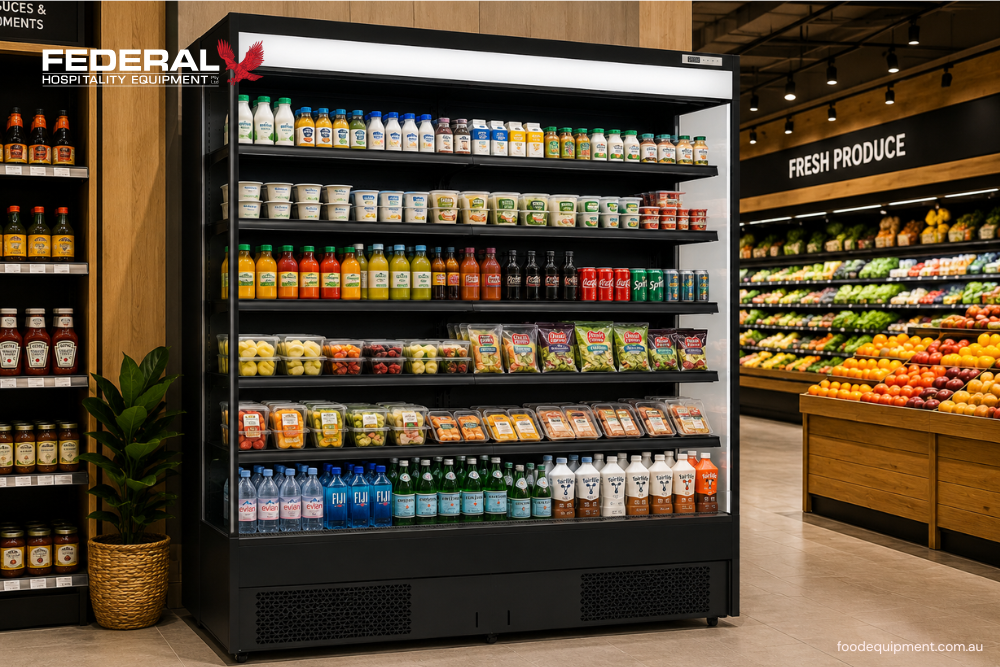
Showcase your delicacies in an attractive display case for the world to see! Check out our Display Fridges here.
- Clean Interior & Exterior Surfaces
Dust, spills, and grime can affect insulation and airflow in your appliance sourced from the leading commercial refrigerator dealers and distributors. Weekly cleaning routines should include:
- Wiping down shelves and walls
- Removing expired or leaking items
- Cleaning fan covers and vents
- Sanitising handles and seals
Clean surfaces reduce strain on the compressor and improve hygiene.
- Use Night Covers & Timers
For display fridges or open units:
- Install night blinds or covers to retain cold air after hours
- Use timers or smart plugs to reduce lighting and fan usage during non-operational hours
These simple additions can cut energy use by up to 30% overnight.
- Choose the Right Refrigerant
Australia is phasing out high-GWP refrigerants like R404A. Switching to natural refrigerants like R290 or CO₂ offers:
- Lower environmental impact
- Better thermodynamic efficiency
- Compliance with future regulations
Consult your supplier about refrigerant options in your commercial refrigerator in Melbourne and Sydney when upgrading or retrofitting.
- Train Your Team
Staff play a huge role in energy efficiency. Include refrigeration care in your SOPs and training modules:
- Proper loading techniques
- Door discipline
- Cleaning routines
- Reporting faults early
Visual aids, checklists, and signage near units reinforce best practices.
- Consider Load Shedding & Demand Response
Large operations can benefit from energy management systems that:
- Shift refrigeration loads during peak tariff hours
- Integrate with solar or battery systems
- Participate in demand response programs
This step is beneficial for supermarkets, aged care facilities, and multi-site operators.
- Choose the Right Size for Your Needs
Selecting the correct size of commercial refrigeration equipment is crucial for both energy efficiency and operational efficiency. Oversized units consume more electricity than necessary, cooling unused space and increasing your energy bills. On the other hand, undersized fridges struggle to maintain temperature during peak hours, leading to overworked compressors and inconsistent cooling. Assess your storage requirements according to your menu, delivery frequency, and service volume.
- Insulate YourCoolroomor Storage Area
Proper insulation is one of the most underestimated yet impactful ways to boost refrigeration efficiency. Poor insulation allows cold air to escape and hot air to seep in, resulting in walk-in fridges and coolrooms that are not as efficient. This issue forces the system to work harder to maintain the temperature. Check for gaps in walls, ceilings, and flooring, and ensure doors seal tightly. Use insulated panels, thermal curtains, and automatic door closers to minimise air exchange—especially in high-traffic kitchens.
- Protect Against Power Surges
Electrical fluctuations can wreak havoc on commercial refrigeration systems, particularly in areas prone to power grid instability or severe storms. Sudden voltage spikes can damage compressors, disrupt cooling cycles, and shorten the lifespan of your equipment. Installing surge protectors or voltage stabilisers acts as a safety net, shielding your fridge from unexpected power surges and ensuring consistent performance. This step is crucial for high-value units, such as blast chillers or multi-door display fridges.
Enjoy immense storage with next-level cooling to prevent spoilage of your products. Browse our Chest Freezers here.
- Use Zoned Refrigeration
Segment your sectors according to your needs to buy commercial refrigerators online — e.g., separate units for dairy, meat, and produce. This step enables each fridge to operate at optimal temperatures, preventing overcooling or cross-contamination, thereby improving energy efficiency and food safety.
Sustainability & Compliance in Australia
Australia’s Greenhouse and Energy Minimum Standards (GEMS) and MEPS regulations require commercial refrigeration units to meet specific energy benchmarks. Staying compliant means:
- Lower emissions
- Better brand reputation
- Eligibility for rebates or sustainability certifications
Conclusion
Maximising energy efficiency in your commercial refrigerator isn’t just about saving money—it’s about building a smarter, more sustainable kitchen. From temperature control and maintenance to smart tech and staff training, every step adds up to long-term gains. Whether you’re running a café in Perth or a catering business in Adelaide, these strategies will help you chill smarter—not harder.