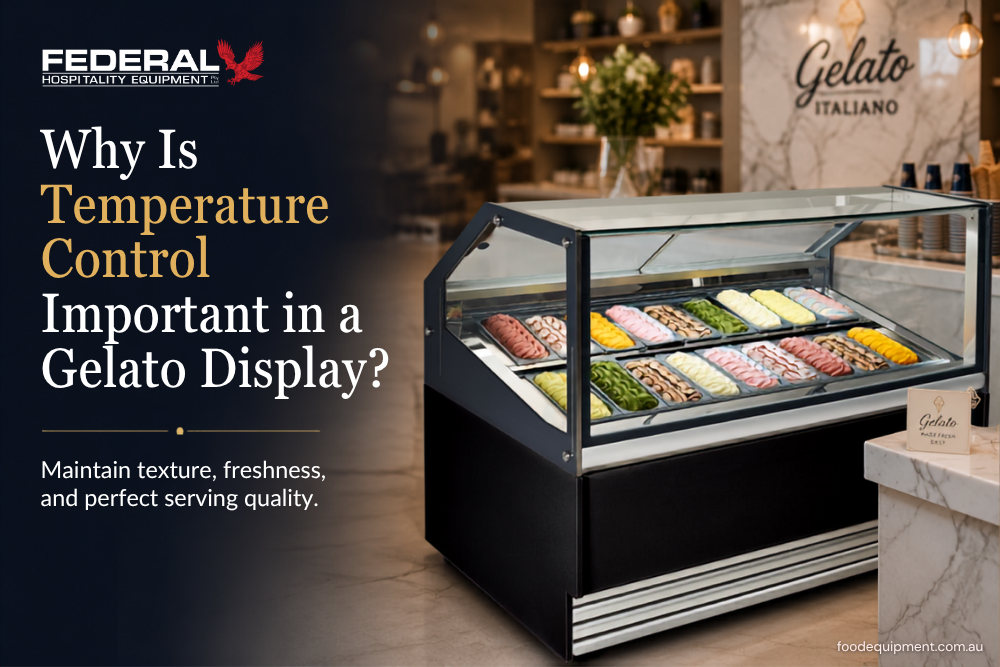
Temperature control is one of the most important factors in maintaining the quality of gelato in a commercial display. For Australian gelaterias, cafés, dessert bars, restaurants and other foodservice businesses, a gelato display needs to do considerably more than simply keep frozen products cold. It needs to provide stable operating conditions that help preserve texture, appearance and overall product quality throughout service.
Gelato is highly sensitive to its storage and display environment. If conditions become too warm, it can soften excessively and lose its attractive shape. Repeated fluctuations may also contribute to partial melting and refreezing, potentially changing the texture customers expect from professionally prepared gelato.
Australia's climate makes this particularly important. High summer temperatures, warm indoor environments, busy trading periods and frequent product access can increase the workload placed on refrigeration equipment. The source material notes that unstable conditions can lead to softening, partial melting and undesirable texture, affecting both product presentation and quality.
In this guide, Federal Hospitality Equipment Australia explains why temperature control matters in a commercial gelato display, how it influences product quality and customer experience, what can cause temperature instability and what Australian hospitality businesses should consider when selecting, positioning, operating and maintaining their display equipment.
Stable temperature control helps gelato maintain its intended texture, shape, appearance and serving consistency. It can also help reduce avoidable product waste and support an attractive customer-facing presentation. Because recipes, formulations and equipment differ, businesses should operate their gelato display according to the product and equipment manufacturer's recommendations rather than assuming one temperature setting suits every application.
Key Takeaways
- Stable operating conditions help maintain gelato texture and presentation.
- Excessive warmth can cause gelato to soften and lose its shape.
- Repeated temperature fluctuations may contribute to partial melting and refreezing.
- Different gelato recipes and formulations may require different display conditions.
- Australian summer heat can place additional demand on commercial refrigeration.
- Direct sunlight and nearby heat-producing equipment can affect display performance.
- Poor airflow and blocked ventilation can make refrigeration equipment work harder.
- Regular temperature monitoring can help identify performance changes early.
- Correct cleaning and routine servicing support reliable operation.
- Stable conditions can reduce avoidable waste and support a better customer experience.
How Does Temperature Affect Gelato Quality?
Bonvue Gelato range is known for its smooth texture, rich appearance and characteristic serving consistency. Maintaining those qualities requires more than simply placing trays inside a refrigerated cabinet.
If the display environment becomes excessively warm, the product may soften and lose definition. If conditions repeatedly move between warmer and colder states, partial melting and refreezing may affect texture. Poor airflow can also create uneven conditions within the cabinet.
This is especially important because gelato is normally displayed openly to customers. Appearance plays a major role in the purchasing decision. Customers can see the texture, colour and shape of each flavour before ordering, so inconsistent refrigeration can quickly become a merchandising problem as well as a product-quality issue.
| Temperature Condition | Possible Effect on Gelato | Potential Business Impact |
|---|---|---|
| Stable operating conditions | Helps maintain consistent texture and presentation | Supports attractive merchandising and consistent service |
| Excessive warmth | Can cause softening and loss of shape | May reduce visual appeal and serving consistency |
| Frequent fluctuations | May contribute to melting and refreezing | Can affect texture and product quality |
| Poor airflow | May create uneven cabinet conditions | Some trays may perform differently from others |
| Regular monitoring | Helps identify unusual changes | Allows staff to investigate problems earlier |
Is There One Ideal Temperature for Every Gelato Display?
No. Although businesses often search for a single ideal gelato display temperature, the appropriate operating range can depend on several factors.
Different recipes contain different proportions of sugars, fats, milk solids, water and other ingredients. These differences influence freezing characteristics and serving consistency. Equipment designs can also vary in airflow, refrigeration method, cabinet construction and control systems.
For these reasons, the original source specifically advises businesses to follow the instructions provided for the particular display rather than relying on one universal setting.
Use the operating range recommended for the specific gelato recipe, product formulation and display equipment. A single setting should not be assumed to be correct for every gelato business or every cabinet.
Why Is Temperature Stability More Important Than Constant Adjustment?
In a busy hospitality business, employees may be tempted to repeatedly adjust refrigeration controls when they notice a product appearing slightly softer or firmer than expected. However, frequent unnecessary adjustments can make troubleshooting more difficult.
What matters is maintaining appropriate and reasonably stable operating conditions for the product and equipment. If performance changes unexpectedly, the cause may not simply be the control setting.
For example, changing ambient conditions, blocked airflow, heavy product loading, frequent access, dirty refrigeration components or an equipment fault may influence cabinet performance.
Rather than repeatedly changing settings without understanding the cause, staff should follow an established monitoring process and investigate unusual performance systematically.
How Can Poor Temperature Control Affect Food Safety?
Temperature management is also part of responsible food handling. Gelato may contain milk, cream, eggs or other ingredients requiring appropriate handling throughout preparation, storage and service.
The source material notes that Australian food businesses must follow applicable food-safety requirements and that frozen food intended to remain frozen should remain frozen during storage and display. Businesses should also follow manufacturer instructions relating to product quality and shelf life.
This means temperature management should not be regarded as a set-and-forget function. Staff should understand the equipment, monitor its performance and know what action to take if operating conditions become unusual.
Requirements can vary according to the food, preparation process, business model and local regulatory circumstances, so operators should ensure their procedures suit their particular operation.
How Does Stable Temperature Help Reduce Gelato Waste?
Product waste has a direct commercial cost. Every tray of gelato represents ingredients, preparation time, labour, refrigeration, storage and potential sales.
If poor temperature control causes a product to become unsuitable for attractive presentation or consistent serving, the business may face avoidable losses. The impact can become substantial when a large display contains many flavours and significant stock.
Stable refrigeration helps protect that investment by supporting suitable display conditions across the cabinet. The source highlights that consistent temperature management can protect the quality of an entire display rather than allowing preventable problems to affect multiple products.
| Business Cost | How Temperature Instability Can Contribute | Benefit of Better Control |
|---|---|---|
| Ingredient waste | Product may become unsuitable for presentation or sale | Helps protect prepared stock |
| Labour | Staff time invested in preparation may be lost | Supports better use of production labour |
| Presentation | Soft or uneven gelato may appear less appealing | Supports consistent visual merchandising |
| Service | Incorrect consistency may make serving more difficult | Supports smoother scooping and portioning |
| Customer experience | Visible quality issues may reduce confidence | Helps maintain professional presentation |
Why Is Temperature Control Especially Important in Australia?
Australian hospitality businesses operate across very different climates. A gelateria in Brisbane may face sustained summer heat, while Melbourne businesses can experience rapidly changing conditions. Sydney, Perth, Adelaide and regional locations each present their own environmental challenges.
High ambient temperatures can increase refrigeration workload. Direct sunlight, insufficient ventilation and nearby heat-producing appliances can add further strain. During busy summer trading, frequent product access can introduce additional heat and make stable conditions more challenging to maintain.
| Australian Operating Challenge | Why It Matters | Practical Consideration |
|---|---|---|
| Hot summer conditions | Can increase refrigeration workload | Choose equipment suited to the operating environment |
| Direct sunlight | Adds unwanted heat to the display | Position the cabinet away from strong sunlight where practical |
| Busy trading periods | Increase product access and handling | Monitor performance during peak service |
| Poor ventilation | Can reduce refrigeration efficiency | Maintain required ventilation clearances |
| Overstocking | May interfere with airflow | Load according to equipment recommendations |
| Insufficient maintenance | Can contribute to reduced performance | Follow cleaning and servicing schedules |
How Does Ambient Temperature Affect a Gelato Display?
Commercial refrigeration equipment removes heat from the refrigerated space. When the surrounding environment becomes hotter, the refrigeration system may need to work harder to maintain the intended cabinet conditions.
This is why the location of a display can matter almost as much as the equipment specification. A cabinet positioned beside strong sunlight, cooking appliances or other heat sources may experience a more demanding operating environment than the same cabinet installed in a cooler, appropriately ventilated area.
Before purchasing, businesses should consider where the unit will operate throughout the year rather than evaluating only the physical floor space available.
Why Is Airflow Important Inside and Around a Gelato Display?
Airflow supports the refrigeration system's ability to maintain consistent operating conditions. Restricted airflow can affect performance both inside the display and around refrigeration components.
Overloading products, blocking internal air paths or obstructing external ventilation can make it harder for equipment to operate as intended.
The original source identifies poor airflow, blocked vents and dust or debris around relevant refrigeration components as factors that can affect performance.
Operators should therefore follow the manufacturer's loading and clearance instructions rather than filling every available space simply because it is physically possible.
Why Is Regular Temperature Monitoring Important?
Even quality commercial refrigeration requires monitoring. A digital controller or built-in display provides useful information, but staff should also have a procedure for recognising and responding to unusual operating conditions.
Regular monitoring can help identify developing issues before obvious product damage occurs. For example, a gradual change may indicate restricted airflow, dirty refrigeration components, unsuitable ambient conditions or an equipment fault.
| Monitoring or Maintenance Practice | Potential Benefit |
|---|---|
| Regular temperature checks | Helps identify changes in performance |
| Checking gelato condition | Supports consistent texture and presentation |
| Cleaning relevant components | Supports efficient equipment operation |
| Keeping vents clear | Helps maintain appropriate airflow |
| Routine professional servicing | Can identify developing equipment issues |
| Recording recurring problems | Can help identify patterns requiring investigation |
What Can Cause Temperature Fluctuations in a Gelato Display?
Temperature instability does not always mean the refrigeration system has failed. Several operational and environmental factors can contribute.
1. High Ambient Temperature
Very warm room conditions can increase the refrigeration load, particularly during Australian summer trading.
2. Direct Sunlight
Sunlight through windows or shopfront glazing can add unwanted heat to the cabinet.
3. Nearby Cooking Equipment
Ovens, grills and other heat-producing equipment can create a more demanding environment for nearby refrigeration.
4. Restricted Ventilation
Insufficient clearance around ventilation areas can interfere with heat dissipation.
5. Overstocking
Loading a display beyond the intended arrangement may restrict airflow and create uneven conditions.
6. Frequent Product Access
Busy service naturally increases interaction with the display and can place greater demand on refrigeration.
7. Dirty Refrigeration Components
Dust and debris on components that require routine cleaning can affect performance.
8. Equipment Faults
Unexpected or persistent temperature changes can indicate a developing fault that requires professional assessment.
How Does Temperature Control Affect Gelato Texture?
Texture is one of the defining qualities customers associate with gelato. The product should maintain a consistency appropriate to its recipe and serving style.
If it becomes excessively warm, it may soften too much and lose its shape. If it experiences repeated warming and refreezing, its texture may change. Conversely, operating conditions that do not suit the formulation can also make service more difficult.
The important point is not to force every flavour or recipe into one assumed temperature target. Instead, the display needs to maintain conditions appropriate to the products being sold.
How Does Temperature Control Affect Scooping and Service?
Serving consistency influences workflow. Gelato that maintains an appropriate condition is generally easier for staff to portion and present consistently.
During peak periods, small improvements in serving efficiency can become important. Employees should be able to scoop and serve without repeatedly struggling with product that is unexpectedly soft or otherwise inconsistent.
The source notes that gelato maintained at an appropriate serving consistency can be easier to scoop and present, helping staff serve customers more efficiently during busy periods.
How Does Temperature Control Improve Customer Experience?
Gelato is a highly visual product. Customers often see the display before they speak to a staff member or decide which flavour to order.
They notice colour, texture, shape and the overall presentation of the cabinet. Neatly presented products can make the range look inviting and encourage customers to explore flavours they may not initially have considered.
Consistent refrigeration supports this presentation by helping gelato maintain an attractive appearance and appropriate serving consistency. In Australia's competitive café, dessert and hospitality market, professional presentation can strengthen customer perceptions of product quality.
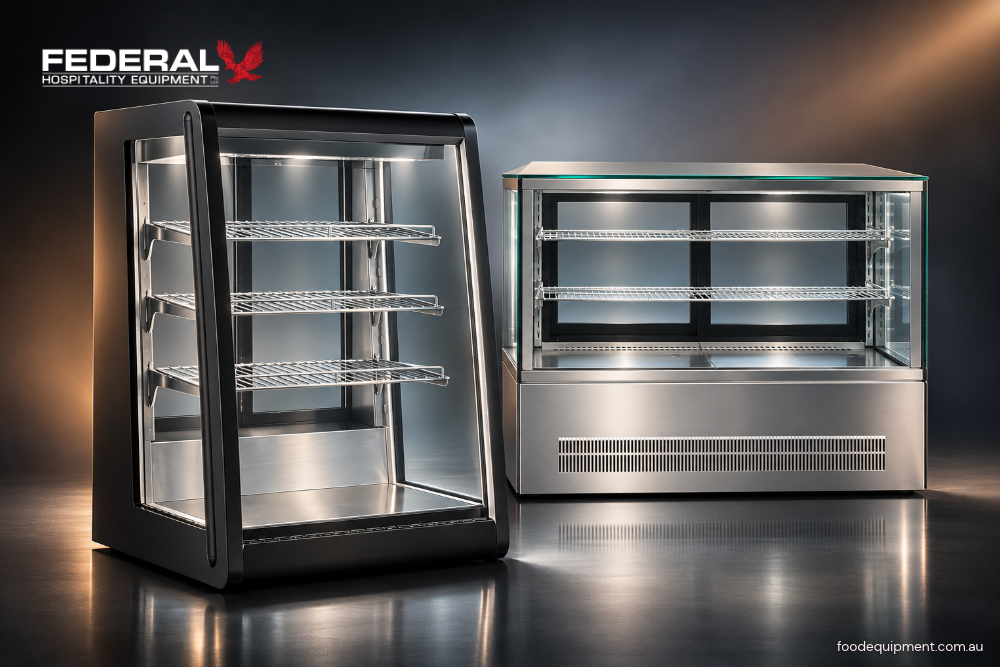
Yes. A gelato display is both refrigeration equipment and a merchandising fixture. Stable conditions help products maintain an attractive appearance, while clear presentation allows customers to compare flavours before ordering.
Gelato Display vs General Frozen Storage
A commercial gelato display and general frozen storage do not perform exactly the same role. Frozen storage is primarily concerned with holding products, whereas a gelato display also needs to support presentation and service.
| Factor | Gelato Display | General Frozen Storage |
|---|---|---|
| Primary purpose | Display, service and product holding | Storage |
| Customer visibility | High | Usually limited |
| Product access | Frequent during service | Generally less frequent |
| Presentation | Major consideration | Usually secondary |
| Serving consistency | Important for immediate service | Not normally the primary function |
| Merchandising role | Significant | Minimal |
How Should You Position a Commercial Gelato Display?
Positioning should be considered during the planning stage rather than after the equipment arrives.
First, check the manufacturer's clearance and ventilation requirements. The refrigeration system needs suitable airflow around relevant areas.
Second, consider environmental heat. Avoid direct sunlight and excessive exposure to nearby cooking equipment where practical.
Third, think about customer flow. The display should be visible and attractive without creating congestion around ordering and payment areas.
Finally, allow practical access for cleaning and servicing. A cabinet that is tightly boxed into a location may become difficult to maintain properly.
How Should a Gelato Display Be Loaded?
Loading practices can influence airflow and product presentation. Businesses should follow the equipment manufacturer's recommendations regarding pan sizes, arrangement and loading limits.
Overstocking can be tempting during busy periods, but placing too much product inside the cabinet may interfere with airflow. The source specifically identifies overstocking as a potential restriction to proper airflow.
A more effective approach is to plan production and replenishment around realistic sales volume while keeping the display organised and visually appealing.
Cleaning and Maintenance of a Gelato Display
Regular cleaning is essential for both presentation and equipment performance. A customer-facing cabinet should remain visually clean, while relevant refrigeration components and ventilation areas also need appropriate attention.
Dust and debris can affect some refrigeration components, while blocked vents can restrict airflow and make the system work harder. Routine professional servicing can also help identify developing faults.
Businesses should always follow the manufacturer's instructions for cleaning individual components, particularly electrical and refrigeration areas.
- Check operating conditions regularly.
- Observe gelato texture and presentation.
- Keep ventilation areas unobstructed.
- Clean accessible surfaces routinely.
- Clean relevant refrigeration components as recommended.
- Check for unusual noise or performance changes.
- Record recurring temperature issues.
- Arrange professional servicing where required.
- Follow manufacturer maintenance instructions.
Energy Efficiency and Temperature Control
A gelato display needs to maintain suitable operating conditions while working efficiently within its intended environment. Poor positioning, blocked airflow and dirty refrigeration components can force the equipment to work harder than necessary.
Efficient operation therefore begins with choosing a cabinet suited to the business and installing it in an appropriate location. Regular cleaning and maintenance can then help the equipment continue operating as intended.
Businesses should compare more than purchase price. Equipment dimensions, capacity, climate suitability, refrigeration design, access, maintenance requirements and operating demands all contribute to long-term value.
Which Australian Businesses Can Benefit from a Gelato Display?
| Business Type | How a Gelato Display May Be Used | Key Consideration |
|---|---|---|
| Gelaterias | Primary product presentation and service | Capacity, presentation and serving consistency |
| Ice Cream Parlours | Display of frozen dessert flavours | Product visibility and reliable refrigeration |
| Cafés | Complementary dessert offering | Available floor space and expected sales volume |
| Dessert Bars | Premium visual presentation | Merchandising and product access |
| Restaurants | Dessert service | Capacity matched to menu demand |
| Hotels | Dessert outlets and foodservice areas | Durability and operational capacity |
| Shopping Centre Kiosks | High-visibility customer-facing service | Footprint, ventilation and presentation |
| Specialty Dessert Shops | Gelato alongside other desserts | Flexible capacity and merchandising |
How to Choose a Commercial Gelato Display in Australia
1. Determine Required Capacity
Estimate how many flavours need to be displayed at once and how much stock each pan needs to hold during normal service.
2. Measure the Available Space
Record the width, depth and height of the proposed location while allowing for manufacturer-specified ventilation and service access.
3. Consider Australia's Climate
Think about the actual ambient environment in which the equipment will operate, particularly during summer.
4. Review Temperature Control
Choose equipment capable of maintaining conditions appropriate for the intended gelato products and follow manufacturer recommendations.
5. Consider Airflow
Review both internal airflow and external ventilation requirements.
6. Evaluate Product Visibility
A customer-facing display should make flavours easy to see while supporting an organised presentation.
7. Consider Service Access
Staff should be able to access products efficiently during peak periods.
8. Review Cleaning Requirements
Choose a design that can be incorporated practically into the business's daily cleaning routine.
9. Consider Maintenance Access
Relevant components should remain accessible for routine maintenance and professional servicing.
10. Consider Long-Term Operating Requirements
Evaluate the complete ownership picture, including capacity, refrigeration performance, cleaning, maintenance and operating demands.
Common Mistakes When Using a Gelato Display
Setting the Temperature Without Checking Product Requirements
Different recipes and equipment can require different conditions. Avoid assuming one universal setting is appropriate.
Placing the Cabinet in Direct Sunlight
Unnecessary heat exposure can increase refrigeration workload and make stable conditions more difficult to maintain.
Blocking Ventilation
Refrigeration equipment requires appropriate airflow. Do not obstruct ventilation areas.
Overloading the Display
Too much product can interfere with internal airflow and may contribute to uneven conditions.
Ignoring Small Temperature Changes
A gradual performance change can be an early indication of airflow, maintenance, ambient-condition or equipment issues.
Waiting Until Product Starts Melting
Visible melting is a late warning sign. Routine monitoring provides an opportunity to identify problems earlier.
Neglecting Cleaning
Dust, debris and blocked ventilation can contribute to reduced refrigeration efficiency.
Skipping Routine Servicing
Professional servicing can identify developing faults before they become more disruptive.
Commercial Gelato Display Buying Checklist
- How many flavours will be displayed?
- What pan sizes and arrangements are required?
- How much floor space is available?
- What ventilation clearances are required?
- What ambient conditions will the cabinet experience?
- Will it be exposed to direct sunlight?
- Are there nearby ovens, grills or other heat sources?
- Does the equipment suit the intended gelato products?
- How is temperature monitored and adjusted?
- How easily can staff access products?
- Can customers see flavours clearly?
- Is the cabinet straightforward to clean?
- Are relevant components accessible for maintenance?
- Can staff keep vents and airflow paths clear?
- Does capacity suit peak trading periods?
- What are the ongoing operating requirements?
- Is professional servicing readily manageable?
What Are the Business Benefits of Stable Gelato Display Temperature?
Stable temperature management can contribute to several areas of business performance. Most importantly, it helps protect the product itself.
Maintaining appropriate conditions can help gelato retain a consistent appearance and serving texture. This supports customer presentation and can make service more predictable for employees.
Reducing avoidable deterioration can also help protect the investment represented by ingredients, production time and labour.
| Business Benefit | How Stable Temperature Can Help |
|---|---|
| Product quality | Supports consistent texture and appearance |
| Waste management | Helps reduce avoidable product deterioration |
| Customer experience | Supports an attractive professional display |
| Service efficiency | Appropriate consistency can make gelato easier to serve |
| Merchandising | Helps flavours remain visually appealing |
| Stock protection | Helps protect multiple displayed flavours from avoidable quality problems |
Why Consider Federal Hospitality Equipment Australia?
Federal Hospitality Equipment Australia supplies commercial hospitality equipment for restaurants, cafés, bakeries, dessert businesses, hotels and other professional foodservice operations.
When comparing a commercial gelato display in Australia, operators should look beyond appearance alone. Capacity, dimensions, refrigeration performance, temperature control, ventilation requirements, access, cleaning and the actual operating environment all influence whether a display is appropriate for the business.
For gelaterias and dessert businesses in particular, the display performs two jobs at the same time: it helps maintain product conditions while presenting flavours directly to customers. Selecting equipment that performs both functions effectively can support everyday service and long-term business operations.
Conclusion
Temperature control is essential to maintaining the texture, appearance and quality of gelato in a commercial display. Australian businesses can face additional challenges from changing ambient temperatures, hot summer conditions and busy service periods, all of which can increase the demands placed on refrigeration equipment.
A suitable, well-maintained display can help protect stock, support attractive product presentation, improve service consistency and reduce avoidable waste. Effective operation also depends on appropriate positioning, airflow, regular monitoring, cleaning and maintenance.
There is no single operating setting that should automatically be applied to every gelato display. Businesses should follow the recommendations for their specific equipment and products, monitor performance and investigate unusual changes before they become larger problems.
For Australian gelaterias, cafés, dessert bars, restaurants and hospitality businesses, investing in the right commercial gelato display is ultimately about protecting both the product and the customer experience.
Frequently Asked Questions
1. Why is temperature control important in a gelato display?
Temperature control helps gelato maintain appropriate texture, shape, appearance and serving consistency while supporting product quality throughout service.
2. What temperature should a commercial gelato display operate at?
The appropriate operating range depends on the product formulation, recipe and equipment. Follow the recommendations for the specific gelato and display cabinet.
3. What happens if gelato becomes too warm?
It can become excessively soft, lose its shape and become more difficult to present consistently.
4. Can temperature fluctuations affect gelato texture?
Yes. Repeated warming, partial melting and refreezing may affect product texture and presentation.
5. Why is temperature control particularly important in Australia?
Hot summer conditions and changing ambient temperatures can increase refrigeration workload, particularly in warm shops or locations exposed to additional heat.
6. Can direct sunlight affect a gelato display?
Yes. Direct sunlight adds heat and can increase the workload placed on the refrigeration system.
7. Should a gelato display be installed near cooking equipment?
Excessive exposure to heat-producing equipment should generally be avoided where practical, subject to the manufacturer's installation requirements.
8. Why is airflow important in a gelato cabinet?
Appropriate airflow helps refrigeration equipment maintain consistent conditions. Restricted airflow may contribute to uneven performance.
9. Can overstocking affect gelato display performance?
Yes. Excessive loading may restrict airflow, so operators should follow the equipment manufacturer's loading recommendations.
10. How often should gelato display temperature be checked?
Businesses should establish regular monitoring procedures appropriate to their products, equipment and food-safety requirements.
11. Can temperature monitoring help reduce product waste?
Yes. Monitoring can help staff identify unusual performance changes before they lead to more significant product deterioration.
12. How does temperature control affect gelato presentation?
Stable conditions help maintain texture and shape, supporting a more attractive customer-facing display.
13. Does gelato display temperature affect scooping?
Yes. Product maintained at an appropriate serving consistency is generally easier for staff to scoop and present.
14. How can I improve the efficiency of a gelato display?
Follow installation requirements, maintain ventilation, avoid unnecessary heat exposure, keep relevant components clean and arrange servicing as required.
15. How should a commercial gelato display be cleaned?
Follow the manufacturer's cleaning instructions and routinely clean customer-facing surfaces, accessible areas and relevant components as specified.
16. What should I consider when buying a gelato display?
Consider capacity, dimensions, temperature control, ambient operating conditions, ventilation, product visibility, service access, cleaning and maintenance.
17. Is a larger gelato display always better?
No. Capacity should match expected sales, available space, product range and operational requirements. Oversizing can use valuable space unnecessarily.
18. Which businesses commonly use gelato displays?
Gelaterias, ice cream parlours, cafés, dessert bars, restaurants, hotels, kiosks and specialist dessert businesses commonly use commercial gelato displays.
19. Can a gelato display improve customer experience?
Yes. A well-maintained display can keep flavours attractively presented and make it easier for customers to view and choose products.
20. Where can I buy a commercial gelato display in Australia?
Australian hospitality businesses can compare commercial gelato displays and related foodservice equipment through specialist suppliers such as Federal Hospitality Equipment Australia.