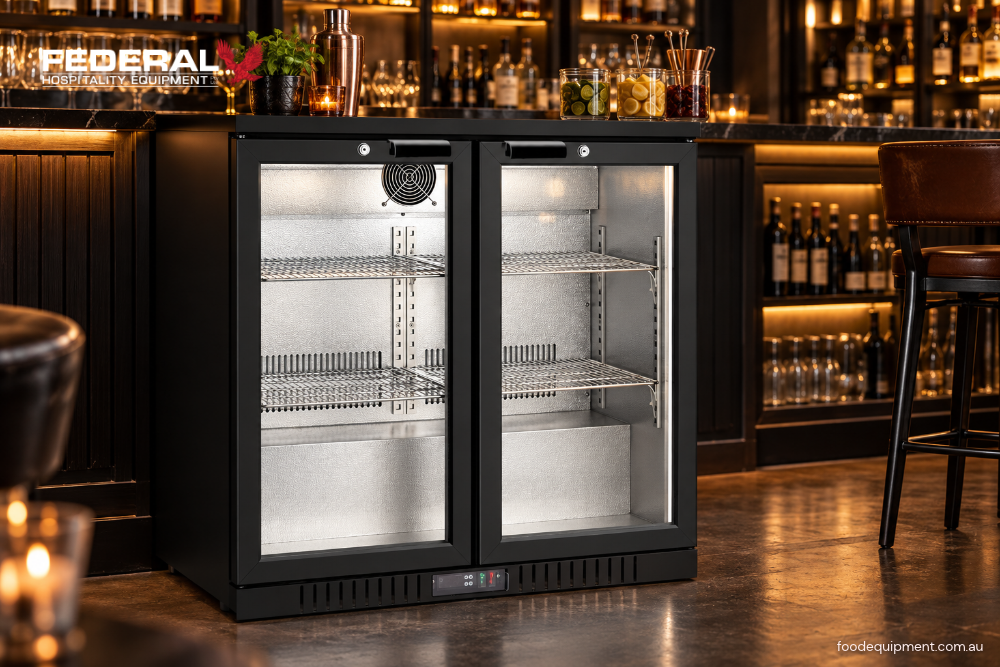
Choosing the right commercial bar fridge is an important decision for Australian hospitality businesses that rely on fast beverage service. Whether you operate a busy pub, cocktail bar, restaurant, café, club, hotel or entertainment venue, your refrigeration should keep drinks appropriately chilled, organised and accessible throughout the day.
A commercial bar fridge is more than somewhere to store bottles and cans. In a busy venue, it becomes part of the service workflow. Staff need to locate beverages quickly, retrieve stock without unnecessary movement and restock the fridge without interrupting customers or other team members. The wrong refrigerator can create congestion behind the bar, increase restocking frequency and make busy service periods harder to manage.
The best commercial bar fridge is not necessarily the largest model or the one with the most doors. The right choice depends on beverage storage requirements, available space, service volume, door configuration, product visibility, temperature performance and daily workload.
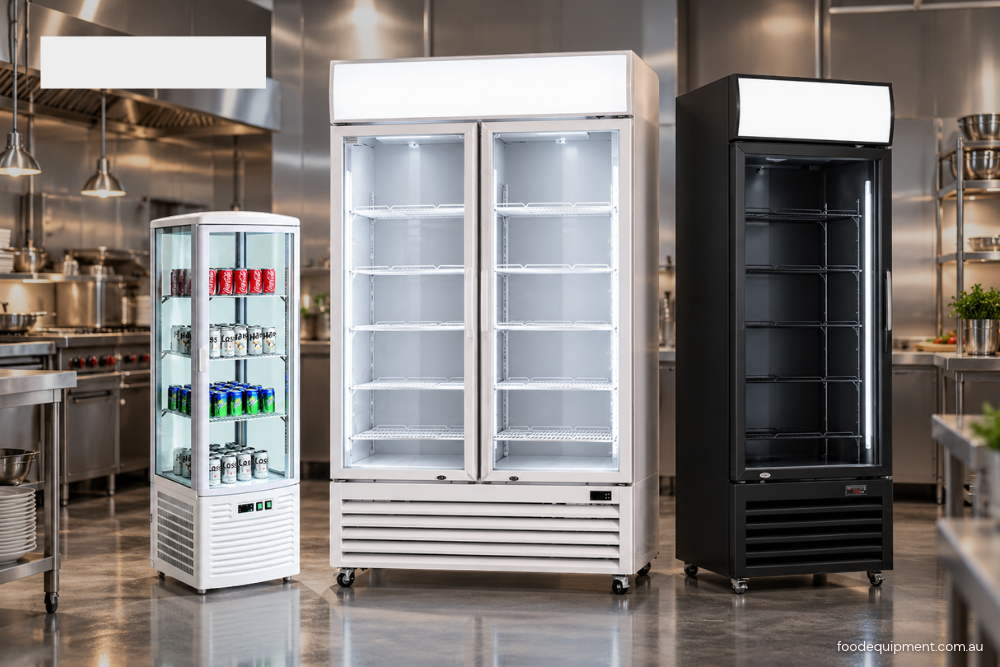
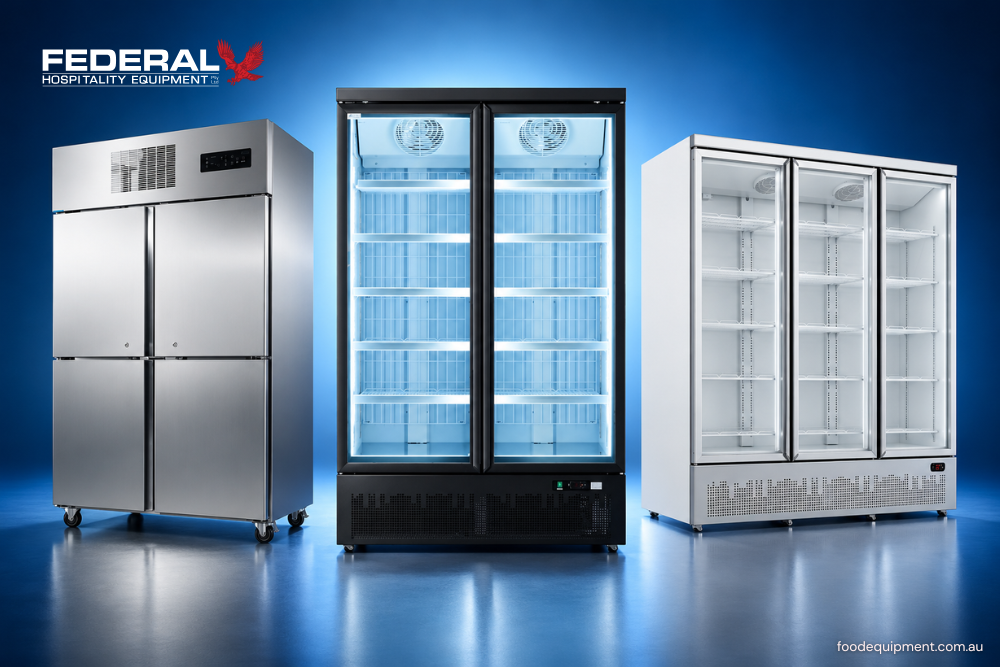
Federal Hospitality Equipment Australia offers a range of commercial bar fridges and coolers, including compact, single-door, double-door, three-door and larger multi-door configurations. Its current range features established commercial refrigeration brands such as Thermaster and FED-X, with glass-door, solid-door, hinged-door and sliding-door options designed for different hospitality applications.
The best commercial bar fridge is one that provides enough refrigerated storage for peak service while fitting comfortably into the available bar space. Small cafés may benefit from a compact single-door unit, restaurants may prefer a two-door under-bench fridge, and high-volume pubs or bars may need three or more doors. Adjustable shelves, practical door access, reliable temperature performance and durable construction are important considerations.
What Makes a Commercial Bar Fridge Suitable for a Busy Hospitality Venue?
Busy bars and hospitality venues place different demands on refrigeration compared with domestic environments. Commercial bar fridges are regularly opened, accessed by multiple staff members and restocked throughout service. They may also operate in warm environments surrounded by people, lighting and other equipment.
A suitable commercial bar fridge should support the way the venue operates rather than forcing staff to work around the appliance. This means considering how drinks are organised, how often doors are opened, where stock is replenished and whether customers need to see the beverages on display.
For example, a cocktail bar may need easy access to mixers, bottled beverages and garnishes, while a pub may prioritise large quantities of beer, cider and soft drinks. A restaurant with table service may need a discreet under-bench refrigerator positioned near the beverage preparation station.
| Important Feature | Why It Matters | Practical Benefit |
|---|---|---|
| Storage capacity | Determines how much stock can be kept chilled | Reduces unnecessary restocking during busy periods |
| Door configuration | Influences access and storage organisation | Helps staff retrieve beverages efficiently |
| Adjustable shelving | Accommodates different bottle and can sizes | Improves use of internal storage space |
| Glass doors | Allow products to be seen without opening the fridge | Supports beverage identification and display |
| Solid doors | Provide concealed storage | Useful in back-of-house and staff-only areas |
| Under-bench design | Uses space below an existing work surface | Keeps chilled drinks close to the service area |
| Interior lighting | Improves visibility of stored beverages | Makes stock easier to identify |
| Durable construction | Supports frequent commercial use | Helps the unit withstand a demanding working environment |
| Temperature performance | Maintains suitable storage conditions | Supports beverage quality and consistent service |
How Do You Choose the Right Commercial Bar Fridge Size?
Choosing the right size begins with understanding the quantity and variety of beverages your business needs to keep refrigerated during service. External fridge dimensions are important, but they do not tell the whole story. Internal storage volume, shelf layout, bottle dimensions and the way staff organise stock can make a substantial difference to usable capacity.
Start by considering how many chilled drinks your venue typically sells during its busiest period. Then assess how often staff can realistically replenish the fridge from a storeroom, cool room or secondary refrigerator.
A venue that can restock frequently may operate comfortably with a smaller service fridge. A busy bar with limited back-up refrigeration may require a larger model to avoid running short of chilled beverages during peak demand.
Why Should You Calculate Peak Beverage Demand?
Average daily sales can be misleading when choosing refrigeration capacity. A venue might sell a moderate number of drinks across the day but experience a concentrated rush during lunch, dinner, sporting events or weekend evenings.
For example, a pub may need significantly more chilled stock between 6 pm and 9 pm than during the rest of the day. If its bar fridge cannot hold enough beverages for that period, staff may need to leave the service area repeatedly to collect additional stock.
When planning capacity, consider your busiest service period, the number of staff accessing the refrigerator, the proportion of beverages that must be served chilled and the time available for restocking.
Should You Choose a Single-Door or Multi-Door Commercial Bar Fridge?
Door configuration is one of the most important considerations when selecting commercial bar refrigeration. The number of doors influences how much stock can be organised within the unit, how staff access beverages and how much installation space is required.
Federal Hospitality Equipment Australia offers Thermaster and FED-X models in different configurations, allowing businesses to match the refrigerator to their service requirements.
Single-Door Commercial Bar Fridges
A single-door commercial bar fridge is often suitable for cafés, smaller restaurants, boutique bars and secondary beverage stations. These units can provide convenient access to chilled drinks without occupying the space required by a larger multi-door refrigerator.
The Thermaster LG-138HC is an example of an under-bench single-door bar fridge/cooler. It can be considered where operators need accessible beverage refrigeration in a relatively compact installation area.
Single-door models may also work well as supplementary refrigerators positioned close to a coffee station, restaurant service counter or secondary bar.
Two-Door Commercial Bar Fridges
A two-door bar fridge can offer greater storage flexibility for venues handling a broader beverage range or higher service volume. Staff can organise products across different sections, helping reduce unnecessary searching during busy periods.
The Thermaster LG-208HC is a two-door under-bench bar fridge/cooler, while the Thermaster LG-208SC provides a two-door sliding configuration. Both are relevant options when a venue needs more capacity than a compact single-door refrigerator.
Two-door units can be particularly useful for restaurant beverage stations, busy cafés, cocktail bars and smaller pubs.
Three-Door Commercial Bar Fridges
Three-door bar fridges are worth considering when beverage service is a major part of daily operations. Their larger refrigerated storage area can help staff organise different drink categories while keeping commonly requested products within reach.
The Thermaster LG-330TD is an example of a three-door under-bench bar fridge/cooler available through Federal Hospitality Equipment Australia.
This type of configuration may suit busy bars, pubs, clubs and restaurants where a larger chilled beverage inventory is required during service.
Four-Door Commercial Bar Fridges
Four-door configurations can be useful for larger beverage operations that require substantial refrigerated storage. They may allow different product categories to be organised across a wider service area, depending on the internal layout.
However, a four-door refrigerator is not automatically the best choice for every busy venue. The additional capacity needs to justify the floor or under-bench space occupied, and staff should still be able to move comfortably behind the bar.
| Venue Type | Potentially Suitable Configuration | Main Consideration |
|---|---|---|
| Small café | Compact or single-door bar fridge | Space efficiency and moderate beverage storage |
| Restaurant beverage station | Single- or two-door model | Convenient access during table service |
| Busy café or restaurant | Two-door under-bench fridge | Greater stock capacity and organisation |
| Pub or high-volume bar | Two- or three-door fridge | Fast access and larger chilled stock levels |
| Large club or beverage operation | Three- or four-door configuration | Higher capacity and multiple staff access |
Are Glass-Door Bar Fridges Better Than Solid-Door Models?
Both glass-door and solid-door commercial bar fridges can be suitable for hospitality businesses. The better option depends on whether beverage visibility is important and where the refrigerator will be installed.
Benefits of Glass-Door Bar Fridges
Glass-door refrigerators allow staff to identify bottles and cans without opening the door. This can be useful in busy service environments where staff need to locate specific beverages quickly.
Glass doors can also support customer-facing beverage displays. When drinks are clearly visible, customers can see the available selection, which may help encourage beverage purchases in suitable settings.
The FED-X XR200SG is a 130L glass-door bar fridge/cooler that offers a compact option for venues where product visibility is a priority.
Benefits of Solid-Door Bar Fridges
Solid-door bar fridges provide concealed storage and can be appropriate for staff-only areas where customers do not need to view the contents.
The FED-X XR200SS is a 130L solid-door bar fridge/cooler suitable for businesses seeking a compact commercial refrigeration option without a glass display door.
Solid doors can also be useful where operators prefer a uniform stainless-steel appearance or need refrigeration that blends into the surrounding equipment.
Choose a glass-door commercial bar fridge when beverage visibility and display are important. Choose a solid-door model when the fridge is mainly used for back-of-house or staff-only storage. Compare the individual models for capacity, insulation, temperature performance and installation requirements rather than assuming one door type is always superior.
Why Are Under-Bench Bar Fridges Popular in Commercial Hospitality?
Space behind a commercial bar is often limited. Bartenders need room to prepare drinks, move between stations, handle glassware and serve customers. A large upright refrigerator positioned away from the service counter can create unnecessary movement during busy periods.
An under-bench commercial bar fridge uses the space beneath a suitable work surface while keeping chilled beverages close to the point of service.
This configuration can be particularly useful in restaurants, cocktail bars, pubs and cafés where staff need frequent access to bottled drinks, mixers and other refrigerated beverages.
However, an under-bench installation must still allow the clearances and airflow specified by the manufacturer. The fridge should not be squeezed into an enclosed space that restricts ventilation or prevents servicing.
Sliding-Door vs Hinged-Door Bar Fridges: Which Is Better?
Door opening style can make a significant difference in a narrow bar layout.
Sliding-Door Commercial Bar Fridges
Sliding doors move across the front of the refrigerator rather than swinging outward. This can be helpful where staff work in narrow aisles or where a hinged door could obstruct movement.
The Thermaster LG-208SC is a two-door sliding bar fridge/cooler designed for under-bench applications.
Sliding doors may be particularly useful in compact cocktail bars, pubs with narrow service corridors and venues where multiple employees share the same working area.
Hinged-Door Commercial Bar Fridges
Hinged doors open outward and can provide convenient access to the refrigerated compartment. They may be suitable where enough clearance is available in front of the unit.
Before choosing a hinged-door model, check whether the door can open comfortably without blocking staff movement, drawers, bins or nearby equipment.
| Feature | Sliding Doors | Hinged Doors |
|---|---|---|
| Front clearance | Generally requires less outward opening space | Requires room for the door to swing open |
| Access | Access depends on sliding panel position | Can provide broad compartment access when open |
| Best suited to | Narrow service aisles and compact bar layouts | Areas with adequate door-opening clearance |
| Important check | Door tracks, cleaning and opening arrangement | Door swing, surrounding obstacles and staff movement |
Why Do Adjustable Shelves Matter in a Commercial Bar Fridge?
Not all beverages are packaged in the same way. A hospitality venue may stock standard cans, tall bottles, small mixers, sparkling water, beer, cider and other products with different heights and shapes.
Adjustable shelving allows operators to change the internal layout to suit their actual stock. This can help make better use of the available refrigerated space and keep frequently used products organised.
Federal Hospitality Equipment Australia highlights adjustable shelf heights as an important feature across its commercial bar fridge range.
When comparing models, consider whether the shelves can accommodate the beverages your business sells most frequently and whether the layout can be adjusted as your menu changes.
Why Is Interior Lighting Important?
Interior lighting can improve visibility inside a bar fridge, particularly in dimly lit hospitality environments. In busy bars and restaurants, staff should be able to identify products quickly without repeatedly moving stock around.
Lighting is especially useful in glass-door refrigerators where customers may also view the beverages on display.
When comparing bar fridges, check the individual model's lighting configuration, internal visibility and shelf arrangement rather than relying on appearance alone.
How Important Is Temperature Performance in a Commercial Bar Fridge?
Reliable cooling is one of the most important requirements for commercial beverage refrigeration. A bar fridge must maintain appropriate storage conditions for its intended contents while operating in the environment where it is installed.
Temperature performance can be influenced by ambient conditions, door-opening frequency, stock loading, airflow and maintenance.
A fridge operating in a warm bar or commercial kitchen may face different conditions from one installed in a cooler, air-conditioned service area.
Before purchasing, check the manufacturer's specified operating temperature range and ambient operating conditions. The correct setting also depends on the beverages or other products being stored.
Can Frequent Door Openings Affect Cooling?
Yes. Every time a refrigerator door opens, warmer surrounding air can enter the cabinet. In a busy venue, repeated door openings place additional demands on the refrigeration system.
Organising stock logically can help staff retrieve beverages more quickly and avoid leaving doors open unnecessarily.
Correct installation, suitable ventilation and sensible stock loading also help the fridge operate under the conditions for which it was designed.
Should a Bar Fridge Be Fully Packed?
A well-stocked fridge can help reduce unnecessary restocking, but overloading can restrict internal airflow and make products difficult to retrieve.
Leave the clearances required by the manufacturer and avoid blocking internal air outlets. Use the shelves to distribute stock appropriately rather than forcing additional bottles into every available space.
What Construction Features Should You Look For?
Commercial bar fridges are exposed to frequent handling, repeated door movements, restocking and cleaning. Durable construction is therefore an important part of long-term suitability.
Federal Hospitality Equipment Australia offers commercial bar refrigeration with robust materials, including stainless-steel configurations and models designed for demanding hospitality environments.
When evaluating construction quality, consider:
- Cabinet material and finish.
- Door construction and handles.
- Door seals and their accessibility for cleaning.
- Shelf strength and adjustability.
- Interior surfaces and cleaning access.
- Door tracks on sliding-door models.
- Available service access.
- Overall suitability for frequent commercial use.
A commercial refrigerator should be easy for staff to use and maintain throughout its working life, not simply attractive when first installed.
Which Commercial Bar Fridge Brands Does Federal Hospitality Equipment Australia Offer?
Two relevant brands in Federal Hospitality Equipment Australia's current bar fridge category are Thermaster and FED-X. Both offer models suited to different beverage storage requirements.
Thermaster Commercial Bar Fridges
Thermaster offers a broad range of commercial bar fridges and coolers, including compact units, single-door under-bench models, double-door refrigerators, sliding-door configurations and larger multi-door options.
Relevant Thermaster models include the DC-122Q, LG-138HC, LG-208HC, LG-208SC and LG-330TD. These configurations allow venues to select refrigeration based on space, capacity and service requirements.
FED-X Commercial Bar Fridges
FED-X provides compact commercial beverage refrigeration options, including the XR200SS and XR200SG 130L models.
The XR200SS features a solid door, while the XR200SG offers a glass-door configuration. These alternatives are useful when businesses need to decide whether product visibility or concealed storage is more important.
Which Federal Hospitality Equipment Bar Fridge Could Suit Your Venue?
The following examples illustrate how different commercial bar fridge configurations can suit different hospitality applications. Final selection should always be based on the latest individual product specifications, available installation space and actual service requirements.
| Brand and Model | Configuration | Potential Application |
|---|---|---|
| Thermaster DC-122Q | Compact bar fridge/cooler | Small beverage stations and supplementary refrigeration |
| FED-X XR200SS | 130L solid-door bar fridge | Staff-only or back-of-house beverage storage |
| FED-X XR200SG | 130L glass-door bar fridge | Beverage display and visible chilled storage |
| Thermaster LG-138HC | Single-door under-bench bar fridge | Cafés, smaller restaurants and compact bars |
| Thermaster LG-208HC | Two-door under-bench bar fridge | Busy beverage stations and restaurants |
| Thermaster LG-208SC | Two-door sliding-door bar fridge | Narrow bar layouts and space-conscious installations |
| Thermaster LG-330TD | Three-door bar fridge/cooler | Higher-volume beverage service |
What Is the Best Commercial Bar Fridge for a Small Café?
A small café generally needs refrigeration that supports its beverage menu without taking up unnecessary floor or bench space.
If bottled drinks and canned beverages are a smaller part of the business, a compact single-door model may provide enough capacity. The Thermaster DC-122Q or LG-138HC may be worth comparing, depending on the installation area and required stock volume.
The main considerations should be whether staff can access the fridge easily, whether the shelves accommodate the café's products and whether enough stock can be kept chilled during peak trading.
What Is the Best Bar Fridge for a Busy Restaurant?
Restaurants often need chilled beverages close to the service counter, particularly when staff prepare drinks for table service.
A two-door under-bench bar fridge may provide a useful balance between capacity and accessibility. Models such as the Thermaster LG-208HC and LG-208SC can be considered where a restaurant needs more refrigerated storage than a compact single-door unit.
Door style should be selected according to the available clearance. A sliding-door refrigerator may be more practical in a narrow service corridor, while a hinged-door model may suit an area with more room.
What Is the Best Commercial Bar Fridge for a Pub?
Pubs often experience concentrated periods of high beverage demand, particularly during evenings, weekends, sporting events and functions.
A two-door or three-door bar fridge may provide more practical storage for popular drinks and reduce the frequency of restocking during busy periods.
For higher-volume operations, a model such as the Thermaster LG-330TD may be worth considering alongside other multi-door options.
However, capacity should be calculated around actual peak beverage demand rather than assuming every pub needs the largest available refrigerator.
What Is the Best Bar Fridge for a Cocktail Bar?
Cocktail bars often need convenient access to a variety of mixers, bottled beverages and other refrigerated ingredients. The range of products may be more important than the total quantity of any single drink.
Adjustable shelving, organised storage and practical door access are therefore particularly valuable.
An under-bench sliding-door fridge can be useful where bartenders operate in a narrow working area, while a glass-door model may help staff identify products quickly.
What Is the Best Bar Fridge for a Hotel or Club?
Hotels and clubs may operate multiple beverage stations with different refrigeration requirements. A smaller fridge may suit a lounge or function area, while a larger multi-door unit may be more appropriate for a busy public bar.
Rather than selecting one refrigerator type for every area, consider the volume and workflow of each service station separately.
This approach can help avoid installing oversized equipment in quiet areas or undersized refrigeration in high-demand locations.
Should You Use One Large Bar Fridge or Several Smaller Units?
The answer depends on the layout and operation of the venue.
One larger refrigerator may provide centralised storage and simplify stock organisation. Several smaller units may be more practical when staff work across separate service stations.
For example, a venue with two bars on opposite sides of a dining area may benefit from having refrigerated drinks available at both locations rather than requiring staff to travel repeatedly to one central fridge.
When comparing these approaches, consider total capacity, energy use, available space, restocking arrangements and how staff move during service.
How Should You Position a Commercial Bar Fridge?
Positioning affects both service efficiency and refrigeration performance.
A bar fridge should be close enough to the beverage preparation area to reduce unnecessary movement, but it should not obstruct walkways, access doors, bins or other equipment.
Consider the following before installation:
- Whether staff can access the fridge without blocking colleagues.
- Whether hinged doors have enough opening clearance.
- Whether sliding doors can be operated comfortably.
- Whether the fridge fits beneath the intended bench.
- Whether ventilation clearances meet manufacturer requirements.
- Whether there is suitable electrical access.
- Whether the unit can be cleaned and serviced.
- Whether the surrounding ambient temperature suits the model.
Good placement should support the overall beverage workflow, not simply fill an unused gap behind the bar.
How Can the Right Bar Fridge Improve Service Efficiency?
In a busy hospitality venue, small delays can accumulate quickly. Searching for a particular drink, moving stock between shelves or walking to another refrigerator can interrupt the flow of service.
A well-chosen bar fridge can help reduce these interruptions by keeping popular beverages organised and close to staff.
For example, a venue may dedicate one section to bottled beer, another to soft drinks and another to mixers. Adjustable shelves can help accommodate different packaging sizes, while interior lighting and glass doors may make stock easier to identify.
The result is a beverage station designed around the way staff work during service.
How Can You Reduce Unnecessary Restocking?
Restocking is unavoidable, but it should not repeatedly interrupt peak service.
To improve stock management, estimate how many drinks are required during the busiest period and organise the refrigerator around the most frequently ordered products.
Keep popular beverages in easily accessible positions and ensure staff know where each product belongs. If a smaller fridge requires constant replenishment, a larger model or supplementary refrigeration may be worth considering.
However, increasing storage capacity should be balanced against available space and actual demand.
What Should You Check Before Buying a Commercial Bar Fridge?
- What types of beverages will be stored?
- How many chilled drinks are required during peak service?
- How frequently can staff restock the refrigerator?
- What is the available installation width, depth and height?
- Would a compact, single-door or multi-door unit be more suitable?
- Is an under-bench installation required?
- Would glass doors improve product visibility?
- Would solid doors be more appropriate for concealed storage?
- Are sliding doors preferable in a narrow working area?
- Is there enough clearance for hinged doors?
- Are the shelves adjustable?
- Can the internal layout accommodate your bottle and can sizes?
- Does the unit have suitable interior lighting?
- What operating temperature range does the manufacturer specify?
- Is the fridge suitable for the expected ambient conditions?
- Are ventilation and service clearances available?
- Is the construction suitable for commercial use?
- Can staff clean the cabinet and door seals easily?
- What are the electrical requirements?
- What warranty and service arrangements apply?
- Does the fridge fit the venue's actual beverage workflow?
Common Mistakes When Choosing a Commercial Bar Fridge
1. Choosing Capacity Based Only on External Size
Two refrigerators with similar external dimensions may provide different internal storage arrangements. Always compare usable space, shelf positions and the beverages you need to store.
2. Buying the Largest Model Available
A large refrigerator may offer extra capacity, but it can also occupy valuable space that staff need for movement and preparation. Choose capacity based on realistic demand.
3. Ignoring Door Clearance
A hinged-door fridge may be difficult to use in a narrow aisle. Sliding doors can be more practical in some layouts.
4. Overlooking Beverage Visibility
Glass doors may help staff identify stock and support customer-facing displays. Solid doors may be more appropriate where visibility is unnecessary.
5. Ignoring Adjustable Shelving
Fixed shelf arrangements may limit the range of bottle and can sizes that fit comfortably inside the cabinet.
6. Installing the Fridge in an Unsuitable Environment
High ambient temperatures, restricted airflow or inadequate ventilation clearances can affect refrigeration performance.
7. Underestimating Peak Service Demand
A fridge that is adequate during quiet periods may require constant restocking during busy evenings or weekend trade.
8. Choosing on Purchase Price Alone
Capacity, access, construction, cooling suitability, service support and running costs should also influence the decision.
9. Forgetting Staff Workflow
Even a well-built refrigerator can become inconvenient if it is installed too far from the beverage station or blocks movement.
10. Assuming One Configuration Suits Every Venue
A compact café, busy pub and large club may have very different refrigeration requirements. The best model is the one that matches the actual application.
How Do You Compare Commercial Bar Fridge Running Costs?
Purchase price is only one part of the total cost of commercial refrigeration.
When comparing models, consider their energy consumption, operating conditions, maintenance requirements and suitability for the venue's workload.
Door-opening frequency, ambient temperature, stock loading and cleaning can all influence real-world operation. A refrigerator should be selected for the environment and service pattern in which it will actually be used.
It is also worth considering whether one larger refrigerator or several smaller units would better suit the business, taking into account both operating costs and staff movement.
How Do You Maintain a Commercial Bar Fridge?
Regular maintenance helps keep commercial refrigeration operating reliably and can reduce the risk of unexpected interruptions.
Staff should follow the manufacturer's cleaning and maintenance instructions, including checking door seals, keeping ventilation openings clear and cleaning accessible surfaces.
It is also important to monitor cabinet temperature, avoid overloading shelves and ensure doors close correctly.
Where servicing or repairs are required, use appropriately qualified refrigeration technicians and follow the manufacturer's requirements.
Why Choose Thermaster or FED-X Commercial Bar Fridges?
Thermaster and FED-X provide different commercial beverage refrigeration options within Federal Hospitality Equipment Australia's range.
Thermaster offers a selection of compact and under-bench bar coolers, including single-door, double-door, sliding-door and three-door configurations. This gives hospitality operators flexibility when selecting equipment for different service volumes and bar layouts.
FED-X provides compact 130L options in both glass-door and solid-door formats, including the XR200SG and XR200SS. These models illustrate how businesses can choose between visible beverage display and concealed refrigerated storage.
The right brand and model should ultimately be selected according to individual product specifications, installation requirements and how the refrigerator will be used.
Why Buy Commercial Bar Fridges from Federal Hospitality Equipment Australia?
Federal Hospitality Equipment Australia supplies commercial refrigeration and catering equipment for Australian restaurants, cafés, pubs, clubs, hotels, bars and other hospitality businesses.
Its commercial bar fridge range includes products from Thermaster and FED-X, with configurations designed for different storage requirements, beverage displays and service environments.
Businesses can compare compact coolers, single-door units, two-door under-bench models, sliding-door refrigerators and larger multi-door configurations within the broader commercial refrigeration range.
When selecting a bar fridge, the priority should be finding a model that suits the venue's beverage stock, installation space, temperature requirements and day-to-day service workflow.
Explore the available options in the Federal Hospitality Equipment Australia commercial bar fridge range.
Conclusion: What Is the Best Commercial Bar Fridge for Your Venue?
The best commercial bar fridge is not determined by a single brand, door count or storage capacity. It is the refrigerator that matches your venue's actual operating requirements.
For smaller cafés and restaurants, a compact or single-door bar fridge may provide enough chilled storage without taking up unnecessary space. A busy restaurant or cocktail bar may benefit from a two-door under-bench refrigerator, particularly where staff need convenient access to a broader range of drinks.
For pubs, clubs and high-volume beverage operations, a three-door or larger multi-door configuration may provide the capacity and organisation needed to support peak service.
Glass doors can improve beverage visibility, while solid doors offer a practical alternative for concealed storage. Sliding doors can be useful where space is restricted, and adjustable shelving allows businesses to organise bottles and cans more effectively.
Temperature performance, ambient conditions, construction quality, ventilation and maintenance should also be considered before purchasing.
Federal Hospitality Equipment Australia offers a range of Thermaster and FED-X commercial bar fridges, including compact, under-bench, glass-door, solid-door and multi-door models.
By choosing a fridge around capacity, accessibility, available space, visibility and daily workload, hospitality businesses can create a more practical beverage station that supports staff efficiency and keeps chilled drinks organised and ready for service.
Frequently Asked Questions
What is the best commercial bar fridge for a busy hospitality venue?
The best commercial bar fridge provides enough storage for peak beverage demand, fits the available space and allows staff to access drinks efficiently. Door configuration, adjustable shelving, temperature performance and construction quality are important considerations.
What size commercial bar fridge do I need?
Choose capacity according to the number and type of beverages required during your busiest service period. Also consider restocking frequency, internal shelf layout and available installation space.
Is a single-door bar fridge suitable for a café?
Yes. A single-door commercial bar fridge can suit a smaller café where beverage demand is moderate and space is limited.
Is a two-door bar fridge better for a restaurant?
A two-door model can provide additional refrigerated storage and more flexible organisation for restaurants with busy beverage stations.
When should I choose a three-door bar fridge?
A three-door refrigerator may suit pubs, clubs and high-volume bars that need greater chilled storage capacity during peak service.
Are four-door bar fridges suitable for large venues?
They can be useful for larger beverage operations, provided the capacity is required and the unit fits the available service area.
What is the difference between a glass-door and solid-door bar fridge?
Glass doors allow beverages to be viewed without opening the refrigerator, while solid doors provide concealed storage. The right option depends on whether visibility is important.
Are glass-door bar fridges good for beverage displays?
Yes. Glass-door models can make chilled drinks visible to customers and staff, making them suitable for customer-facing beverage areas.
Why choose a solid-door bar fridge?
A solid-door refrigerator can be practical for back-of-house or staff-only beverage storage where product display is unnecessary.
What is an under-bench commercial bar fridge?
It is a commercial refrigerator designed to fit beneath a suitable bench or work surface while keeping chilled beverages accessible to staff.
Are sliding-door bar fridges better for small spaces?
Sliding doors can be useful in narrow service aisles because they do not require the same outward opening clearance as hinged doors.
What is the difference between sliding and hinged bar fridge doors?
Sliding doors move across the cabinet front, while hinged doors swing outward. Choose according to available clearance and how staff access the refrigerator.
Why are adjustable shelves important?
Adjustable shelves allow businesses to organise different bottle and can sizes, improving the practical use of refrigerated storage space.
Does interior lighting matter in a bar fridge?
Interior lighting can improve beverage visibility, especially in dimly lit bars and customer-facing glass-door refrigerators.
Can frequent door openings affect a bar fridge?
Yes. Frequent openings allow warmer air to enter the cabinet, increasing the demands placed on the refrigeration system.
Can a commercial bar fridge operate in a warm kitchen?
Suitability depends on the model's specified ambient operating conditions. Always check the manufacturer's climate rating and installation requirements.
Should a commercial bar fridge be completely full?
Stock should be organised without blocking internal airflow or exceeding manufacturer recommendations. Overloading can reduce accessibility and affect cooling performance.
Which Thermaster bar fridge is suitable for a small beverage station?
The Thermaster DC-122Q is a compact bar fridge/cooler that may suit smaller beverage stations, subject to capacity and installation requirements.
What is the Thermaster LG-138HC?
It is a single-door under-bench commercial bar fridge/cooler that can suit cafés, smaller bars and restaurant beverage stations.
What is the Thermaster LG-208HC?
It is a two-door under-bench bar fridge/cooler that may suit venues needing more refrigerated beverage storage.
What is the Thermaster LG-208SC?
It is a two-door sliding-door under-bench bar fridge/cooler, useful for considering in layouts where front door clearance is limited.
What is the Thermaster LG-330TD?
It is a three-door bar fridge/cooler that may suit higher-volume beverage service environments.
What is the FED-X XR200SS?
It is a 130L solid-door commercial bar fridge/cooler that can be considered for concealed beverage storage.
What is the FED-X XR200SG?
It is a 130L glass-door commercial bar fridge/cooler designed for applications where beverage visibility is useful.
Which bar fridge brands does Federal Hospitality Equipment Australia offer?
Relevant brands in the current commercial bar fridge category include Thermaster and FED-X.
How do I choose between one large fridge and several smaller fridges?
Consider the number of service stations, available space, total required capacity, staff movement and operating costs. Several smaller units may be more practical where beverages are served from different locations.
How do I maintain a commercial bar fridge?
Follow the manufacturer's cleaning and maintenance instructions, keep ventilation openings clear, check door seals, monitor temperatures and arrange qualified servicing when necessary.
Is the largest commercial bar fridge always the best?
No. The best refrigerator is one that provides sufficient capacity without unnecessarily reducing working space or creating inefficient staff movement.
Where can I compare commercial bar fridges in Australia?
Federal Hospitality Equipment Australia offers a range of Thermaster and FED-X bar fridges, including compact, under-bench, glass-door, solid-door and multi-door configurations.