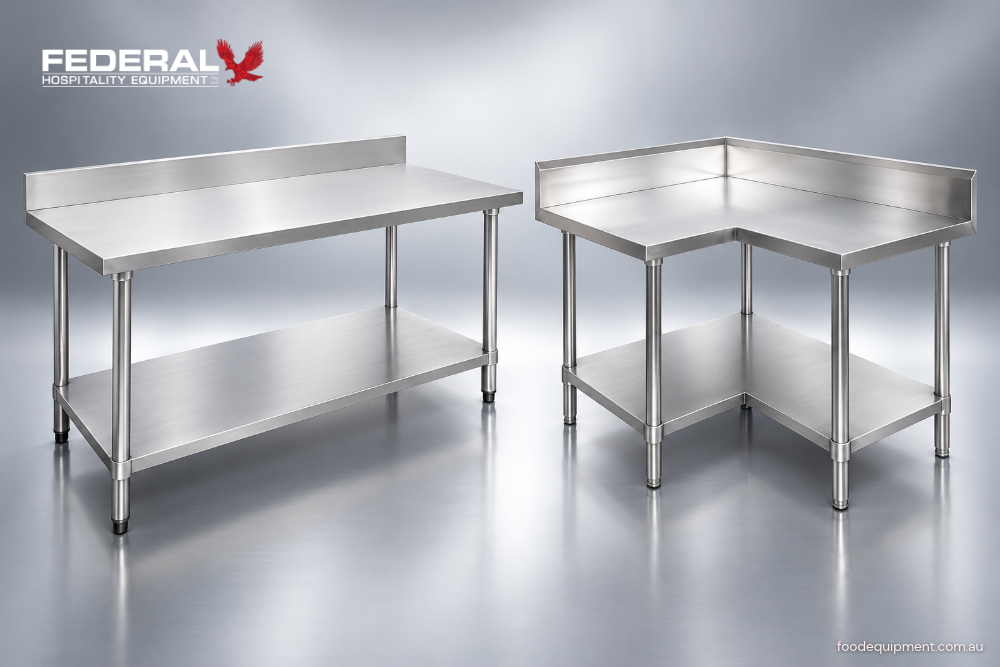
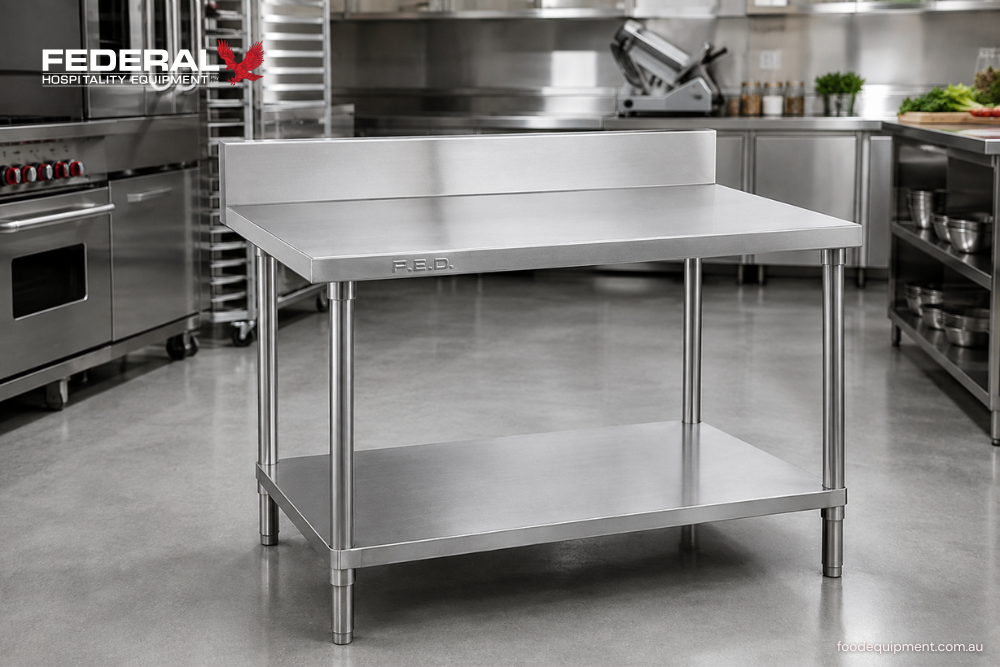
Commercial kitchens across Australia rely on stainless steel work surfaces every day. Whether you operate a café in Melbourne, a restaurant in Sydney, a bakery in Brisbane or a catering business in Perth, a stainless steel splashback bench provides a practical, hygienic and durable surface for food preparation, plating and general kitchen work.
Even high-quality stainless steel needs regular care. Grease, food residue, moisture, fingerprints and chemical build-up can gradually affect its appearance and may make day-to-day cleaning more difficult. A consistent maintenance routine helps preserve the surface, supports hygiene and keeps the bench looking professional throughout busy service periods.
Cleaning correctly is about more than making the surface shine. It helps reduce contamination risks, supports safer food preparation and protects the natural corrosion resistance of the stainless steel. Incorrect cleaning methods, on the other hand, can scratch the finish, leave streaks or damage the protective surface over time.
This guide explains how to clean and maintain a stainless steel bench with splashback properly, which products to use, which chemicals and tools to avoid, how often the surface should be sanitised and how to deal with grease, water marks and common maintenance problems.
Remove loose food particles first, then wash the bench with warm water and a mild detergent using a soft cloth or sponge. Wipe in the direction of the stainless steel grain, rinse with clean water and dry the surface thoroughly with a microfibre cloth. Finish with a food-safe sanitiser according to the manufacturer's instructions and required contact time. Avoid steel wool, wire brushes, chlorine-based cleaners and abrasive pads because they may damage the surface.
Key Takeaways
- Warm water and mild detergent are suitable for most everyday cleaning.
- Use a food-safe sanitiser after washing when sanitising food preparation areas.
- Microfibre cloths and soft sponges help clean without scratching the finish.
- Wipe in the direction of the stainless steel grain rather than scrubbing randomly.
- Dry the surface after rinsing to reduce water spots and streaks.
- Avoid bleach, chlorine-based products, steel wool, wire brushes and harsh abrasives.
- Clean spills during service instead of allowing grease and food residue to harden.
- Inspect stainless steel benches regularly for scratches, staining or signs of corrosion.
- A consistent cleaning schedule supports hygiene, presentation and equipment longevity.
Why Is Proper Maintenance Important for Stainless Steel Benches?
Stainless steel is widely used throughout Australian commercial kitchens because it is durable, resistant to corrosion and comparatively easy to sanitise. These qualities make it suitable for busy preparation areas where surfaces are exposed to food, moisture, cleaning products and frequent handling.
Despite its name, stainless steel is not completely immune to staining or damage. Grease, fingerprints, food residue, moisture and chemical deposits can gradually affect the appearance and performance of the surface if they are not removed properly.
Regular cleaning also helps protect the chromium oxide layer that contributes to the corrosion resistance of stainless steel. When harsh chemicals or abrasive tools damage the surface, the material may become more vulnerable to staining or corrosion.
| Benefit | Why It Matters |
|---|---|
| Better Food Safety | Helps reduce contamination risks on preparation surfaces |
| Longer Equipment Life | Helps protect the surface from corrosion and unnecessary damage |
| Professional Appearance | Keeps preparation areas looking clean and well maintained |
| Easier Daily Cleaning | Prevents grease and food residue from becoming stubborn |
| Hygiene Support | Supports established commercial kitchen cleaning procedures |
What Cleaning Products Should You Use?
Choosing suitable cleaning products is just as important as the cleaning process itself. For most day-to-day maintenance, the source guide recommends warm water and a mild detergent. This combination can remove routine grease, food residue and surface marks without using unnecessarily aggressive chemicals.
After washing, a food-safe sanitiser can be used where required to disinfect the preparation surface. The sanitiser should be suitable for the intended environment and applied according to the manufacturer's directions, including any required contact time.
Microfibre cloths are useful because they can remove residue without scratching the finish. A soft sponge may be used when food has dried onto the bench, provided the sponge itself is non-abrasive.
If additional polishing is required, a stainless steel cleaner designed for appropriate commercial use may help restore the appearance of the surface. Always check product instructions and suitability before applying specialised cleaners to food preparation areas.
| Cleaning Item | Suitable? | Typical Purpose |
|---|---|---|
| Warm Water | Yes | Everyday cleaning and rinsing |
| Mild Detergent | Yes | Removing grease and food residue |
| Food-Safe Sanitiser | Yes | Sanitising preparation surfaces |
| Microfibre Cloth | Yes | Wiping, drying and polishing |
| Soft Sponge | Yes | Softening and removing dried residue |
| Stainless Steel Cleaner | Yes, when suitable | Removing stubborn marks or restoring shine |
Which Cleaning Products Should You Avoid?
Some cleaning products appear strong and effective but can be unsuitable for stainless steel. The source guide specifically warns against bleach, chlorine-based cleaners, steel wool, wire brushes, abrasive scouring pads and highly acidic chemicals because they may scratch, stain or weaken the protective surface.
Steel wool is particularly risky because it can scratch the finish and may leave behind small particles. Abrasive pads can create visible marks that make the bench harder to keep looking clean.
Chlorine-based products and unsuitable acidic chemicals may also contribute to staining or corrosion when used incorrectly. Even some household bathroom cleaners can leave residues or contain ingredients that are not appropriate for food preparation surfaces.
When in doubt, check the bench manufacturer's care instructions and the cleaning product label before use.
| Product or Tool | Why Avoid It? |
|---|---|
| Steel Wool | May create permanent scratches |
| Wire Brushes | Can damage the finish |
| Abrasive Scouring Pads | May leave visible scratching |
| Bleach or Chlorine-Based Cleaners | May contribute to staining or corrosion |
| Highly Acidic Chemicals | May attack the protective surface |
| Unsuitable Household Cleaners | May leave unwanted residues on food preparation surfaces |
How Do You Clean a Stainless Steel Splashback Bench Step by Step?
A good routine should remove visible dirt before the sanitising stage. Applying sanitiser to a greasy or heavily soiled surface is not the same as properly cleaning the bench first.
Step 1: Remove Loose Food Particles
Start by removing crumbs, loose ingredients and visible food particles. A clean damp cloth is normally suitable for this first pass.
Step 2: Wash With Warm Water and Mild Detergent
Apply warm water mixed with a mild detergent. Wipe across the preparation surface and splashback, paying particular attention to corners, edges and areas where grease tends to accumulate.
Step 3: Wipe With the Stainless Steel Grain
Stainless steel often has a visible grain or brushed direction. Wiping in that direction helps maintain the finish and may reduce visible streaking. Avoid aggressive circular scrubbing.
Step 4: Rinse With Clean Water
Once grease and food residue have been removed, wipe or rinse the surface with clean water to remove detergent residue.
Step 5: Dry the Bench Thoroughly
Dry the stainless steel using a clean microfibre cloth. Standing water can leave mineral marks, particularly where the local water supply contains higher mineral levels.
Step 6: Apply a Food-Safe Sanitiser
Apply an appropriate food-safe sanitiser according to its instructions. Follow the required dilution, application method and contact time. If the product instructions require a final wipe or rinse, complete that step as directed.
Clean first, then sanitise. Food residue and grease should be removed before the sanitising stage so the sanitiser can be used on a properly cleaned surface. The uploaded guide follows this sequence. :contentReference[oaicite:5]{index=5}
Why Should You Clean With the Grain?
Brushed stainless steel has fine lines running across the surface. These lines create the grain. Cleaning in the same direction helps preserve the appearance of the finish and can reduce visible streaks.
Cleaning across or against the grain with abrasive pressure can make marks more noticeable. It may also push residue into fine surface lines instead of removing it effectively.
If you are not sure which direction the grain runs, look at the bench from an angle under overhead lighting. The brushed lines should become easier to see.
How Often Should the Bench Be Cleaned and Sanitised?
Cleaning frequency depends on kitchen activity. A quiet preparation area may require fewer interventions than a busy restaurant prep station operating continuously through lunch and dinner.
The source guide recommends wiping and sanitising after food preparation tasks, removing spills during service, completing a full clean and sanitise at the end of every shift, deep cleaning weekly and inspecting monthly for scratches, damage or corrosion.
| Frequency | Recommended Task |
|---|---|
| After Food Preparation Tasks | Wipe and sanitise as required |
| Throughout Service | Remove spills and visible residue promptly |
| End of Every Shift | Complete a full clean and sanitise |
| Weekly | Deep clean the splashback, edges and hard-to-reach areas |
| Monthly | Inspect for scratches, surface damage and signs of corrosion |
Very busy cafés, takeaway shops and restaurants may need to clean work surfaces many times during a single trading day. The schedule should reflect the actual level of food preparation rather than a fixed minimum number of cleans.
How Do You Remove Grease and Tough Food Residue?
Grease build-up is common around cooking areas, particularly where a stainless steel bench is positioned near fryers, grills, ranges or other hot equipment.
Instead of reaching immediately for a harsh scouring pad, allow warm soapy water to soften the grease. Giving the detergent time to work can make stubborn residue easier to remove without aggressive scrubbing.
For more persistent build-up, the source recommends a non-abrasive stainless steel cleaner suitable for commercial kitchens. Excessive force is rarely necessary and may cause scratches that become harder to keep clean later.
How Can You Prevent Water Spots and Streaks?
Water marks are one of the most common appearance complaints with stainless steel. They are usually easier to prevent than to remove.
Do not leave the bench wet after rinsing. Water droplets that evaporate naturally can leave mineral deposits on the surface. The source guide notes that this can be particularly noticeable in locations with harder water supplies.
Dry the bench with a clean microfibre cloth immediately after rinsing. A final light polish in the direction of the grain can help restore the natural finish and reduce the appearance of fingerprints.
How Should You Clean the Splashback Area?
The raised splashback is easy to overlook because most preparation takes place on the horizontal work surface. However, it can collect grease, sauce splashes, food particles and moisture, particularly when the bench is located near cooking equipment.
Clean the splashback using the same general method as the main work surface: remove visible residue, wash with warm water and mild detergent, rinse, dry and sanitise where appropriate.
Pay attention to the point where the splashback meets the bench top. This junction can collect residue if it is not wiped thoroughly.
During the weekly deep clean, include edges, seams and surrounding wall contact points that may not receive as much attention during normal service.
What Common Cleaning Mistakes Should You Avoid?
Many surface problems come from cleaning methods rather than normal kitchen use. Avoiding a few common mistakes can help a splashback bench retain its appearance for longer.
| Common Mistake | Possible Result |
|---|---|
| Using Steel Wool | Permanent scratches |
| Leaving Bleach on the Surface | Staining or corrosion |
| Scrubbing Against the Grain | Visible marks or streaking |
| Using Dirty Cloths | Possible cross-contamination |
| Allowing Water to Air Dry | Water marks and mineral deposits |
| Skipping Sanitising | Reduced hygiene control |
The uploaded guide specifically identifies steel wool, bleach exposure, dirty cloths, cleaning against the grain and skipping sanitising as avoidable maintenance problems.
How Can You Reduce Cross-Contamination Risks?
A clean-looking work surface is not automatically a sanitised surface. Kitchen teams should follow established procedures for separating cleaning tools, handling raw and ready-to-eat foods and sanitising benches after relevant preparation tasks.
Dirty cloths can transfer residue from one area to another, so cloths and sponges should be managed according to the venue's hygiene procedures.
If raw meat, seafood or other high-risk ingredients are prepared on the bench, the surface should be cleaned and sanitised appropriately before it is used for another task.
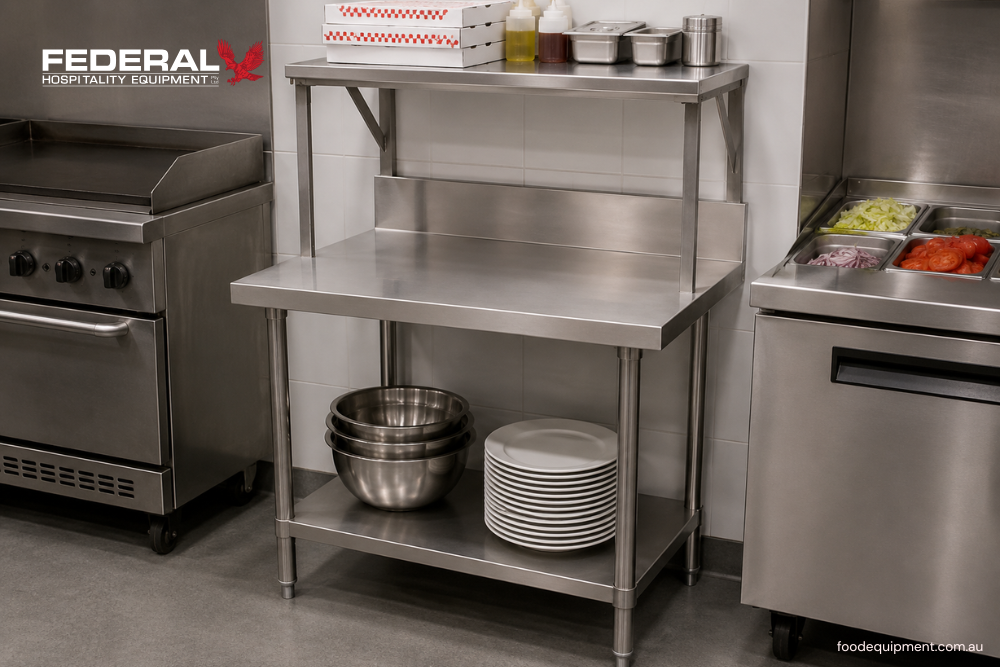
A stainless steel flat table workbench is popular partly because its smooth surface is relatively straightforward to maintain, but that advantage depends on consistent cleaning practices.
How Does Proper Cleaning Support Australian Food Safety Practices?
Food preparation surfaces play an important role in commercial kitchen hygiene because they are used repeatedly for ingredients, packaging, plating and general preparation.
The uploaded guide notes that preparation surfaces should remain clean, sanitised and in good condition throughout business operations and links appropriate cleaning routines with Food Standards Australia New Zealand requirements and local council health inspections.
Written hygiene schedules can also help demonstrate that cleaning tasks are assigned and completed consistently. A simple record can show when a surface was cleaned, sanitised or inspected, which may be useful as part of broader kitchen hygiene management.
Cleaning removes food, grease and visible residue, while sanitising is a separate step used where required to reduce microorganisms on the cleaned surface. A commercial kitchen should follow its established hygiene and food safety procedures rather than treating visible cleanliness as the only requirement.
How Can Regular Maintenance Extend Bench Life?
Commercial benches are long-term kitchen equipment, so small maintenance habits can contribute to better value over time.
Removing grease before it hardens reduces the need for aggressive scrubbing. Drying the surface limits water spotting. Avoiding harsh chemicals helps protect the finish. Regular inspection can also identify minor scratches or damaged areas before they become more noticeable.
A bench that is properly maintained is generally easier to keep presentable because each cleaning cycle begins with less accumulated residue.
This can be particularly important in open kitchens, bakeries, cafés and customer-visible preparation areas where the condition of stainless steel equipment contributes to the overall impression of cleanliness.
Daily, Weekly and Monthly Maintenance Guide
During the Day
Remove food spills, grease and visible residue promptly. Sanitise the bench between relevant preparation tasks according to the kitchen's hygiene procedures.
At the End of the Shift
Remove all loose residue, wash with mild detergent, rinse, dry and sanitise. Include the splashback and edges rather than focusing only on the centre of the work surface.
Weekly
Perform a deeper clean of seams, edges, splashback corners and less-accessible sections. Check for built-up grease around nearby cooking equipment.
Monthly
Inspect the bench for scratches, dents, staining, loose fittings or signs of corrosion. Review whether staff are using appropriate cloths and cleaning products.
What About Mobile Benches and Flat Table Workbenches?
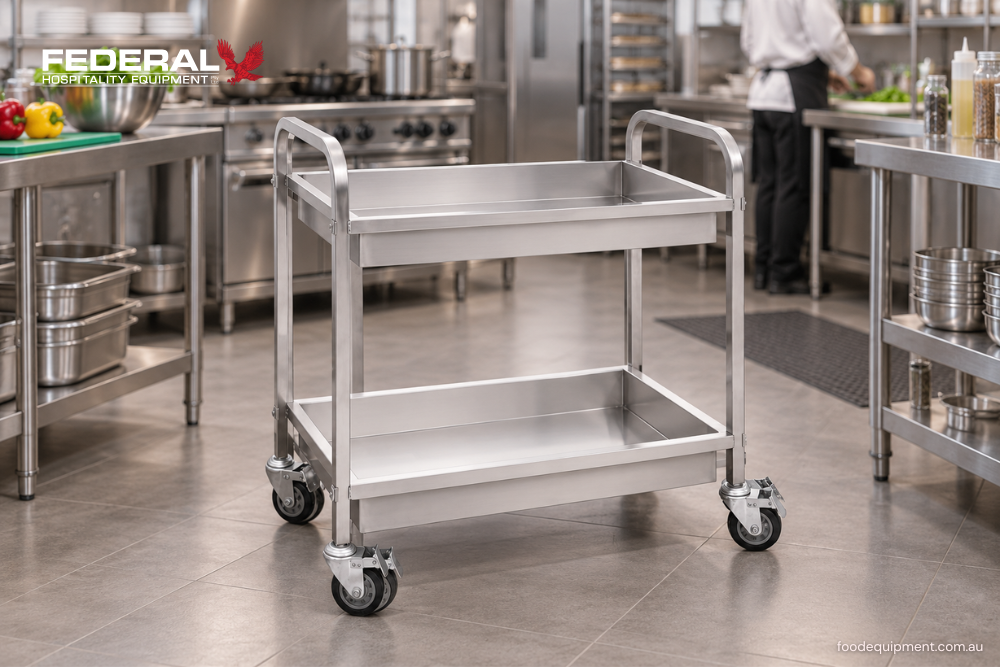
The same general cleaning principles apply to mobile stainless steel benches and flat worktables. However, additional attention may be needed around castors, undershelves, legs and lower frames.
Food residue can fall onto undershelves or collect around castors, especially when mobile benches are moved between preparation areas. These sections may not be obvious during a quick surface wipe.
During deeper cleaning, move mobile equipment where safe and practical so surrounding floors and difficult-to-reach areas can be cleaned as well.
If the bench includes a splashback, clean the raised section and the rear junction carefully because these areas can collect grease and moisture over time.
How Can You Keep Stainless Steel Looking Professional?
A professional appearance comes from consistent light maintenance rather than occasional aggressive polishing.
Wipe fingerprints regularly, clean food spills promptly and dry the surface after rinsing. Use microfibre cloths that are clean and in good condition.
If a specialised stainless steel cleaner is used, make sure it is appropriate for the area and apply it according to the product directions. Avoid applying unnecessary polishing products to surfaces that are directly used for food preparation unless they are suitable for that purpose.
The most effective approach is simple: wash gently, rinse thoroughly, dry properly and avoid abrasive tools.
What Should You Consider When Buying a Splashback Bench?
If you are comparing splashback benches for sale, cleaning and maintenance should be part of the buying decision, not an afterthought.
Review the work surface size, splashback height, undershelf layout and overall dimensions. A bench should provide sufficient workspace while fitting the preparation area comfortably.
Smooth surfaces, practical corners and accessible undershelves can make day-to-day cleaning easier. If the unit is mobile, check that the castors are suitable for the intended environment and can be cleaned around effectively.
Consider how the bench will interact with nearby equipment as well. A unit positioned beside a range or fryer may experience heavier grease exposure and therefore require more frequent maintenance.
Businesses comparing splashback benches in Australia may also want to consider access to product specifications, replacement components and support from established suppliers or distributors.
Stainless Steel Bench Cleaning Checklist
- Remove loose food particles before washing.
- Use warm water and mild detergent for routine cleaning.
- Use a clean microfibre cloth or soft sponge.
- Wipe in the direction of the stainless steel grain.
- Rinse detergent residue away with clean water.
- Dry the surface immediately after rinsing.
- Apply a suitable food-safe sanitiser where required.
- Follow the sanitiser's specified contact time.
- Avoid steel wool and wire brushes.
- Avoid abrasive scouring pads.
- Avoid unsuitable bleach or chlorine-based cleaners.
- Clean the splashback as well as the work surface.
- Remove grease before it hardens.
- Do not allow water droplets to dry naturally where possible.
- Use clean cloths to reduce cross-contamination risks.
- Deep clean edges and joins regularly.
- Inspect the bench monthly for surface damage.
- Keep cleaning procedures documented for staff.
Why Choose Federal Hospitality Equipment Australia?
Federal Hospitality Equipment Australia supplies commercial kitchen equipment for cafés, restaurants, bakeries, hotels, takeaway businesses and catering operations across Australia.
Stainless steel preparation equipment is available in different sizes and configurations to suit a wide range of kitchen layouts and workflows, including benches with splashbacks, flat table workbenches and other commercial preparation solutions.
When choosing a bench, it is useful to compare practical working dimensions, splashback design, undershelf configuration and available floor space rather than focusing only on purchase price.
A well-chosen workbench combined with consistent cleaning can provide a durable and professional food preparation surface for everyday commercial use.
Conclusion
Properly maintaining a stainless steel bench with splashback is one of the simplest ways to support hygiene, protect the equipment and keep a commercial kitchen looking professional.
For everyday cleaning, warm water, mild detergent and a clean microfibre cloth are usually suitable. Once visible food and grease have been removed, a food-safe sanitiser can be used according to the product instructions and the kitchen's hygiene procedures.
Just as important is knowing what not to use. Steel wool, wire brushes, harsh abrasive pads and unsuitable chlorine or acidic cleaners may scratch or damage stainless steel surfaces.
Wiping with the grain, rinsing thoroughly and drying the bench immediately can help reduce streaks and water marks. Regular attention to splashback edges, corners and nearby grease-prone areas also prevents residue from becoming difficult to remove.
A clear daily, weekly and monthly cleaning routine can make maintenance easier for staff while supporting a safer food preparation environment. The uploaded guide also emphasises the role of proper cleaning in Australian food safety practices and maintaining preparation surfaces in good condition.
With consistent care, stainless steel remains a practical and durable choice for Australian commercial kitchens, helping businesses maintain clean preparation areas and protect their investment over the long term.
Find the Right Stainless Steel Bench for Your Commercial Kitchen
Explore stainless steel benches, splashback worktables and commercial preparation equipment from Federal Hospitality Equipment Australia. Compare sizes, configurations and workspace options to find equipment suited to your kitchen layout and daily preparation requirements.
Frequently Asked Questions
1. What is the best cleaner for a stainless steel splashback bench?
Warm water and a mild detergent are suitable for most routine cleaning. A food-safe sanitiser can then be used where required after the surface has been cleaned.
2. Can you use bleach on stainless steel?
The uploaded guide advises avoiding bleach and chlorine-based cleaners because they may damage the protective surface and contribute to staining or corrosion.
3. Can you use steel wool on a stainless steel bench?
No. Steel wool may create permanent scratches and should be avoided.
4. Should stainless steel be cleaned with the grain?
Yes. Wiping in the direction of the grain can help maintain the finish and reduce visible streaking.
5. How often should a commercial kitchen bench be sanitised?
Frequency depends on kitchen activity and hygiene procedures. The source recommends cleaning and sanitising after relevant preparation tasks, dealing with spills during service and completing a full clean at the end of each shift.
6. How do you remove grease from stainless steel?
Allow warm water and mild detergent to soften the grease before wiping it away with a soft cloth or sponge.
7. How do you remove stubborn food residue?
Soften the residue with warm soapy water. A suitable non-abrasive stainless steel cleaner may be used for more stubborn marks if appropriate.
8. How do you prevent water spots on stainless steel?
Dry the bench immediately after rinsing with a clean microfibre cloth instead of allowing water droplets to evaporate naturally.
9. Why does stainless steel become streaky?
Streaks may be caused by detergent residue, water drying on the surface or wiping in an inconsistent direction.
10. Is a microfibre cloth suitable for stainless steel?
Yes. Microfibre cloths are useful for wiping, drying and polishing because they are soft and non-abrasive.
11. Can you use a soft sponge on stainless steel?
Yes, provided the sponge is non-abrasive and suitable for the cleaning task.
12. Should sanitiser be applied before cleaning?
No. Visible food residue and grease should be removed first, followed by sanitising according to the product instructions and kitchen procedures.
13. Why should the splashback be cleaned regularly?
Splashbacks can collect grease, sauce, moisture and food residue, especially when positioned near cooking equipment.
14. How often should you deep clean a splashback bench?
The uploaded guide suggests a weekly deep clean, including the splashback edges and less-accessible areas.
15. How often should stainless steel be inspected?
The source suggests monthly inspection for scratches, damage and corrosion.
16. Can dirty cleaning cloths cause contamination?
Yes. Dirty cloths may transfer food residue or contamination from one area to another, so clean cloths should be used according to the kitchen's hygiene procedures.
17. Can harsh cleaners damage stainless steel?
Yes. Highly abrasive, chlorine-based or strongly acidic products may damage the finish or protective surface if they are unsuitable for stainless steel.
18. Does stainless steel require polishing every day?
Not necessarily. Routine washing, rinsing and drying are generally more important than frequent heavy polishing.
19. What should I look for when buying splashback benches for sale?
Review work surface dimensions, splashback height, undershelf configuration, overall footprint, cleaning access and how the bench will fit into the kitchen workflow.
20. Why buy stainless steel preparation equipment from a commercial hospitality supplier?
A specialist supplier can provide commercial product specifications, sizing information and suitable preparation equipment options for professional kitchen use.